

Ted Bundy is a name forever associated with heinous crimes and lingering mysteries. But how does someone grow up to become one of history’s most notorious serial killers? The answer may be hidden in his early years—a period marked by strange circumstances and deeply troubling events.
In this article, we take a closer look at the factors that may have shaped Bundy’s dark psyche by uncovering ten secrets from his childhood and upbringing. From unusual family dynamics to early signs of antisocial behavior, here is what you may not have known about Ted Bundy’s path from child to serial killer.
1 Ted Bundy was born as an illegitimate child at a time when such circumstances were deeply taboo…
Ted Bundy was born as Theodore Robert Cowell on November 24, 1946, at the Elizabeth Lund Home for Unwed Mothers in Burlington, Vermont. His mother, Eleanor Louise Cowell, was unmarried and just 22 years old at the time. Due to the strict social norms of the era and her parents’ deeply religious beliefs, giving birth out of wedlock was considered a profound shame.
As a result, Bundy grew up surrounded by secrecy and deception regarding his origins. His grandparents raised him as if he were their own child, while Louise was presented to him as his “sister“. The identity of Ted Bundy’s biological father remains unclear, and it is widely believed that Ted himself never learned who his real father was—a fact that would later fuel speculation about its impact on his psychological development. [source]
2 Rumors suggested that Ted Bundy’s grandfather may also have been his biological father…
For decades, rumors and speculation have circulated that Samuel Cowell, Ted Bundy’s maternal grandfather, may also have been his biological father. During Bundy’s trials and in later investigations, theories emerged suggesting that Bundy could have been the result of an incestuous relationship between his mother, Eleanor Louise Cowell, and her father. Such a scenario has been cited as a possible explanation for why the identity of Bundy’s biological father was never confirmed or traced.
Louise Cowell, however, strongly denied these allegations, insisting that she never had any inappropriate relationship with her father. There is no conclusive evidence to support the claim that Samuel Cowell was Ted Bundy’s biological father, yet the speculation has persisted over the years as one of several theories attempting to explain the complexity and disturbance of Bundy’s psyche. [source]
3 The first truly bizarre incident from Ted Bundy’s childhood reportedly occurred when he was just three years old…
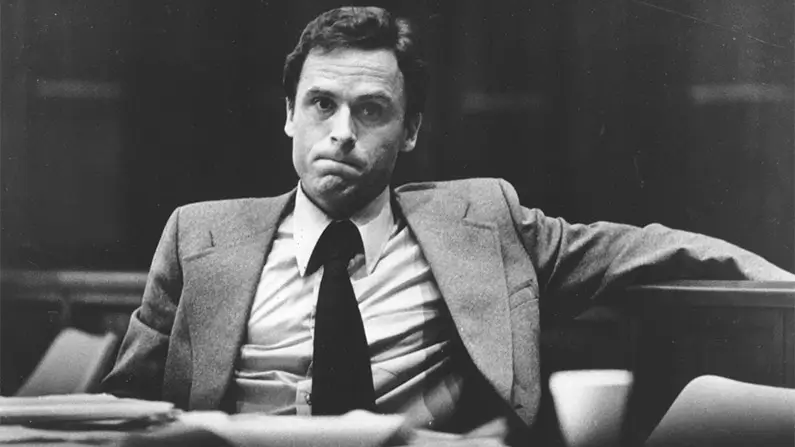
According to Ted Bundy’s aunt, Julia Cowell, she once woke up to a deeply disturbing scene: Ted, then only three years old, had arranged a circle of kitchen knives around her body as she slept. When she opened her eyes, she saw Ted Bundy standing at the foot of the bed, silently staring at her without saying a word.
The incident has frequently been cited as an early and unsettling warning sign, often referenced by investigators and biographers as a glimpse into Bundy’s later disturbing behavior. [source]

You may also like
4 Ted Bundy claimed that early exposure to “adult material” fueled his crimes…
Shortly before his execution, Ted Bundy claimed in an interview with James Dobson that his early exposure to pornographic material played a role in shaping his violent tendencies and criminal behavior. During the interview, Bundy described encountering adult material at a young age—an experience he said led to an escalating fascination with violence and sexual coercion.
However, it is important to note that Bundy was widely known for his manipulative nature, and many have questioned his true motives for offering this explanation. Critics argue that he was attempting to shift responsibility away from himself, placing blame on external influences such as pornography rather than fully acknowledging his own actions. Additionally, Dobson and his organization, Focus on the Family, were openly and strongly opposed to pornography and other forms of adult content. This has led to speculation that Bundy may have been tailoring his narrative to align with Dobson’s views, either to gain sympathy or to justify his crimes in the final days before his execution. [source]

5 Ted Bundy was shy and introverted as a child…
Ted Bundy was often described as a shy and introverted child, particularly during his early years. When he was four years old, he moved with his mother, Louise, to Tacoma, Washington, to live with a wealthy relative. The move was partly motivated by a desire to distance themselves from Bundy’s grandfather, Samuel Cowell, who was reportedly a violent and domineering figure. During this period, Ted still believed that Louise was his older sister, as he had not yet been told the truth about his parentage.
At school, Bundy struggled to form friendships and fit in socially. He was often isolated, finding it difficult to relate to his peers. It is also well documented that Bundy had a quick temper, with signs of anger emerging at an early age. He frequently felt excluded both at school and at home, and developed a deep sense of jealousy toward his younger half-siblings, whom he believed received more attention than he did. [source]
6 Ted had a deeply strained relationship with his stepfather and never truly bonded…
Ted Bundy had a troubled relationship with his stepfather, Johnny Bundy. Ted’s mother, Louise Cowell, married Johnny Bundy on May 19, 1951, when Ted was just four years old. Johnny, who worked as a cook, made genuine efforts to act as a father figure. He included Ted in family activities, became a Boy Scout leader, and frequently invited him on camping trips and outings—efforts that were largely met with indifference from Ted, who rarely showed interest or participated willingly.
Reports suggest that Ted felt embarrassed by his stepfather, largely because of Johnny Bundy’s modest profession and simple lifestyle. From an early age, Ted developed a strong fascination with social status and refinement, which may have contributed to his emotional distance from Johnny and a tendency to look down on him. This growing fixation on image and superiority would later become a recurring theme in Bundy’s personality and self-perception. [source]

You may also like
7 Ted Bundy displayed voyeuristic tendencies during his youth…
It is well documented that Ted Bundy developed a habit of spying on women and girls through windows, particularly while they were changing clothes. Bundy later admitted that he would sometimes consume alcohol before engaging in these acts, and claimed that the behavior gave him a distorted sense of closeness to the people he observed—despite his ongoing inability to form healthy, genuine relationships in his own life.
Bundy also showed a strong interest in late-night radio talk shows, often listening to call-in programs after dark. He reportedly enjoyed the conversations and listener interactions, which provided him with a vicarious sense of human connection. Even so, his real-life relationships remained shallow and deeply troubled.
This phase—marked by voyeurism, emotional distance, and a persistent desire for connection without true intimacy—is often cited as part of a broader pattern of antisocial behavior that would later escalate into his criminal actions. [source]
8 He had several minor legal run-ins during his youth…
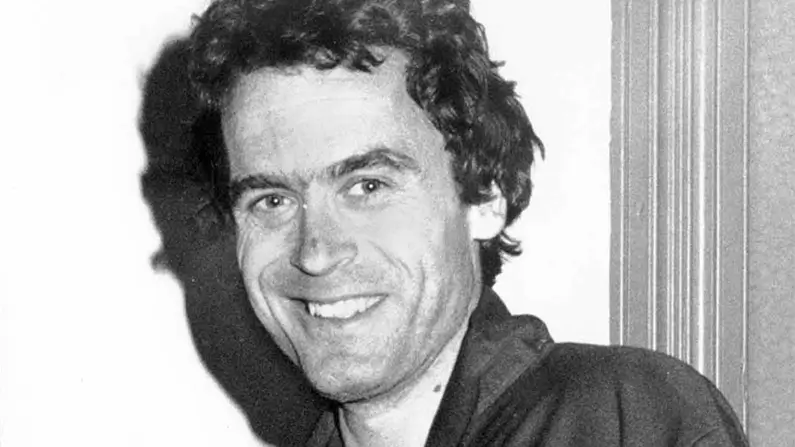
During his early teenage years, Ted Bundy began to display rebellious tendencies and a growing desire to rise above his working-class background. His behavior included stealing items he could not afford, which led to multiple encounters with law enforcement while he was still a teenager. Bundy developed a particular fascination with skiing, an interest that further fueled his legal troubles—he was found to possess a collection of stolen ski equipment.
These repeated run-ins with the law caused tension and concern within his family, especially in their deeply religious household, and further strained his already fragile relationship with his mother. This period marked another step in the gradual pattern of behavior that would later intensify and take far more serious forms. [source]

You may also like
9 Some believe Ted Bundy may have killed his first victim as a teenager…
Ted Bundy was long considered a suspect in the disappearance of Ann Marie Burr, who vanished on August 31, 1961, at just eight years old. At the time, Bundy was 14 years old and lived only a few blocks from the Burr family home in Tacoma. Speculation arose because the disappearance occurred so close to where Bundy lived, and neighbors reported seeing a suspicious individual in the area shortly before Ann Marie Burr went missing.
Despite these suspicions, authorities were never able to directly link Bundy to the case, and no concrete evidence has ever connected him to Ann Marie Burr’s disappearance. Bundy himself consistently denied any involvement.
Additional claims have surfaced over the years. One author alleged that Bundy later confessed in prison to being responsible for Ann Marie Burr’s disappearance. Bundy’s final attorney also claimed that Bundy admitted to having taken more than 100 lives, including victims who were not all adult women. These statements, however, are difficult to verify and are often viewed through the lens of Bundy’s manipulative and deceptive nature, as he was known to deliberately mislead investigators and the public. [source]
10 Ted Bundy may have blocked out memories of his physically abusive grandfather…
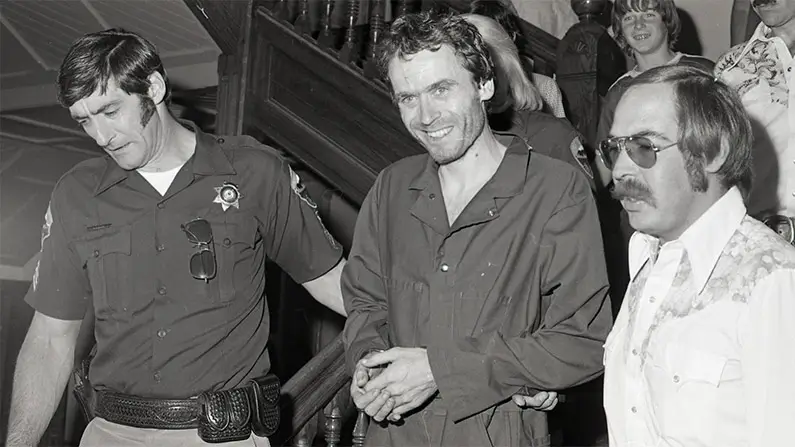
Psychiatrist Dorothy Otnow Lewis, who evaluated Ted Bundy shortly before his execution in 1989, theorized that Bundy’s dark tendencies were rooted in early childhood trauma—particularly his exposure to violence and aggression from his grandfather, Samuel Cowell. Lewis believed that Bundy may have witnessed physical abuse and harsh treatment directed at family members and animals. Samuel Cowell was reportedly known for a violent, intimidating demeanor and was widely feared and disliked within the community.
Bundy himself appeared to have repressed memories of his grandfather, instead recalling more positive feelings toward Johnny Bundy, the man he believed to be his father. Johnny Bundy According to Dr. Lewis, the true extent of Samuel Cowell’s behavior only became clear after she interviewed other family members and conducted a deeper investigation into Bundy’s upbringing and personal history. [source]

You may also like
5 Frequently Asked Questions About Ted Bundy
He was one of the most notorious serial killers in U.S. history, responsible for the murder of numerous young women during the 1970s. He became infamous for his charm, intelligence, and brutality, which allowed him to gain victims’ trust.
He officially confessed to 30 murders, but investigators believe the true number is significantly higher, possibly exceeding 100 victims. The exact figure remains unknown.
Psychiatric evaluations suggested traits of antisocial personality disorder, narcissism, and psychopathy. However, no single diagnosis fully explains his behavior, and experts still debate the root causes.
Yes. He once volunteered at a suicide prevention hotline, where he was described as intelligent and articulate—an unsettling contrast to his secret life of violence.
He was executed by electric chair in Florida in 1989 after being convicted of multiple murders. His execution marked the end of one of the most disturbing criminal cases in modern history.