
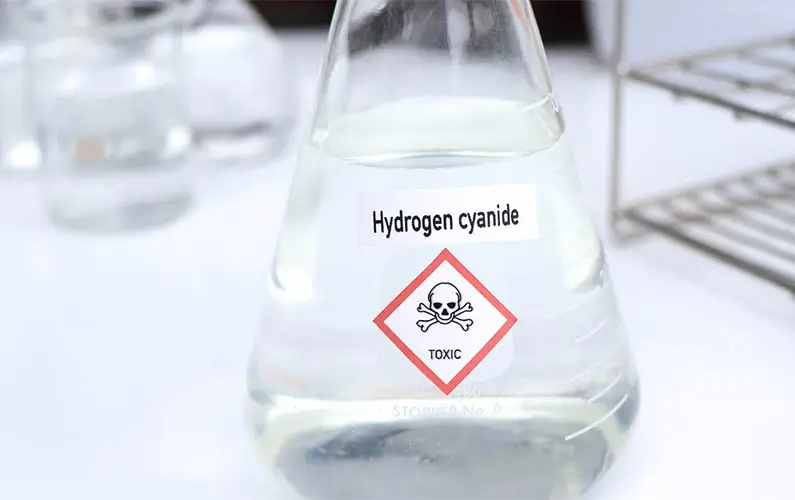
Cyanide is one of the most infamous poisons in the world. The substance has long been surrounded by both fear and mystery and has appeared in everything from historical murder cases and spy stories to industrial processes and scientific research. Despite its reputation, cyanide is not actually just a single substance, but a group of chemical compounds that contain the cyanide ion – and that can affect the human body in a very rapid and dramatic way.
But how dangerous is cyanide really? How does the poison work in the body, and where can it actually occur in everyday life? Here are ten facts that help explain one of history’s most feared chemical substances.
1 Cyanide occurs naturally in some foods…
Despite its frightening reputation, cyanide can also occur naturally in certain plants. The compound is present in substances known as cyanogenic glycosides, which are found in foods such as cassava, lima beans, bitter almonds and the kernels of some fruits.
When these plant tissues are damaged, chewed, or processed, small amounts of cyanide can be released as part of a natural chemical reaction. This is actually a defense mechanism that plants use to protect themselves from herbivores.
In normal dietary amounts, however, these foods are generally safe to eat. The cyanide-related compounds are usually present in very low concentrations, and many of them break down during cooking, soaking, fermentation, or other food preparation methods.
Problems typically arise only when these foods are prepared or processed incorrectly, allowing higher levels of the toxic compound to remain. Improperly processed cassava, for example, has historically been linked to cyanide poisoning in some parts of the world. [source]
2 Hydrogen cyanide is an important cyanide compound used in the production of plastics…
Hydrogen cyanide (HCN) is a colorless and extremely toxic gas that is sometimes described as having a faint bitter-almond smell—although many people are unable to detect the odor at all.
The substance plays an important role as a raw material in several industrial processes, including the production of plastics, synthetic fibers, adhesives, and other chemical products. [source]

3 Cyanide has also been used as a chemical weapon…
Cyanide compounds have at times been used as chemical warfare agents. During World War I, hydrogen cyanide was tested as a poison gas, but it proved less effective than gases such as chlorine and phosgene because it dispersed too quickly in the open air.
Cyanide later gained an even darker reputation through the Nazi regime’s use of hydrogen cyanide–based products during the Holocaust. [source]

You may also like
4 There are actually antidotes for cyanide poisoning…
In cases of cyanide poisoning, doctors can administer specific antidotes, including hydroxocobalamin and sodium thiosulfate. These substances help the body neutralize or break down the toxin, allowing it to be safely eliminated.
However, rapid medical treatment is absolutely critical, since the poison can affect the body’s cells extremely quickly. [source]
5 Cyanide is even found in ordinary cigarette smoke…
When tobacco burns, a range of toxic chemicals are produced, including hydrogen cyanide. The substance appears in small amounts in cigarette smoke and is part of the chemical mixture that smokers inhale.
Hydrogen cyanide can damage the lungs’ natural defense mechanisms and contributes to the well-known health risks associated with smoking. [source]
6 Cyanide has been used in executions…
During the 20th century, hydrogen cyanide was used in so-called gas chambers during certain executions in the United States. The gas was produced through a chemical reaction between cyanide salts and acid.
The method later became heavily criticized and has today largely been replaced by other execution methods. [source]

You may also like
7 The human body can produce tiny amounts of cyanide naturally – as strange as it may sound…
It may sound surprising, but the human body can actually produce extremely small amounts of cyanide as part of certain natural biological processes. For example, the compound can form when the body breaks down certain amino acids and other nitrogen-containing substances.
The levels involved are extremely low, and the body has efficient systems to quickly neutralize the toxin. One important mechanism involves the enzyme rhodanese, which converts cyanide into the much less toxic compound thiocyanate. This substance can then be safely excreted through urine. [source]
8 Gold is extracted using cyanide…
Despite its deadly reputation, cyanide is widely used in the mining industry. Through a process known as cyanide leaching, the chemical can dissolve gold from ore, making it possible to separate the precious metal from surrounding rock.
The method is highly effective and used in many gold mines around the world, but it has also been heavily criticized due to potential environmental risks. [source]

You may also like
9 Spies carried cyanide capsules during the Cold War…
During the 20th century—especially during World War II and the Cold War—some spies carried cyanide capsules that could be used to take their own lives if they were captured and risked revealing sensitive information.
These tiny capsules were sometimes hidden in ingenious ways, including inside dental fillings, eyeglass frames, or hollow false teeth.
An example of what a false tooth containing a cyanide capsule could look like can be seen on the picture below. [source]

10 A cyanide-based pesticide took on a dark role in history…
The product Zyklon B was originally developed as a pesticide used to control insects and other pests. It contained a compound that released hydrogen cyanide gas when exposed to air.
During Nazi Germany, the substance tragically became known for its use in concentration camps during the Holocaust. [source]

You may also like
5 Frequently Asked Questions About Cyanide
It refers to a group of chemical compounds that contain a carbon–nitrogen bond known as the cyanide ion. These substances can interfere with the body’s ability to use oxygen at the cellular level, which is why they are considered highly toxic.
It disrupts the process cells use to produce energy. When this process is blocked, vital organs such as the brain and heart can no longer function properly because the cells are unable to use oxygen efficiently.
Small amounts occur naturally in certain plants and foods, such as cassava, bitter almonds, and some fruit pits. It is also used in several industrial processes, including mining, chemical manufacturing, and metal processing.
Some people report a faint bitter-almond odor, but many individuals cannot detect it at all due to genetic differences in smell perception.
Yes. Medical professionals can administer specific antidotes that help neutralize the toxin in the body. However, treatment must be given quickly because the substance can affect the body’s cells very rapidly.