

Ready for another dose of bizarre trivia, unexpected history, and facts so wild you’ll want to repeat them to the next person you see? You’re in luck. This fourth installment brings even more strange, hilarious, and jaw-dropping discoveries from around the world — the kind of facts that make you say, “How is this even real?”
Whether you’re here to fuel your curiosity, impress your friends, or just kill a few minutes with something fun, Part 4 has you covered.
Let’s dive into 10 random and kickass facts of the day!
1 Probably not the most densely populated area…
There is a region in Venezuela where lightning strikes between 280 and 3,600 times per hour, for roughly 300 nights each year. This natural phenomenon is known as Relámpago del Catatumbo — or, translated into English, “Catatumbo lightning“. [source]
2 Sweden once regulated the use of oak…
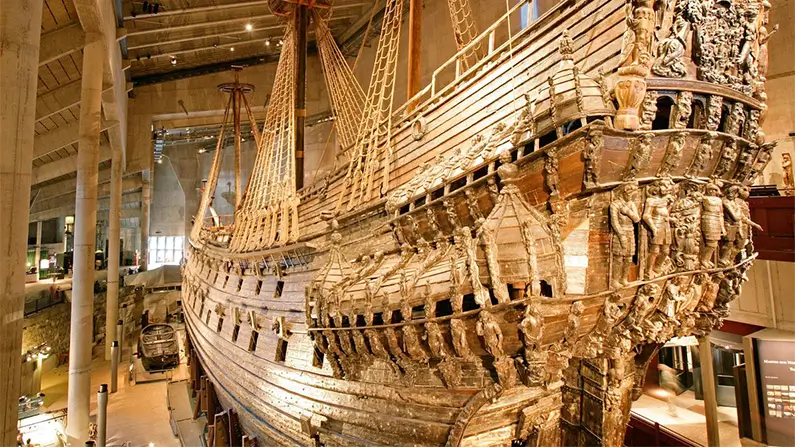
In the past, warships required around 2,000 oak trees—just like the warship Vasa, shown in the image below. But since an oak tree needed at least 150 years to fully mature, Sweden introduced a law in the 1200s to regulate oak usage and secure a steady supply for shipbuilding. [source]
3 The internet wasn’t quite as fast back in 2009…
In 2009, South Africa’s largest internet provider carried out a rather fascinating experiment. They attached a 4 GB USB flash drive to a homing pigeon to see which would be faster: the pigeon delivering the data 100 kilometers away, or the company transferring 4 GB over the internet to the same location.
When the pigeon arrived, the internet provider had managed to send only 4% of the data. [source]
4 The world’s deepest man-made hole…
A deep borehole drilled in Siberia became widely known as “the Well to Hell” after religious media claimed that the screams of the damned could be heard echoing from its depths. You can see an image of the hole below. [source]

5 It pays off to play James Bond – Just ask Daniel Craig…
For his work and years in the role of James Bond, actor Daniel Craig has earned a remarkable lifetime perk: he can choose any Aston Martin he wants — for the rest of his life — completely free of charge. [source]
6 A cross between spiders and goats? No problem…
Randy Lewis, a genetics professor at Utah State University, implanted spider genes into a goat embryo, creating a goat named Freckles. The goat produces spider silk proteins in its milk, which are used to make “bio-steel” — a material stronger than Kevlar. [source]
7 An old, untrue myth about the badger…
According to an old myth, a badger’s jaws would lock if it bit someone, staying clenched until it heard the victim’s bones crack. To protect themselves, people were told to put eggshells or crispbread in their boots so a crunching sound would satisfy the animal.
However, there is absolutely no truth to this myth. [source]


You may also like
8 The dead bodies remained for several days after the Stockholm Bloodbath…
The bodies of those executed during the Stockholm Bloodbath were left lying in the town square for several days. It wasn’t until Saturday that a large pyre was lit on Södermalm, where the corpses were dragged to be burned.
Although Sten Sture the Younger had already been dead and buried for six months, King Christian the Tyrant ordered his body exhumed so it could be burned on the pyre as well. [source]
9 It’s not just humans who helped coconuts spread…
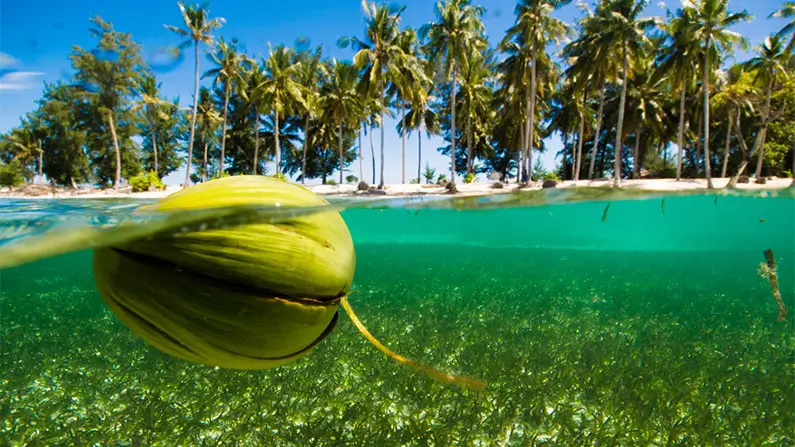
The reason coconuts are found all around the world—aside from human involvement—is that the nuts have a natural ability to “transport themselves“. They simply fall into the ocean and drift with the currents, allowing them to reach distant shores across the globe. [source]
10 Belarus suffered the most after the Chernobyl disaster…
Around 60% of all contamination released by the Chernobyl disaster in what is now Ukraine (then the Soviet Union) ended up in Belarus, meaning the country bore the worst impact of the nuclear accident.
Even today, chemical and nuclear pollution remains one of Belarus’s most serious environmental issues. [source]