

The Statue of Liberty is one of the world’s most iconic symbols of freedom and democracy. You’ve likely seen her in countless images and heard about her history, but there is far more to her than meets the eye. Behind this majestic monument lies a series of surprising facts that most people are unaware of. Whether it’s her design, hidden features, or her journey across the Atlantic, these ten facts are guaranteed to give you a whole new perspective on the guardian of liberty.
1 The creator of the Eiffel Tower helped build the Statue of Liberty…
Gustave Eiffel, best known for designing the Eiffel Tower, also played a crucial role in the creation of the Statue of Liberty. While the statue’s exterior was designed by French sculptor Frédéric Auguste Bartholdi, Eiffel was responsible for engineering the statue’s internal structure.
His advanced engineering skills ensured that the massive statue could stand securely and withstand harsh weather conditions. In other words, Gustave Eiffel had a hand in two of the world’s most famous landmarks — an achievement few can match. [source]
2 The Statue of Liberty attracts millions of tourists every year…
Every year, more than 4 million tourists from around the world visit the Statue of Liberty in New York City, located on Liberty Island in New York Harbor. On average, each visitor spends around $250 during their visit, making it one of the largest and most important tourist attractions in the United States. [source]
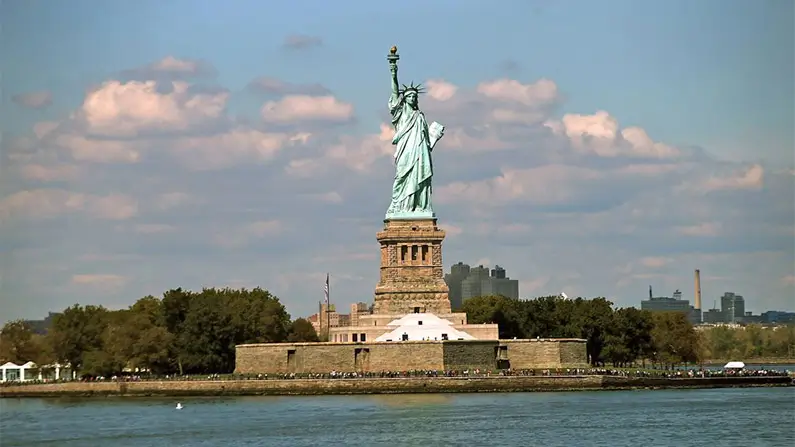
3 This is what the seven spikes on the Statue of Liberty’s crown mean…
The seven spikes on the Statue of Liberty’s crown symbolize the seven continents and the seven seas. They are meant to represent universal freedom and enlightenment spreading across the entire world. [source]

You may also like
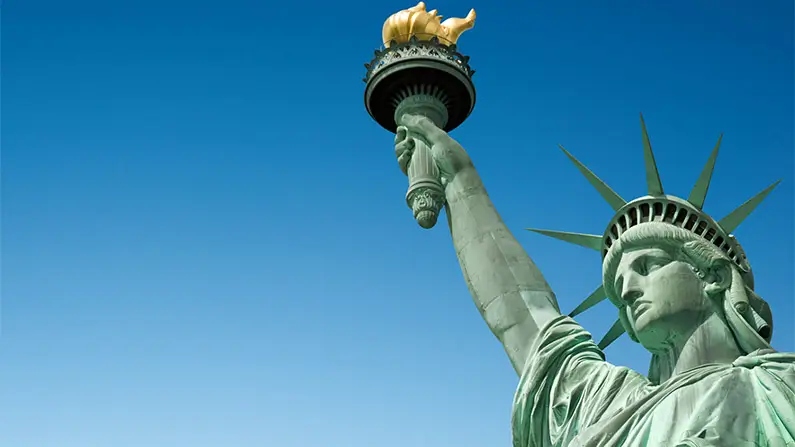
4 The torch was replaced with real gold in 1984…
The original torch of the Statue of Liberty was replaced in 1984 after suffering extensive damage from corrosion — a chemical reaction that causes materials, most often metal, to break down and weaken over time.
The new torch is covered in 24-karat gold, giving it the brilliant, glowing appearance we see today. The original torch is now on display inside the monument’s pedestal, where visitors can view this historic piece up close. [source]
5 Why there is a small house on Liberty Island…
There was once a family living in a small house on Liberty Island, where the Statue of Liberty stands today. The house served as the residence of the caretaker responsible for maintaining both the monument and the island. The family lived there until 1937, when they moved out and the house was later abandoned. Today, the house remains a small but fascinating part of the island’s history and an intriguing detail in the story of the Statue of Liberty. [source]
6 The Statue of Liberty is actually called something completely different…
One fascinating fact about the Statue of Liberty is that her official name is Liberty Enlightening the World. This title reflects the statue’s true purpose as a symbol of freedom and democracy, rather than simply being a physical representation of liberty itself. [source]

You may also like
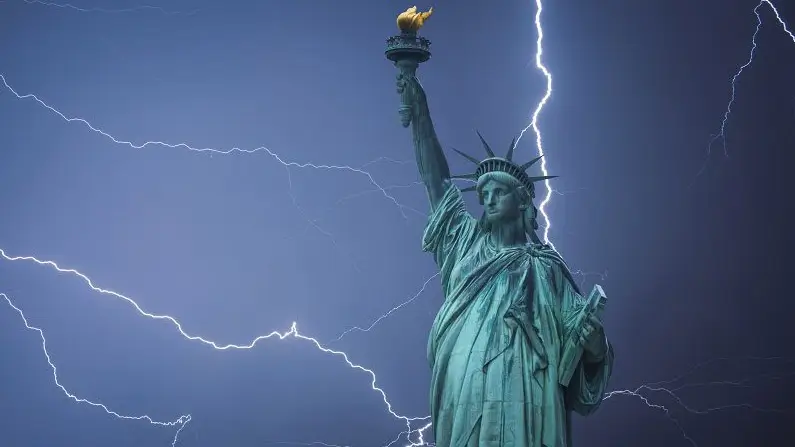
7 The monument is highly exposed to thunderstorms…
The Statue of Liberty is struck by lightning around 600 times every year. To protect it from damage, the statue is equipped with lightning rods that safely channel the electrical energy from lightning strikes down into the ground. This system significantly reduces the risk of structural damage to the monument. Standing at the top of the statue during a thunderstorm would be extremely dangerous, but thanks to these lightning rods, the monument itself remains well protected. [source]
8 Originally, the Statue of Liberty was meant to function as a lighthouse…
The design by Gustave Eiffel (who also designed the Eiffel Tower, as mentioned earlier) originally included a light source in the statue’s head. However, during construction it became clear that maintaining such a lighthouse would be difficult, and that it would not be practical in that location. As a result, the idea was abandoned, and the monument was completed solely as a statue, officially inaugurated as the Statue of Liberty in 1886. [source]

You may also like
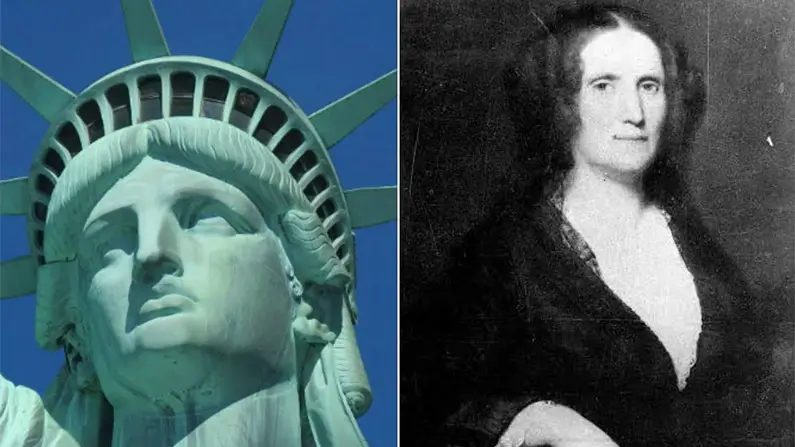
9 The sculptor’s mother modeled for the Statue of Liberty’s face…
The face of the Statue of Liberty is said to have been inspired by Frédéric Auguste Bartholdi’s mother, Charlotte Bartholdi. According to several accounts, Bartholdi used his own mother as the model when creating the statue’s facial features, giving this iconic monument a deeply personal and familial connection that many people are unaware of. [source]
10 Her color has changed over the years…
One fun and slightly quirky fact about the Statue of Liberty is that the statue is actually green. This is because she is made of copper, which has gone through a natural process called oxidation. When the copper was first installed, it had a shiny brown color, but over time it developed a distinctive green patina.
This gradual color change makes the Statue of Liberty look as if she is wearing a green robe, which has become an iconic and instantly recognizable part of her appearance and charm. [source]
Xtra Technically, the Statue of Liberty stands in both New York and New Jersey…
The Statue of Liberty stands on Liberty Island, which is administratively part of New York State. However, the surrounding waters, including parts of the harbor, belong to the state of New Jersey. Because of this, it’s fair to say that the Statue of Liberty technically “stands” in both New York and New Jersey, even though the statue itself and the island are officially part of New York. The boundary between the two states runs through the water around the island. [source]
5 Common Questions About the Statue of Liberty
The monument is located on Liberty Island in New York Harbor. While the island belongs to New York State, the surrounding waters are part of New Jersey, which often causes confusion.
The statue was a gift from France to the United States. It was meant to celebrate freedom, democracy, and the friendship between the two nations after the American Revolution.
The Statue of Liberty symbolizes freedom, democracy, and hope. The torch represents enlightenment, while the broken chains at her feet stand for liberation from oppression.
Yes, visitors can enter the statue. You can access the pedestal and the crown, but crown tickets are limited and must be booked in advance. The torch is not open to the public.
The statue is green because it is made of copper, which has oxidized over time. This process created a protective green patina, helping preserve the statue rather than damage it.