
Nicaragua is a country that often finds itself overshadowed by its more well-known neighbors, but anyone who takes the time to look closer will quickly discover a place full of contrasts, drama, and unexpected stories. Here, active volcanoes coexist with tranquil lakes, colonial city centers blend into dense rainforest, and a culture shaped by both proud traditions and turbulent periods thrives.
In this article, we highlight ten fascinating facts that reveal a side of Nicaragua many have never encountered before — and perhaps they’ll even change the way you see the country.
1 Deaf children created their own sign language in Nicaragua…
Nicaraguan Sign Language emerged spontaneously in the late 1970s and early 1980s, when deaf children in Managua — the capital of Nicaragua — were brought together for the first time in newly opened school programs. Without being taught any established sign language, the children began combining their individual home signs and gradually developed a shared system of communication.
Over time, this system evolved into a fully formed language with its own grammar and structure, created entirely by the children themselves. In other words, a completely unique sign language was born, which today stands as the official sign language of Nicaragua. [source]
2 Nicaragua lost its canal dream to Panama…
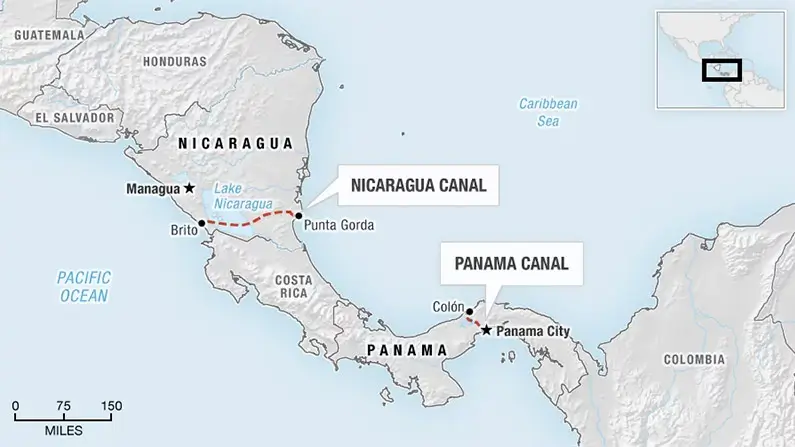
The United States spent years considering a canal through Nicaragua but ultimately chose Panama instead. Several factors played a role — including the shorter distance and concerns about volcanic and seismic activity in Nicaragua.
In 2013, the Nicaraguan government granted a Chinese company the rights to build a new canal connecting the Atlantic and the Pacific. Despite a ceremonious groundbreaking in 2014, the project never truly got off the ground, and the concession was officially revoked in 2024. [source]
3 A controversial transit country for drug trafficking…
For many years, Nicaragua has been identified as an important transit corridor for narcotics moving north through Central America. International authorities have repeatedly arrested smugglers in the country transporting cocaine toward the United States, though the exact networks and routes remain difficult to prove in full. The Nicaraguan government, for its part, emphasizes that it combats drug trafficking effectively and rejects accusations that the country serves as a hub for smuggling.
There are also reports of fishermen occasionally coming across packages of cocaine washed ashore or floating at sea, dumped by smugglers to avoid seizure. The phenomenon itself — smugglers discarding their cargo to evade capture — is well-known throughout the region. [source]

You may also like
4 The American William Walker declared himself president of Nicaragua…
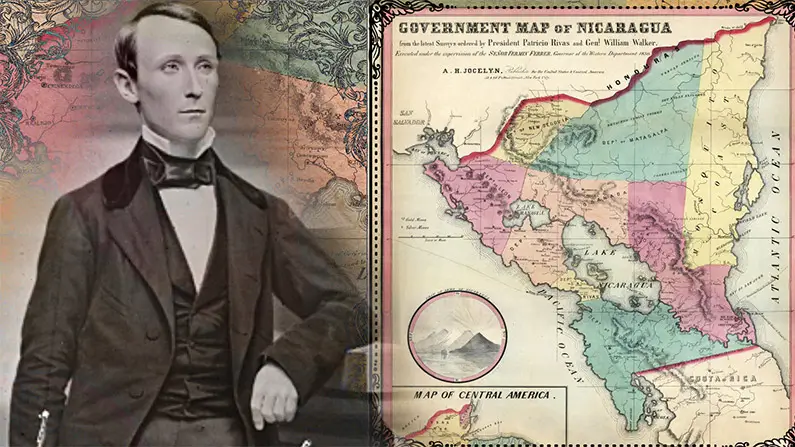
William Walker, an American adventurer and so-called filibuster, led a small group of mercenaries into Nicaragua in 1855. After exploiting the country’s internal power struggles, he managed to seize control and proclaimed himself president on July 12, 1856.
His rule, however, was short-lived: a coalition of Central American nations defeated him, and he was forced from power in May 1857. Today, Walker is remembered as a highly controversial figure — viewed by some as a revolutionary leader and by others as an opportunistic conqueror. [source]
5 A political battle steeped in conspiracy theories…
During the 1980s, the United States supported the anti-communist Contras in Nicaragua, and in 1985 Congress officially approved over $25 million in aid. At the same time, allegations have circulated for decades claiming that the CIA funded the Contras using money from drug trafficking, especially after investigative reporting and several widely discussed documentaries.
However, investigations by both the CIA and the U.S. Department of Justice found no evidence that the agencies knowingly used drug money to support the Contras — though individuals connected to the movement were proven to have ties to smuggling. [source]
6 Nicaragua accidentally invaded Costa Rica…
In 2010, a widely publicized border dispute erupted between Nicaragua and Costa Rica when Nicaraguan forces entered the contested area around Isla Portillos. The incident quickly went viral because Google Maps was displaying the border incorrectly at the time — something commander Edén Pastora pointed to when defending the operation. Google later acknowledged the discrepancy and corrected the error.
However, it was misleading to blame the entire situation on the mapping service. The area had long been part of a border conflict, and Nicaraguan troops remained far longer than what a purely “accidental” incursion would normally involve. This significantly deepened the diplomatic crisis between the two countries. [source]

You may also like
7 The bull shark phenomenon that has puzzled scientists for decades…
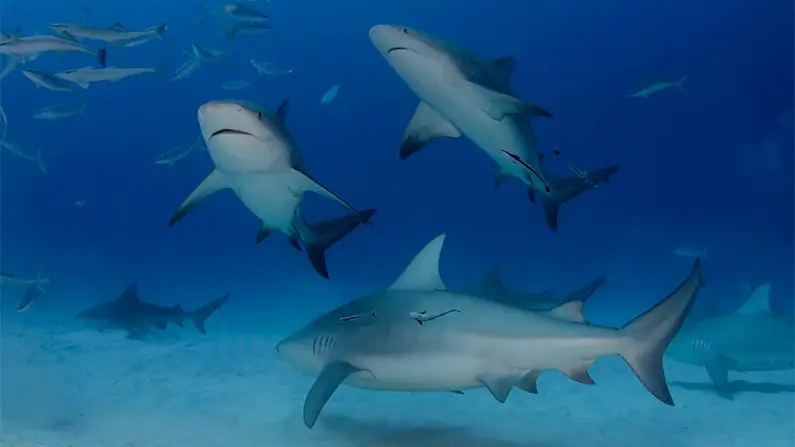
Bull sharks (Carcharhinus leucas) are found — quite surprisingly — in Lake Nicaragua, even though the lake is far from the coast and contains freshwater. The explanation lies in its connection to the Caribbean Sea via the Río San Juan, a river that bull sharks are capable of swimming up from the ocean.
For many years, scientists believed the sharks had become trapped in the lake due to ancient geological changes. Later research, however, revealed that they actively migrate between the sea and the lake whenever conditions allow. This makes Lake Nicaragua one of the few places in the world where bull sharks live naturally in freshwater. An image of bull sharks can be found below. [source]
8 Ben Linder was killed while trying to bring electricity to Nicaragua’s rural villages…
Ben Linder was a young American engineer working on small-scale hydroelectric projects in northern Nicaragua during the 1980s. His goal was to provide electricity to remote villages that lacked basic infrastructure. On April 28, 1987, he was killed by Contra guerrillas near San José de Bocay, becoming the first confirmed U.S. citizen to be killed by the Contras.
The incident drew major international attention and quickly became a symbol of the risks faced by civilian aid workers during the conflict. [source]
You may also like
9 Nicaragua experienced its most recent volcanic eruption in May 2024…
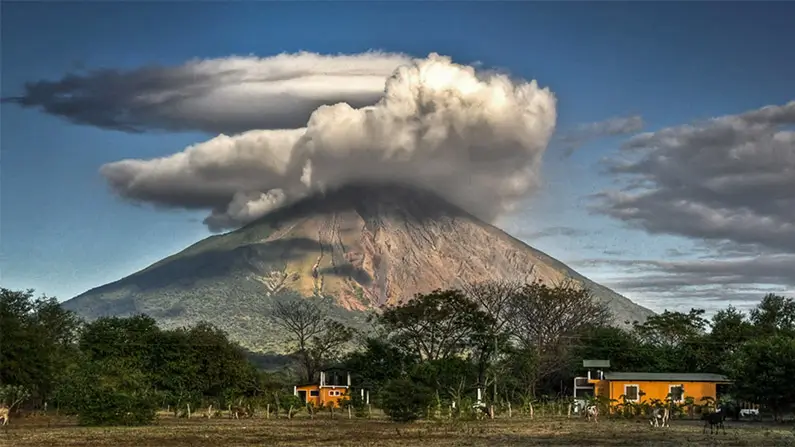
This small Central American nation is one of the most volcanically active countries in the world, and eruptions are part of everyday life in certain regions. The most recent confirmed eruption occurred on May 16, 2024, when the Concepción volcano on Ometepe Island sent a column of ash and gas into the air.
The event was closely monitored by the country’s geological authorities, but fortunately caused no major damage. [source]
10 León and Granada competed for more than 200 years to be the country’s capital…
The rivalry was so intense that the government eventually did what Australia and Bolivia did: they chose a neutral city in between the two. The result was Managua, which became the capital in 1858 — largely because it sat exactly between the two feuding cities. [source]

You may also like
Xtra There is a small “lake” at the Masaya volcano made of liquid sulfur — not water…
On several occasions, volcanologists have documented that one of Masaya’s craters can fill with molten, yellow-black sulfur, bubbling like a chemical cauldron. The phenomenon is caused by gas emissions and the extreme heat in the lower parts of the volcano, and it is so rare that very few places on Earth display anything similar. [source]
5 Common Questions About Nicaragua
Safety in Nicaragua varies by region. Most tourist areas like Granada, León, and Ometepe are generally considered safe, especially during the day. However, travelers should stay updated on current political developments, avoid large demonstrations, and follow local advice. Petty crime can occur, so standard travel precautions are recommended.
Nicaragua is famous for its volcanoes, lakes, colonial cities, and dramatic landscapes. Visitors often highlight places like Ometepe Island, the city of Granada, the Masaya volcano, and the Corn Islands. It’s also known for its rich cultural history and being one of the most budget-friendly countries in Central America.
Citizens from the US, Canada, the EU, and many other countries do not need a visa for short tourist stays. Instead, travelers purchase a tourist card upon arrival, typically valid for 90 days. Requirements can change, so it’s best to check the latest entry information before traveling.
The official language is Spanish, spoken by the vast majority of the population. On the Caribbean coast, several Indigenous and Creole languages are also used, including Miskito, Mayangna, and English Creole. English is not widely spoken outside tourist areas.
The most popular time to visit is during the dry season, from November to April, when the weather is sunny and ideal for travel. The rainy season (May–October) brings lush scenery and fewer tourists, but some rural roads can become difficult to access.