
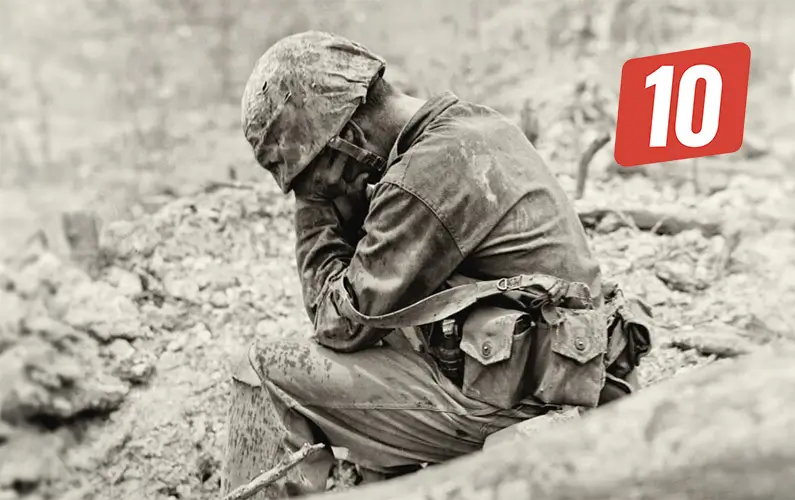
When it comes to World War II, there is no shortage of theories about how the war might have ended earlier than it did. But that is exactly what they are—theories. We will never truly know how or when the conflict would have concluded, regardless of how political and military leaders might have acted differently. One thing, however, seems fairly certain: the war would likely have ended sooner were it not for a series of major mistakes and acts of negligence by the Allied forces. Below, we have listed ten of the Allies’ biggest tactical errors during World War II.
1 The Battle of Hürtgen Forest…
The Battle of Hürtgen Forest was a long and brutal campaign during World War II, in which American forces fought for nearly six months, from September 1944 to February 1945. It became one of the most devastating battles for U.S. troops, with approximately 33,000 American soldiers killed or wounded. The true scale of the battle remained classified until the 1950s and is still poorly documented in detail.
The prolonged fighting delayed the American offensive in Europe by several months. Despite repeated attempts to break through Germany’s Westwall (Siegfried Line) defenses, U.S. forces were eventually forced to dig in and wait until spring 1945 before launching new offensives into Germany. Time and again, American units advanced into the dense forest without their usual advantages, such as effective armor support and air superiority—resulting in heavy casualties.
The 28th Infantry Division lost more than 6,000 soldiers in just one week, while the 112th Infantry Regiment suffered 2,316 casualties out of an authorized strength of 3,207 men. The 9th Infantry Regiment recorded a total of 4,500 casualties while advancing less than 3.2 kilometers (2 miles). In total, eleven divisions and one Ranger battalion took part in the fighting, which was marked by harsh weather, difficult terrain, poor planning, and a well-coordinated German defense. [source]
2 Operation Cottage…
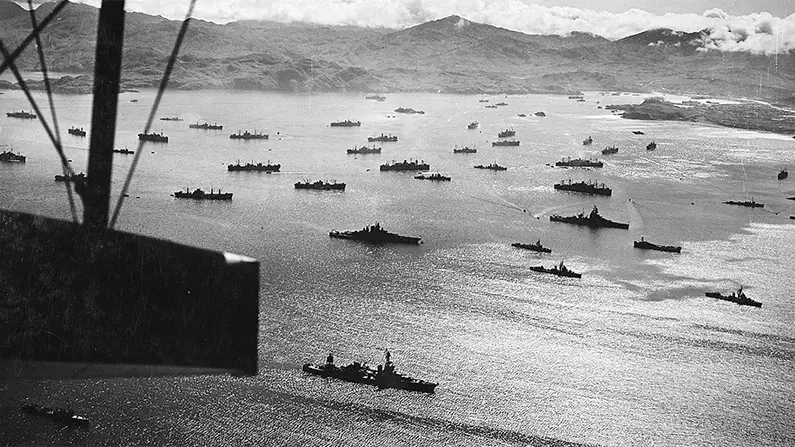
Although this was not a major tactical disaster and the overall death toll was relatively low, it was nevertheless deeply embarrassing. The opening phase of the two-day operation resulted in 32 killed and 50 wounded, along with several additional injuries caused by accidents as American and Canadian forces landed on Kiska Island in Alaska. The landing itself met no resistance at all. Unknown to the Allies, Japanese forces had secretly evacuated the island two weeks earlier, using heavy fog as cover. After the loss of Attu Island, their position on Kiska had become dangerous and indefensible.
Over the following two days, Allied troops made a series of fatal mistakes in thick fog, repeatedly running into one another and engaging in friendly-fire firefights. Twenty-eight Americans and four Canadians were confirmed killed after opening fire on fellow Allied soldiers, while another 50 were wounded. Booby traps left behind by the Japanese killed several troops, and a Japanese naval mine struck a ship, killing an additional 71 soldiers.
A further 191 soldiers disappeared without a trace during the operation, likely killed by friendly fire or remaining traps. Due to poor planning and near-zero visibility, the largest firefights of the operation occurred between Allied forces themselves—on what was, in effect, an almost completely uninhabited island. [source]
3 The Dieppe Raid…
The Dieppe Raid was a large-scale disaster. On August 19, 1942, around 6,000 troops—most of them Canadian— landed on the French coast near Dieppe. More than half were either killed or captured by German forces within hours.
The primary objective of the raid was to seize and hold a port long enough to disable it. This would allow the Allies to test weapons, tactics, and amphibious warfare methods in preparation for a future invasion of France. The operation was also meant to boost British morale and demonstrate to the Soviet Union that the Western Allies were serious about opening a second front.
Instead, the landing turned into a complete failure. Intelligence on German defenses was severely lacking, with many enemy positions overlooked. The beach terrain had also been misjudged, particularly in terms of its suitability for tanks. There was no preliminary aerial bombardment, and naval gunfire support was minimal. Too few tanks landed, they arrived late, and most quickly became bogged down or immobilized, forcing infantry units to assault machine-gun positions without armor support—resulting in heavy casualties.
Although the Royal Air Force initially managed to keep the Luftwaffe at bay, losses mounted as British fighter aircraft operated at the edge of their effective range. At the time, close air support tactics were also poorly developed. After just five hours, Allied forces were forced to withdraw.
The severe losses—especially among Canadian troops— were later described as a necessary evil. The hard-learned lessons in intelligence, planning, and beach assaults were said to have directly contributed to successful landings in North Africa and later on D-Day. [source]
4 The Arakan Campaign…
The Arakan Campaign (1942–43) contained all the elements of both strategic and tactical failure. It was planned by leaders who underestimated their enemy, carried out by a general too stubborn to recognize that the approach was failing, and fought by troops who lacked the necessary training for the task at hand. In short, it was a perfect recipe for disaster.
The Arakan Campaign marked the Allies’ first tentative offensive into Burma following the Japanese conquest of the country earlier in 1942. Neither the British Army nor the British Indian Army was prepared for offensive operations in the harsh terrain they encountered. Civil administration, government planning, industry, and transportation infrastructure in eastern India had been organized only to support defensive operations along the Burma border, not a sustained advance.
Japanese defenders, occupying well-prepared defensive positions, repeatedly repelled British and Indian attacks. When Japanese forces received reinforcements and launched counterattacks, Allied units were forced into repeated retreats. In total, around 900 Allied soldiers were killed, while approximately 4,000 were wounded or went missing during the campaign. [source]
5 Operation Market Garden…
Dwight D. Eisenhower once wrote to George Catlett Marshall, arguing that large-scale airborne operations often consumed too many resources while delivering limited results relative to their human cost. The city of Arnhem, in the Netherlands, would become a clear example of this concern—marking the largest Allied airborne disaster of World War II.
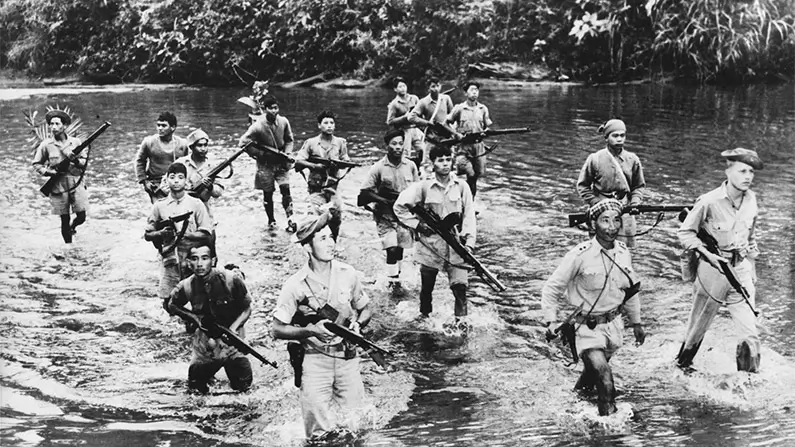
In September 1944, the British 1st Airborne Division and the U.S. 82nd and 101st Airborne Divisions were tasked with establishing a narrow corridor through the Netherlands. The goal was to restart the stalled Allied advance, open supply routes, and secure a strong position from which to seize the resource-rich Ruhr region, ultimately pushing into the heart of Germany. A successful operation was believed to potentially shorten the war and offer significant post-war advantages.
Despite these ambitions, Operation Market Garden proved to be a complete failure. The British deployed around 9,000 troops near Arnhem, but fewer than 2,500 returned. Although Arnhem itself was abandoned, the corridor was held against repeated German attacks, a notable achievement in itself. This corridor included key bridges over the Maas and Waal rivers and helped improve security around Antwerp.
The operation underestimated German resistance, overestimated Allied logistical capabilities, and pushed airborne forces beyond their limits. Nearly everything that could go wrong did go wrong. Total Allied casualties are estimated to have reached between 15,326 and 17,200 soldiers. [source]
6 The failed defense of Belgium and France…
The opening actions—or rather, failures to act—by most Allied nations amounted to a comedy of errors. There was widespread strategic incompetence among Allied generals across multiple operations, marked by rigid defensive thinking, an overreliance on static fortifications, and a lack of experience with mechanized infantry tactics.
A clear example of this was the counterattack at Arras. British Matilda tanks were, at the time, superior to German tanks, largely due to their exceptionally heavy armor. They were able to break through German lines because they were largely impervious to German anti-tank weapons. However, they advanced without adequate support and were eventually destroyed through the clever German reuse of anti-aircraft guns in a ground role.
Although the Allies achieved initial gains, they were soon pushed back by German forces and ultimately forced to withdraw to avoid encirclement. The episode became emblematic of the broader Allied failures during the defense of Belgium and France in the early stages of the war. [source]

You may also like
7 The Winter War…
After signing the Molotov–Ribbentrop Pact, the Soviet Union believed it had the right to divide Eastern Europe with Nazi Germany. Part of this ambition involved establishing military bases in Finland, similar to those already imposed on the Baltic states. The Soviets were also deeply concerned about a potential attack on Leningrad, which lay less than 32 kilometers (20 miles) from Finnish territory.
On October 5, 1939, the Soviet Union demanded large areas of land near Leningrad, including all major border fortifications. Finland was asked to destroy its defensive lines and surrender strategically valuable territory so the Soviets could establish military bases for a period of 30 years. In return, Moscow offered a land area twice as large, but far less valuable both strategically and economically. Finland countered by offering roughly half of the demanded territory, but firmly refused to allow any foreign military bases on Finnish soil. When negotiations collapsed, war broke out.
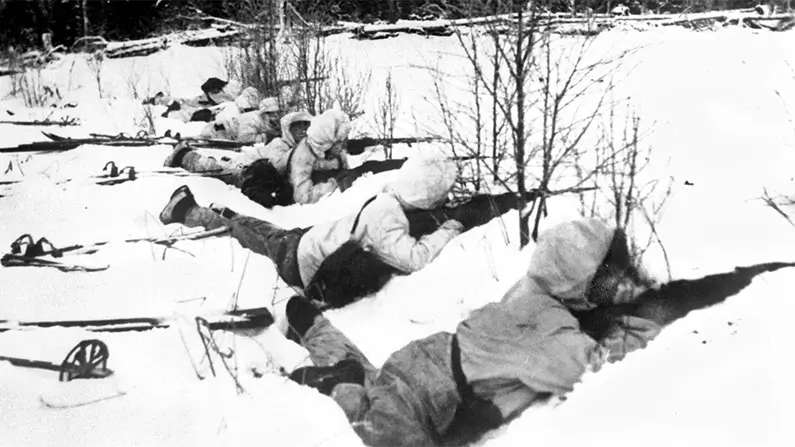
Finland managed to hold out through the entire winter until its main defensive line was finally breached in March 1940. By the end of the Winter War, Finnish losses amounted to nearly 26,000 killed, with around 50,000 wounded or captured, as well as the loss of 30 tanks and 60 aircraft.
Soviet losses were vastly higher: over 150,000 killed, with an additional 190,000 wounded or captured, alongside the destruction of approximately 3,500 tanks and 500 aircraft. These catastrophic losses were largely the result of poor leadership within the Red Army, confusion in the chain of command caused by political commissars, and severe misjudgments of Finland’s terrain and extreme winter conditions. [source]
8 The Battle of Crete…
Historian Antony Beevor argues that Commonwealth and Greek forces under Bernard Freyberg should have been able to defeat the German invaders on Crete. The Germans lacked the means to challenge the Royal Navy and carry out an amphibious landing. Instead, they launched a bold airborne assault, led by Kurt Student. This became the first—and last—large-scale German airborne operation of the war.
One of the Allies’ greatest challenges was Crete’s poor infrastructure and communications, which were not improved until the invasion was already imminent. This severely hindered the movement of supplies and reinforcements. Beevor identifies the single greatest failure as a misinterpretation of intelligence. Freyberg was convinced that the main invasion would come by sea, with airborne forces playing only a supporting role.
Despite having exclusive access to ULTRA intercepts clearly indicating a major airborne assault, Freyberg interpreted the intelligence in a way that confirmed his existing beliefs. As a result, he withheld large reserve forces to guard against coastal landings—an unlikely scenario due to the island’s geography.
When the airborne attack began, its primary objective was Maleme Airfield, the island’s most critical airfield. German paratroopers were extremely vulnerable during the drops, owing to poor German intelligence, strong Allied resistance, and a hostile civilian population that often killed isolated German soldiers on the spot.
Despite the Germans’ initially fragile hold on the airfield, Freyberg’s continued misreading of German intentions—combined with poor communications—prevented him from launching an effective counterattack until it was too late. By then, enough German troops had landed to secure victory. Many of the Allies’ best units were left deeply demoralized when it became clear that, despite local successes elsewhere on the island, evacuation was inevitable.
The defeat provided Germany with a crucial base in the Mediterranean and a strategically vital airfield. It also resulted in the capture of approximately 17,000 Allied soldiers who were unable to evacuate. [source]
You may also like
9 The Great Purge in the Soviet Union…
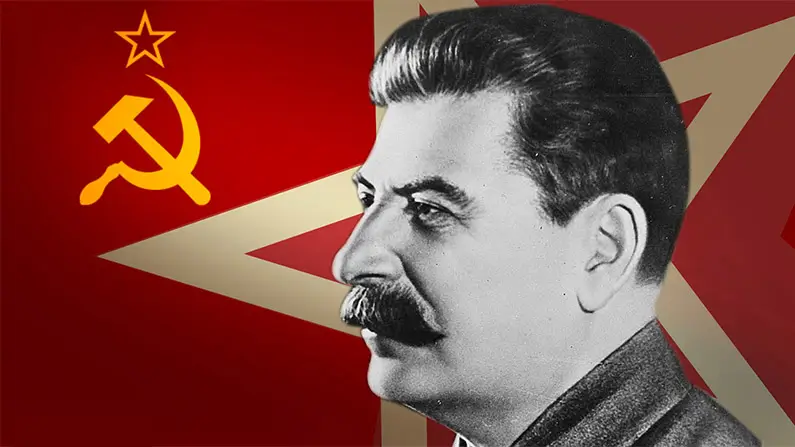
Joseph Stalin feared his own people more than a foreign military invasion. During the civil wars, the Soviet officer corps had built a strong reputation, partly due to its ties with foreign socialist movements and its preference for scientific objectivity over political loyalty. This, in Stalin’s eyes, made them dangerous—leading to a brutal purge of military officers at home.
One of the most prominent victims was Mikhail Tukhachevsky, a military theorist who had helped develop early concepts of blitzkrieg-style warfare in cooperation with officers from the Wehrmacht. Tukhachevsky, along with many other highly capable officers, was executed during the Great Purge. This massacre had devastating consequences, stifling innovation and creating a rigid command structure incapable of adapting to the complexities of modern warfare.
Another notable officer, Konstantin Rokossovsky—who would later play a crucial role in the conquest of Prussia in 1945—was imprisoned and tortured in the gulag, largely for ethnic or political reasons.
In his works on Stalingrad and the fall of Berlin, historian Antony Beevor provides insight into many aspects of the war and identifies a key reason behind the Red Army’s later successes after 1942. Having lost so many skilled generals, Soviet forces were eventually forced—by the desperate circumstances of war—to restore trust in their commanders, who were at times even permitted to disagree with Stalin on tactical matters. [source]
10 The neglect of military intelligence…
Driven by ideological distrust and a deep fear of being drawn into a major war, Joseph Stalin chose to ignore accurate intelligence reports from Britain’s Secret Intelligence Service and from Winston Churchill. Ironically, the British intelligence proved to be correct, but the reports were dismissed as self-serving warnings from an island nation desperate for an ally against Nazi Germany. Stalin also disregarded intelligence from his own foreign agents, defectors from the Wehrmacht, and frontline observations.
Stalin’s preconceived assumptions about Adolf Hitler’s behavior led to a series of critical misjudgments. A pragmatic leader with an irrational resistance to opposing views, Stalin could not imagine that Hitler would commit fully to an invasion of a country twice the size of Germany. As a result, he was unwilling to let external sources challenge his beliefs.
The consequences were catastrophic. During the first week of Operation Barbarossa—often compared to a thousand Pearl Harbors—the sophisticated Red Army air force was devastated on the ground. Thousands of Soviet aircraft were destroyed, granting the Wehrmacht a decisive technological advantage that it retained until 1943.
History has repeatedly shown that the combination of air power and a strong ground army forms an extremely powerful offensive force. Throughout the war, German forces were able to exploit Soviet mistakes, often aided by systemic incompetence at the highest levels of command. [source]
5 Common Questions About World War II
The conflict was triggered by political instability after the First World War, economic collapse, unresolved grievances, and the rise of aggressive totalitarian regimes in Europe and Asia.
An estimated 70–85 million people were killed, including civilians and soldiers, making it the deadliest conflict in human history.
The primary forces opposing the Axis included the United States, the Soviet Union, the United Kingdom, and China, supported by many other nations.
The war in Europe ended after Germany’s unconditional surrender, following the fall of Berlin and the collapse of its military and political leadership.
It is studied because it reshaped global politics, led to the creation of modern international institutions, and offers critical lessons about warfare, ideology, and human rights.