

We often think we have a good grasp of how the world works — but what happens when some of our most basic beliefs turn out to be wrong? In this article, we explore ten widely accepted “truths” that many of us take for granted, only to discover that they don’t quite hold up under closer scrutiny.
From myths we’ve heard since childhood to facts that are commonly accepted but surprisingly misleading, it’s time to challenge what we think we know. Stick around and see how many of these familiar ideas you’ve believed yourself.
1 “Bagpipes originate from Scotland”…

We all tend to associate bagpipes with Scotland. But do they really originate there? The instrument actually has a much longer and more complex history, with roots tracing back to several ancient cultures, including Ancient Egypt and the Roman Empire.
Early versions of the instrument were made using materials like animal bones and animal skins, and they differed significantly from the modern Scottish bagpipes we recognize today. How the bagpipes eventually made their way to Scotland remains unclear.
What is clear, however, is that the Scots played a crucial role in refining and popularizing the instrument, shaping it into the iconic form we know today — even if it didn’t actually originate there. [source]
2 “Food isn’t edible after its ‘best before’ date”…
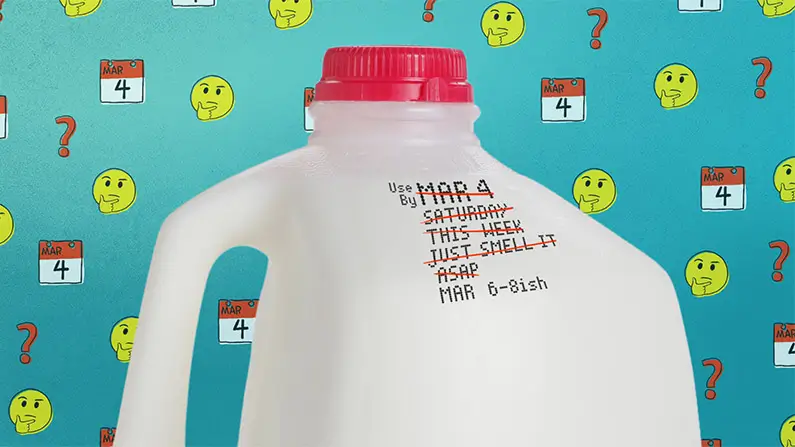
Reducing food waste is important for both the economy and the environment, as food waste accounts for over 10% of global greenhouse gas emissions. While certain foods — such as fresh fish and raw meat — require a strict use-by date for safety reasons, many others do not.
Foods like fruit, vegetables, and bread often remain perfectly safe to eat even after their best before date. These dates are typically conservative estimates, not expiration deadlines. The best way to decide whether food is still okay to eat is to use your senses — look at it, smell it, and taste it — and trust your judgment. [source]
3 “Toilet seats are crawling with bacteria”…

Research from University of Arizona shows that toilet seats are actually fairly clean, largely because they’re regularly cleaned and disinfected. As a result, they often harbor far fewer bacteria than people assume.
Surprisingly, surfaces we use constantly but rarely clean — such as mobile phones — tend to be much more bacteria-laden. In fact, phones can carry up to ten times more bacteria than toilet seats, making them a potential health risk if not cleaned regularly. [source]
4 “Coffee comes from coffee beans”…

Despite the name, coffee beans aren’t actually beans in the traditional sense. They are seeds found inside a fruit known as the coffee cherry.
Coffee cherries are small, red fruits that grow on coffee plants. When the fruit is harvested, the outer flesh is removed, leaving behind the seeds — which we mistakenly call “coffee beans“. So while we’ve all gotten used to the term, what we’re really drinking comes from fruit seeds, not beans.
Now you’ve got a fun fact ready for the next time someone compliments the “beans” in the office coffee machine. [source]
5 “Sharks can smell a drop of blood from a mile away”…

It’s a claim most of us have heard countless times — and it certainly sounds believable. Sharks do have an exceptionally sensitive sense of smell and can detect extremely small concentrations of blood in the water. Some estimates suggest they can sense blood diluted to one part in ten billion, roughly equivalent to a tiny amount in a large swimming pool.
However, while their sense of smell is highly refined, that doesn’t mean sharks can reliably track blood over long distances like an entire mile. In reality, their olfactory abilities tend to be effective over shorter ranges, often a few hundred meters, depending on water conditions such as currents and temperature.
That said, caution is still wise. If you have open cuts or wounds and are swimming in areas where sharks are known to live, it’s best to be careful — even if the myth itself is exaggerated. [source]

You may also like
6 “Everyone knows St. Patrick was Irish”…

Strongly associated with Ireland and the celebration of St. Patrick’s Day, St. Patrick was not actually born in Ireland. He was born in what is now the United Kingdom and was kidnapped by Irish pirates at a young age.
After spending years in Ireland working as a shepherd, he later became a Christian missionary and played a key role in spreading Christianity across the island. Originally, St. Patrick’s Day was a religious observance held in his honor. It wasn’t until the 19th century that the day evolved into the lively cultural celebration we know today — complete with parades, music, and plenty of festivities, both in Ireland and among Irish communities around the world. [source]
7 “Mount Everest is the tallest mountain on Earth”…

We’ve all heard it: Mount Everest is the tallest mountain in the world. But is it really? That depends on how you measure height.
In recent years, scientists have identified nearly 20,000 previously unknown underwater mountains. When measured from base to summit — including what lies beneath the ocean — Mauna Kea, a dormant volcano in Hawaii, actually takes the top spot.
From the ocean floor to its peak, Mauna Kea measures around 10,210 meters, making it almost 1,400 meters taller than Mount Everest, which rises 8,848 meters above sea level. So while Everest is the tallest mountain above sea level, Mauna Kea is the tallest overall when its underwater base is included. [source]

You may also like
8 “You can fix a water-damaged phone by putting it in a bag of rice”…
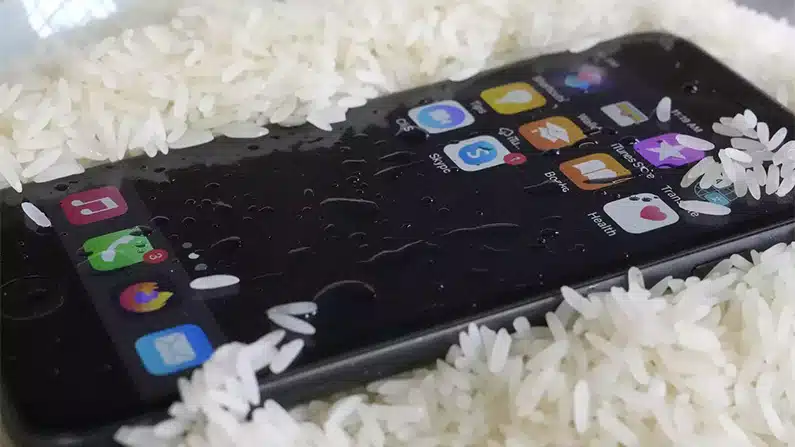
Using rice as a home remedy to dry out a water-damaged phone is something almost everyone has heard of. But in reality, it’s not very effective — and it can sometimes make things worse.
Rice can release dust and starch particles that may get into the phone’s ports and openings, potentially causing additional blockages or damage. A far better option is to use silica gel packets, which are much more effective at absorbing moisture.
For best results, place the phone in a sealed container together with silica gel packets and leave it there for at least 48 hours before trying to turn it on again. [source]
9 “A rainbow consists of seven colors”…

It’s easy to believe — after all, that’s what most of us were taught. But a rainbow actually contains a continuous spectrum of colors, not just the seven commonly listed (red, orange, yellow, green, blue, indigo, and violet).
Those seven are simply a convenient way to divide the visible spectrum, but many additional shades exist in between — including subtle tones like coral, pink, and aqua that the human eye can’t easily distinguish as separate colors.
Rainbows are also complete circles, not just arcs. We usually see only a curved band because the horizon blocks the lower half when viewed from the ground. From higher vantage points, such as an airplane, it’s sometimes possible to see a full circular rainbow. [source]
10 “Quicksand will suck you underground”…

We’ve all seen it in movies: quicksand is portrayed as a deadly trap that pulls people straight down to their doom. In reality, though, that image is highly exaggerated.
Quicksand is simply a mixture of sand and water where the water becomes so saturated that friction between the sand grains is reduced. This means the surface can’t support weight in the same way as solid ground — but it doesn’t act like a bottomless pit.
Laboratory experiments have shown that while a person can sink partially, it’s nearly impossible to be completely swallowed by quicksand. So unfortunately, you can’t push your worst enemy into it and expect the problem to magically “disappear”. [source]
Xtra “Cut an earthworm in half and you’ll get two worms”…

Despite what many of us were taught, cutting an earthworm in half does not create two new worms. Earthworms have a clearly defined head end, located near the clitellum — the swollen band around the body.
If an earthworm is cut behind the clitellum, the head end may survive and regenerate its tail, but the tail end cannot grow a new head and will eventually die. So no, this isn’t a shortcut to doubling your worm population.
That said, some other worms — such as planarian flatworms — are far more impressive when it comes to regeneration. They can rebuild an entire body from just small fragments, even a fraction of their original size. Earthworms, however? Nope. And now you can safely skip that childhood “experiment”. [source]