
Christmas, the most wonderful time of the year, is filled with traditions and mystique that stretch back through the centuries. While many of us have our own ways of celebrating this special holiday, there are countless fascinating aspects of Christmas that are rarely discussed. From unusual customs to historical curiosities, we dive into 10 facts that will shed new light on how we view this season of joy and togetherness.
1 Where the word “Christmas” comes from…
The word “Christmas” traces its roots back to the Old Norse term “jól” or “jūl“, which originally referred to a pagan winter solstice or midwinter festival. Over time, the term was gradually integrated into Christian tradition and came to denote the Christian holiday celebrating the birth of Jesus Christ. [source]
2 Where Christmas originally comes from…
Christmas celebrations as we know them today — a blend of Christian and pagan traditions — have roots in several different cultures and have evolved over centuries through influences from various countries and regions.
In the Roman Empire, there were already solar festivals such as Saturnalia and Sol Invictus, which strongly influenced celebrations of the winter solstice. These festivities involved feasting, merrymaking, and gift-giving, elements that later became closely associated with Christmas.
Christianity later integrated these older pagan celebrations by selecting December 25 as the day to commemorate the birth of Jesus Christ. This date coincided with Roman solar festivals and helped form the foundation of the Christian Christmas tradition.
In Northern Europe and Germany, strong traditions surrounding midwinter and the winter solstice also existed, with a focus on light, celebration, and community. These customs included the use of candles, evergreen trees, and gift-giving, which were eventually absorbed into modern Christmas celebrations. [source]
3 Why some people celebrate Christmas on January 7…
Christmas is celebrated around the world on different dates, depending on the Christian tradition followed by various countries and churches. The most common and widely observed date is December 25, traditionally recognized as the birth of Jesus Christ in Western Christianity, including the Roman Catholic Church, Protestant churches, and many Orthodox communities.
In some Eastern Orthodox churches and other Eastern Christian traditions, Christmas is observed according to the Julian calendar. As a result, Christmas falls on January 7 in the Gregorian calendar, which is used in most parts of the world today. This includes, for example, the Russian Orthodox Church and several other Orthodox churches. [source]
4 Why Ukrainians decorate Christmas trees with spider webs…
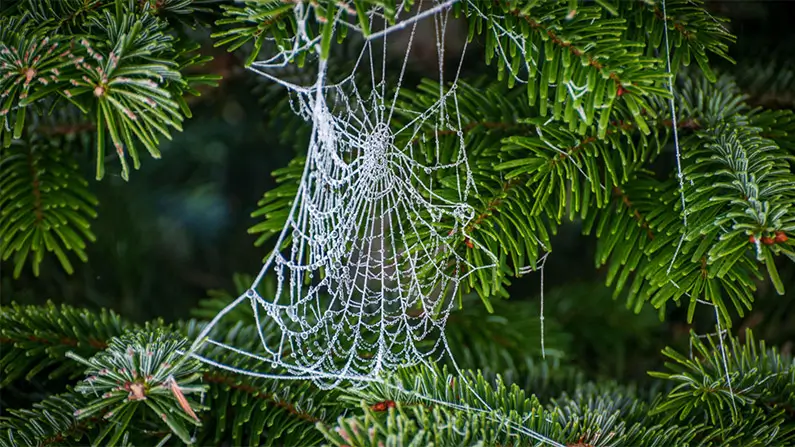
In Ukraine, one unique Christmas tradition involves decorating the Christmas tree with spider web ornaments. This custom comes from a popular Eastern European folktale known as the Legend of the Christmas Spider, where spiders spin beautiful webs on a bare tree overnight, and when the sunlight hits them on Christmas morning, they sparkle like silver and gold — bringing good luck and fortune to the family. To this day, artificial spider webs and spider-shaped decorations (called “pavuchky”) are used to honor this story and symbolize good luck for the coming year. [source]
5 What the colors of Christmas represent…
The traditional colors of Christmas are green, red, and gold. Green has long symbolized life and renewal, which is fitting given that Christmas celebrates the birth of Jesus Christ and the promise of eternal life in Christian belief.
Red is associated with Christ’s blood, serving as a reminder of both his sacrifice and birth. It also represents warmth and love, themes that lie at the heart of Christmas celebrations.
Gold symbolizes light, wealth, and royalty, and is used to emphasize Jesus’ royal nature, as well as to represent gifts and generosity shared during the holiday season. Together, these colors carry deep symbolic meanings that have become firmly rooted in Christmas traditions and continue to play an important role in celebrations around the world. [source]
6 Most breakups happen around Christmas…
According to data analyzed from Facebook posts, one of the two most common times for couples to break up is two weeks before Christmas. Interestingly, Christmas Day itself is the time when couples are least likely to end their relationships. Could it simply be that no one wants to give their partner a Christmas gift they’ll never receive back? [source]

You may also like
7 Why Rudolph probably has a red nose…
Even if you can’t name all of Santa’s reindeer, you almost certainly know Rudolph — the one with the glowing red nose. Norwegian researchers have suggested that Rudolph’s red nose may actually be the result of a parasitic infection in his respiratory system. Because, of course, we all need a logical explanation for why his nose is red.
That reindeer can fly, on the other hand — that’s a completely different story! [source]
8 Why people in Norway hide their brooms at Christmas…
In Norway, there’s an old Christmas belief that evil spirits and witches roam freely on Christmas Eve. According to folklore, witches would steal brooms to fly on during the night — so people began hiding their brooms to prevent them from being taken.
While hardly anyone believes this today, the tradition has survived in stories and symbolism, making the broom an unexpected part of Norwegian Christmas folklore. [source]
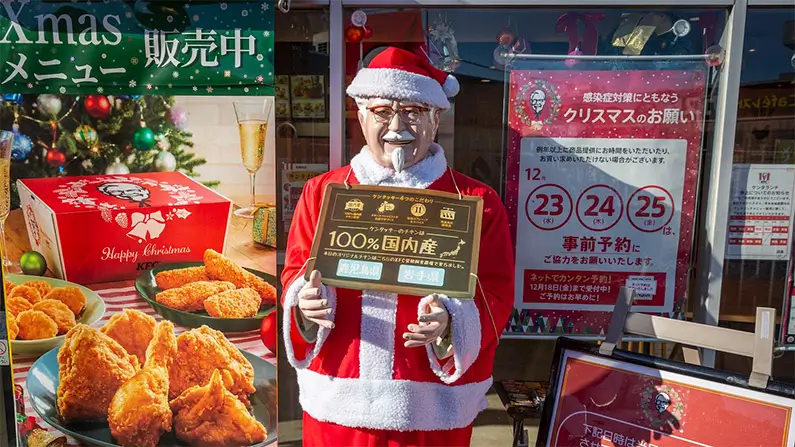
9 Why KFC is so popular in Japan at Christmas…
A fun Christmas fact is that in Japan, it’s a tradition to eat fried chicken from KFC on Christmas Eve. This unusual custom stems from a highly successful marketing campaign launched by KFC in the 1970s, which managed to establish fried chicken as a popular Christmas meal in Japan.
Today, the tradition is so widespread that many people pre-order their KFC meals weeks in advance to avoid the long queues during the Christmas holiday. [source]
10 Why people dress up as demons in the Alps before Christmas…
One of the most unusual Christmas traditions in parts of Austria and Alpine Europe involves the figure known as Krampus — a horned, half-goat, half-demon character from local folklore. In this tradition, Krampusnacht (“Krampus Night”) takes place on December 5, the eve of Saint Nicholas Day, when men dressed as Krampus roam the streets in elaborate costumes with fur, wooden masks, chains, and bells. These figures are meant to scare or tease onlookers as part of the festive — and somewhat spooky — holiday season. Today, Krampus parades and runs are popular cultural events that blend ancient folklore with fun theatrical spectacle. [source]
5 Common Questions About Christmas
The holiday has roots in both Christian beliefs and ancient pagan winter festivals. Over time, traditions from different cultures merged into one widely celebrated occasion.
The date was chosen to align with existing winter solstice festivals in the Roman world and later became associated with the birth of Jesus Christ.
Gift-giving symbolizes generosity, goodwill, and the biblical story of the Three Wise Men, as well as older traditions of sharing during winter.
The combination of financial pressure, social expectations, family gatherings, and travel often leads to higher stress levels during this period.
Cultural differences, history, and religion have shaped unique customs, foods, and rituals across the world.