
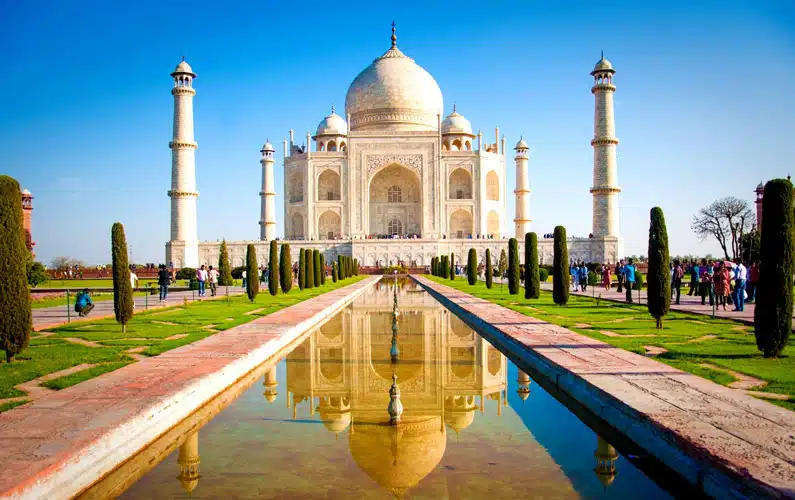
The Taj Mahal rises in white marble along the banks of the Yamuna River in Agra and has fascinated the world for nearly 400 years. Behind the iconic mausoleum stands the Mughal emperor Shah Jahan, who commissioned the monument as a final declaration of love for his wife, Mumtaz Mahal. Construction began in 1632 and involved thousands of craftsmen, architects, and artists in a project unlike anything of its time.
Today, the Taj Mahal is regarded as the crowning achievement of Mughal architecture, blending Persian, Islamic, and Indian influences into a single, harmonious vision. In 1983 it was inscribed on UNESCO’s World Heritage List as “a universally admired masterpiece”, and in 2007 it was named one of the New Seven Wonders of the World.
Yet despite its global fame, the Taj Mahal still holds many lesser-known stories. Behind its perfect symmetry and romantic legend lie details and decisions few visitors ever hear about. Here are ten surprising facts about the Taj Mahal you probably didn’t know.
1 Scammers sold the Taj Mahal – sentenced to over 100 years in prison…
The notorious Indian con artist Natwarlal was active during the 1950s and 1960s and became infamous for convincing people that he had the legal right to sell government-owned landmarks. Using forged documents and fake titles, he claimed to sell, among other things, the Taj Mahal itself—despite the fact that the monument was, of course, never for sale.
Natwarlal was convicted in numerous cases and sentenced to more than 100 years in prison in total (often cited as 113 years). Despite this, he managed to escape custody several times, sometimes disguised as a police officer or a lawyer. Today, his story is regarded as one of India’s most unbelievable yet true tales of fraud. [source]
2 The Taj Mahal was camouflaged during World War II…
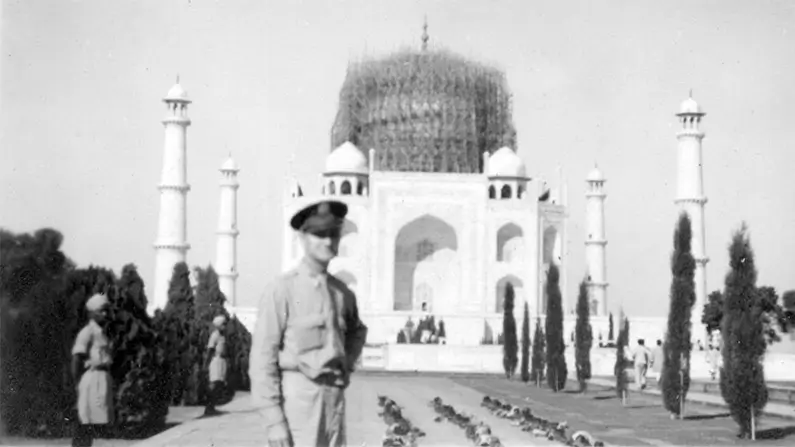
During World War II, around 1942, British colonial authorities took precautionary measures to protect the Taj Mahal from potential air raids. The monument’s main dome was covered with extensive scaffolding, designed to make the structure resemble a simple bamboo warehouse and thus less recognizable from the air.
Similar camouflage was used again in 1971, during the war between India and Pakistan, when the Taj Mahal was once more concealed to reduce the risk of becoming an aerial target. Although these measures were preventive, they illustrate how even the world’s most famous monuments have been shaped by modern warfare. The image below shows how the monument was camouflaged during World War II. [source]
3 The World Heritage site is surrounded by extreme security…
On November 12, 2016, an American tourist was arrested near the Taj Mahal after flying a drone over the heavily guarded area, where drone flights are strictly prohibited. Although police found nothing suspicious in his actions, the incident highlighted just how closely the World Heritage site is monitored. [source]

You may also like
4 There is, in fact, a reason behind the four minarets…
The four nearly 40-meter-tall minarets surrounding the Taj Mahal are not perfectly vertical. Instead, they lean slightly outward, away from the main mausoleum. This is widely believed to be a deliberate architectural choice, designed to reduce the risk of damage to the central structure in the event of earthquakes or structural collapse.
Although no surviving documents explicitly explain the intent, historians and architects agree that the tilt is not a mistake. On the contrary, it is often regarded as an early example of thoughtful safety engineering within Mughal architecture. [source]
5 The Taj Mahal actually changes color depending on the time of day…
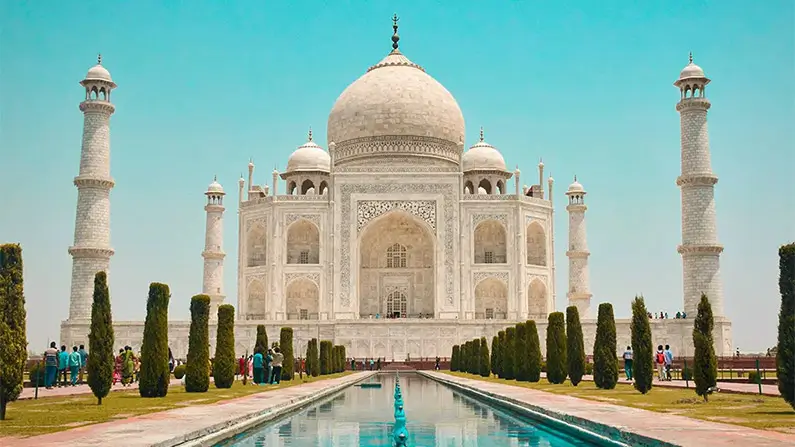
The marble can appear soft pink at dawn, brilliant white at midday, golden at sunset, and can even take on an almost silvery-blue hue in moonlight. This effect is caused by the structure of the marble and the way light is reflected, and is often interpreted symbolically as the monument mirroring the different stages of love. [source]
6 The monument is deliberately not perfectly symmetrical – even though it appears to be…
The entire complex is constructed with extraordinary precision and near-perfect symmetry, with one notable exception: the tomb of Emperor Shah Jahan himself. When he died, his sarcophagus was placed beside that of his wife, Mumtaz Mahal, subtly disrupting the otherwise millimeter-perfect balance of the structure.
The result?
The Taj Mahal is almost completely symmetrical—but not entirely, due to the emperor’s own final resting place. A small, human “imperfection” in an otherwise mathematically flawless monument. [source]

You may also like
7 The Taj Mahal is full of “optical illusions”…
As you walk through the main gateway and approach the mausoleum, the Taj Mahal appears to grow larger the closer you get—yet when you walk away, it seems to shrink in size. This effect is entirely intentional, created through carefully calculated proportions between the gateway, the courtyard, and the monument itself.
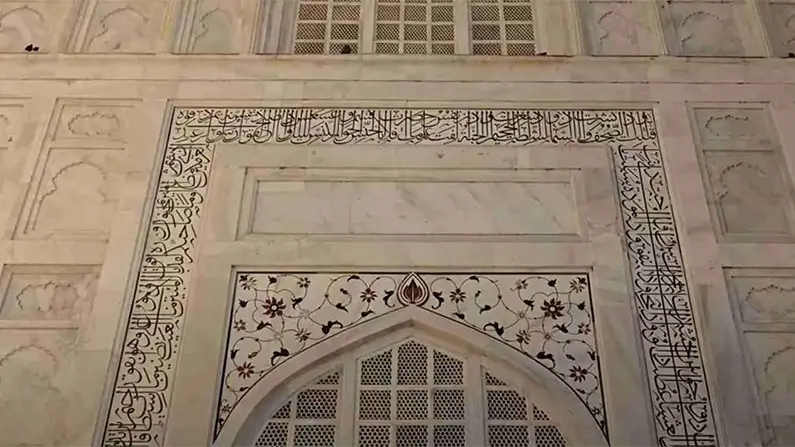
The same kind of visual manipulation can be found in the famous calligraphy on the walls: the letters are actually larger higher up, so that from ground level they appear perfectly uniform in size. A 17th-century trick of the eye that continues to fool visitors—every single day. [source]
8 There is a theory claiming the Taj Mahal was built as a temple—not a tomb…
A modern Hindu nationalist theory argues that the Taj Mahal was originally a temple dedicated to the god Shiva, sometimes referred to as Tejo Mahalaya, and that it was later converted into a mausoleum by Emperor Shah Jahan. The theory gained traction in the late 20th century and has since resurfaced in various political and ideological debates.
However, historians and archaeologists firmly reject the claim. Contemporary records, architectural inscriptions, and archival material clearly show that the Taj Mahal was constructed in the 17th century as a tomb. India’s archaeological authorities and the country’s courts have also ruled that the theory lacks any scientific or historical basis. [source]

You may also like
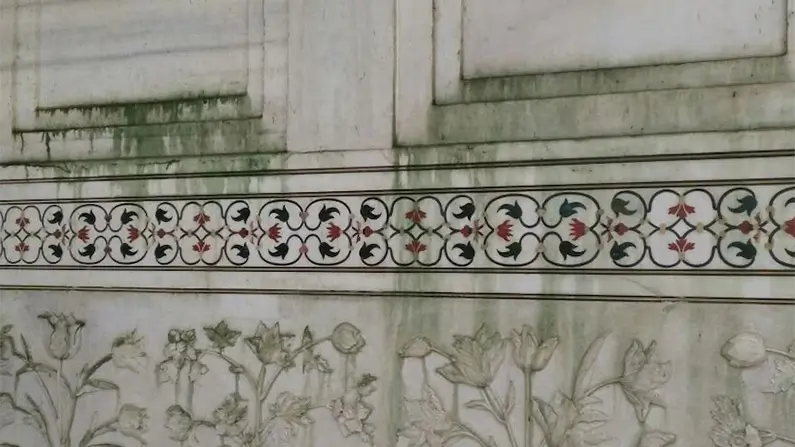
9 The Taj Mahal is slowly turning green over time…
The white marble of the Taj Mahal gradually becomes discolored over the years, partly due to air pollution, but also because of waste left by tiny insects that live around the Yamuna River. The issue has led to repeated restoration efforts aimed at preserving the monument’s bright, iconic appearance. [source]
10 There is a controversial replica of the Taj Mahal in Bangladesh…
A widely debated replica of the Taj Mahal was built in Bangladesh by film producer Ahsanullah Moni, inspired by a visit to India. The construction drew significant attention and criticism, but ultimately led to no legal action from Indian authorities. [source]
5 Common Questions About Taj Mahal
It was commissioned in the 17th century by Emperor Shah Jahan as a mausoleum for his wife Mumtaz Mahal, who died in childbirth. The structure is widely regarded as a symbol of love, mourning, and imperial power.
It stands in Agra, northern India, on the banks of the Yamuna River, and is part of a large walled complex including gardens, mosques, and ceremonial gates.
Construction began in 1632 and was largely completed by 1648, making the monument nearly 400 years old today.
The effect is caused by the properties of white marble and shifting light conditions. Depending on the time of day, the surface can appear pink, white, golden, or silvery, a feature often interpreted symbolically.
Yes. It was designated a UNESCO World Heritage Site in 1983, recognized as one of the finest architectural achievements in human history.