
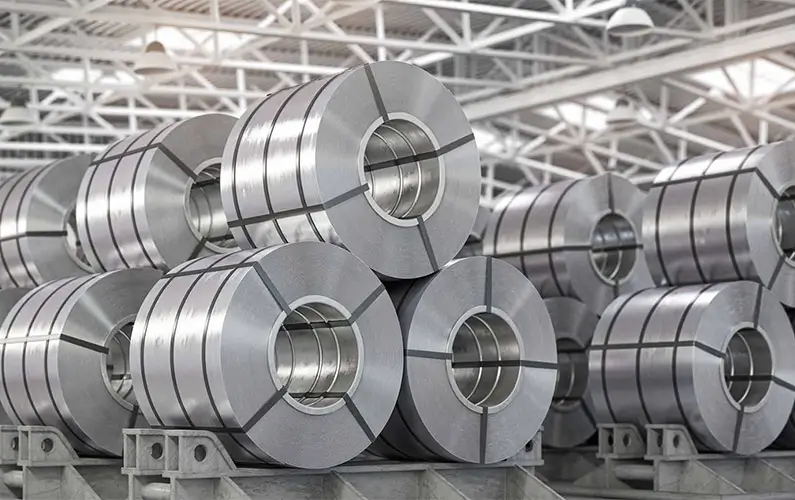
When you think of aluminum, you might picture lightweight packaging, building materials, or perhaps the aluminum foil in your own kitchen. But this seemingly ordinary metal carries a fascinating history and a range of surprising properties that often go unnoticed. From its unusual chemical behavior to its unexpected applications in the modern world, aluminum is far more than just a simple metal.
In this article, we’ll explore 10 facts you probably didn’t know about aluminum — insights that may change the way you see this everyday, yet often overlooked, hero. Get ready to be surprised by what you’ve been missing!
1 This is why cans keep your soda more carbonated than plastic bottles…
Soft drinks in cans are often more carbonated than those in plastic bottles because aluminum is a far more effective barrier against gases. Cans are tightly sealed and prevent carbon dioxide (CO₂) from escaping, while plastic bottles (PET) are more permeable, allowing small amounts of CO₂ to slowly diffuse over time.
In addition, cans are designed to handle internal pressure more efficiently, which further helps preserve carbonation. As a result, beverages stored in cans tend to stay fizzy for longer than those kept in plastic bottles. [source]
2 Fascinating but dangerous: How mercury reacts with aluminum…
When mercury comes into contact with aluminum, a process known as amalgamation occurs. The mercury reacts with the aluminum to form a mercury–aluminum amalgam, which makes the metal porous and structurally unstable.
This reaction can cause unusual structures, such as strands of aluminum oxide, to grow out from the surface. If the process continues, the aluminum can eventually break down completely and collapse. While fascinating, this is a dangerous chemical reaction, as mercury is highly toxic and must be handled with extreme care. If you click the source reference, you’ll be taken to a YouTube video (external link) that shows what the reaction looks like. [source]

3 In the 19th century, aluminum was one of the rarest and most valuable metals in existence…
During the mid-1800s, aluminum was extremely rare and incredibly expensive. When Napoleon III of France hosted a formal dinner and invited the King of Siam, he gave himself gold cutlery, his military officers silver cutlery, and the king aluminum cutlery.
This was not an insult, but rather a great honor, as aluminum was considered the most exclusive and costly metal of the time, making it a particularly prestigious choice. [source]
4 Transparent aluminum exists — and it outperforms bulletproof glass…
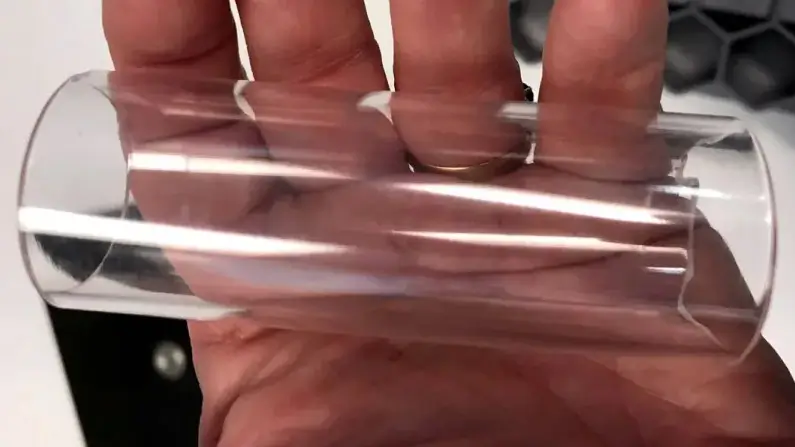
Transparent aluminum, more accurately known as aluminum oxynitride (ALON), is a real material that combines aluminum, oxygen, and nitrogen. ALON is a transparent ceramic with high optical clarity, making it similar to traditional glass — but with far superior properties.
It is significantly stronger and more durable than conventional bulletproof glass, which makes it suitable for high-security applications. ALON is also lighter and can be made thinner than traditional ballistic glass while still offering equal or better protection. What you see in the image below is transparent aluminum. [source]
5 Aluminum is extremely abundant — yet has no known biological role…
Despite being one of the most common elements in Earth’s crust, aluminum has no known essential biological function in the human body or in most other organisms. It is not required for any fundamental life processes and can be toxic in high amounts.
Although research is ongoing to better understand aluminum’s effects on biological systems — including possible links to conditions such as Alzheimer’s disease — it is not known to play any vital role in biological processes. [source]
6 The Washington Monument was crowned with the world’s largest aluminum treasure of its time — a 2.8 kg aluminum cap…
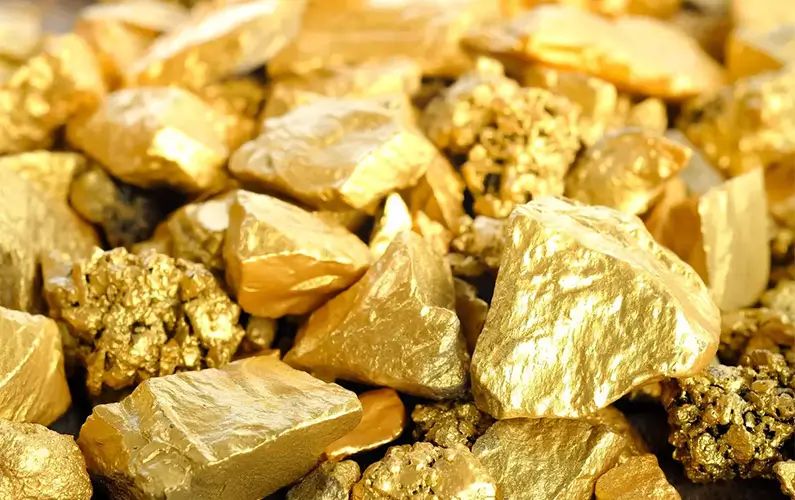
During the 19th century, aluminum was a rare and extremely valuable metal (as mentioned earlier), worth more than both silver and gold due to the complex and costly extraction process. A powerful symbol of aluminum’s exclusivity was the 2.8-kilogram aluminum apex placed atop the Washington Monument in 1884, which was the largest single piece of aluminum in the world at the time.
It wasn’t until advances in production techniques that aluminum became cheaper and widely available in the early 20th century. [source]
You may also like
7 This is why aluminum is preferred over copper for high-voltage power lines…
Aluminum is often used instead of copper for high-voltage transmission lines because it is lighter and more cost-effective. Although aluminum has lower electrical conductivity than copper and therefore requires cables to be about 1.5 times thicker to achieve the same capacity, aluminum conductors are still roughly half the weight of copper ones.
This significant weight reduction is crucial for minimizing stress on support structures and transmission towers. Despite their increased thickness, aluminum cables offer clear advantages in long-distance electricity transmission thanks to their lower weight and cost. [source]

8 An aluminum smelter in New Zealand can account for up to 15% of the country’s total energy use…
The Tiwai Point aluminum smelter in New Zealand is known for its extremely high energy consumption. This facility, one of the largest of its kind in the world, accounts for a significant share of the country’s total electricity use. At peak capacity, Tiwai Point can consume around 13–15% of New Zealand’s total electricity.
This massive energy demand is the result of the enormous amount of electricity required to extract aluminum from its oxide form. Because aluminum production is highly energy-intensive, the smelter has a major impact on the national power grid. [source]

You may also like
9 In the past, film studios used aluminum powder in makeup to achieve a “silver look” — causing life-threatening health issues…
Buddy Ebsen, who was originally cast as the Tin Man in The Wizard of Oz (1939), suffered severe health problems due to the aluminum powder used in his makeup.
During filming, a makeup containing fine aluminum powder was applied to create the character’s shiny silver appearance. The powder proved to be extremely dangerous when inhaled, and Ebsen developed serious breathing difficulties and lung complications as a result of the exposure. He was forced to leave the production after becoming critically ill, and the role of the Tin Man was later taken over by Jack Haley. [source]

10 Aluminum is the most widely used metal in aircraft production…
The metal is especially popular in the aviation industry because of its unique combination of low weight and high strength. This makes it ideal for constructing aircraft components that must be light yet strong enough to withstand the extreme stresses experienced during flight.
But there’s an extra twist. Aluminum’s role in aircraft manufacturing has also driven major technological advances. To improve durability and reduce weight even further, engineers developed advanced aluminum alloys containing other metals such as copper, manganese, or silicon. These alloys provide additional strength and corrosion resistance, which are crucial for the safety and efficiency of modern aircraft.
One such alloy is duralumin, first developed in the early 20th century, which revolutionized aircraft design. It is still used today not only in airplanes, but also in cars, bicycles, and other vehicles where strength and low weight are essential.
So next time you see an airplane, remember that its sleek technology and design are largely made possible by the remarkable properties of aluminum. [source]
5 Common Questions About Aluminium
It is widely used in packaging, construction, transportation, electronics, and aviation due to its low weight, strength, and resistance to corrosion.
Yes. When properly treated, it forms a protective oxide layer that prevents it from reacting with food, making it safe for everyday use.
It has a low atomic density, which gives it a much lower weight compared to many other metals while still maintaining strength.
Absolutely. It is 100% recyclable and can be reused indefinitely without losing quality, while saving large amounts of energy.
In normal everyday exposure, it is generally considered safe. However, very high levels can be toxic, which is why exposure is regulated.