Apples are a natural part of everyday life. They sit in fruit bowls, end up in school bags, and appear in everything from pies to fresh juice. Because of this familiarity, it’s easy to assume there isn’t much more to say about them. Yet beneath the seemingly simple skin lies a fruit with an unexpected history, unusual characteristics, and details that often go unnoticed in daily life.
From how apples actually ripen to why they have taken on such a powerful symbolic role in both culture and science, the apple is far more complex than its reputation suggests. Here, we’ve gathered ten facts that show why this classic fruit is much juicier, more fascinating, and more surprising than you might think.
1 The invisible gas that speeds up apple ripening…
Fruit ripens faster when stored near other fruit because they release ethylene gas, a natural substance that accelerates the ripening process of nearby fruits and vegetables. This is why it can be smart to store produce separately if you want better control over how quickly it ripens. Ethylene gas is especially common in ripe fruit, with apples being one of the strongest producers. [source]
2 There are more than 7,500 different varieties of apples…
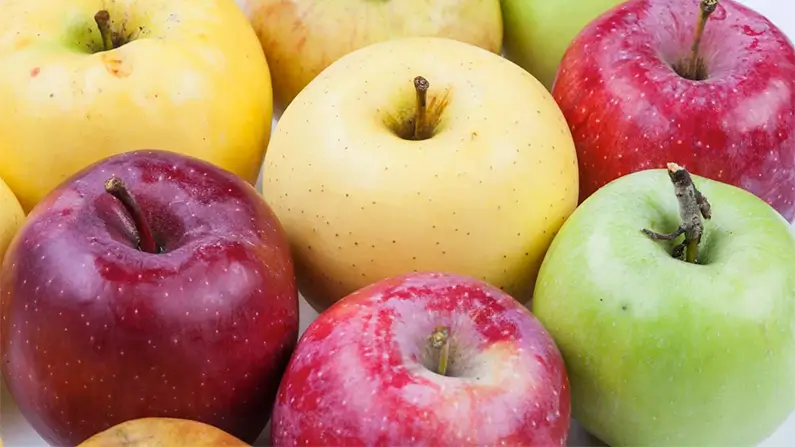
Today, there are over 7,500 apple varieties worldwide, ranging from well-known classics to local and almost forgotten types grown only in small regions. The differences go far beyond color and shape, extending to flavor, texture, sweetness, and how the apples are used in cooking and baking.
In fact, if you decided to try a new apple variety every single day without missing one, it would take more than 20 years to taste them all. And chances are that even more varieties would be developed along the way, making the diversity of apples nearly impossible to fully catch up with. [source]
3 About a quarter of an apple is made of air…
Have you ever wondered why apples float when placed in water? The explanation is that an apple contains a large number of tiny air-filled pockets within its flesh. These pockets cause the apple’s average density to be lower than that of water.
Roughly 20–25 percent of an apple’s volume consists of air, which is enough to make it float—even though the fruit is mostly made of water. The exact amount varies depending on the variety and level of ripeness, but the principle remains the same for all apples. [source]
4 Apple trees are remarkably long-lived…
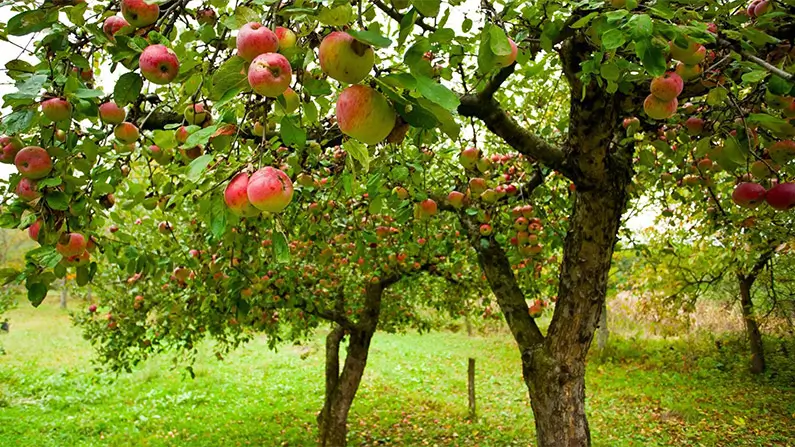
Apple trees can live for several decades, and in some cases more than 100 years under favorable conditions. The lifespan of an apple tree is influenced by factors such as overall health, care, variety, and the surrounding environment.
With proper pruning, pest control, and attentive care, apple trees can thrive and produce fruit for a very long time. It is not uncommon to see old apple trees still bearing fruit and beautifying gardens after many years of faithful service. [source]
5 Good things come to those who wait…
A newly planted apple tree usually begins to bear fruit after about four to five years, although the exact timing can vary depending on the variety, rootstock, and growing conditions. During the early years, the tree focuses mainly on developing its root system and overall growth before it starts investing energy in fruit production. [source]
6 This is how much the world’s heaviest apple weighed…
The heaviest apple ever recorded weighed an astonishing 1.849 kilograms (4.08 pounds). The record was set in 2005 in Japan, where the apple was grown by Chisato Iwasaki in the city of Hirosaki. The weight is officially recognized by Guinness World Records, making it the heaviest reliably documented apple in history.
For comparison, a typical apple weighs around 150–200 grams, meaning the record-breaking apple was nearly ten times heavier than a normal apple. Such gigantic fruits are extremely rare and require ideal growing conditions, great skill, and a lot of patience. [source]

You may also like
7 This is how many calories an apple contains…
An average apple weighing around 180 grams contains approximately 90–100 calories. The calorie content can vary slightly depending on the size and variety. Apples also provide dietary fiber, vitamin C, and antioxidants, making them a nutritious and popular snack. [source]

8 And yes — they’re healthy too…
Apples are one of the most widely consumed fruits in the world and have become a staple of everyday diets across many cultures. Their popularity is easy to understand: apples are accessible, affordable, and easy to eat on the go, making them a natural choice for millions of people.
And for good reason. Apples contain fiber, vitamins, and antioxidants, while being low in calories and highly filling. This combination makes them a simple, tasty, and nutritious snack—whether enjoyed occasionally or as a daily habit. [source]
9 The apple originates from Central Asia…
Botanical research and genetic analyses show that the apple tree (Malus domestica) originated in Central Asia. The wild ancestor of modern cultivated apples is Malus sieversii, which still grows naturally in mountain regions of Kazakhstan and western China.
Through human cultivation, trade, and deliberate crossbreeding, apples gradually spread across large parts of the world. Over thousands of years, people have selected varieties with different flavors, colors, and characteristics. Despite today’s vast diversity, the apple’s origins can still be traced back to the wild apple forests of Central Asia. [source]
10 This is how important bees are for our apples…
Most apple varieties cannot pollinate themselves and instead rely on cross-pollination. This is where bees play a crucial role. Without their work, both the size and quality of apple harvests would decline significantly—so yes, you can thank your local bees for every crisp bite. [source]
5 Common Questions About Apples
Yes, eating apples daily can be part of a healthy diet. Apples are rich in fiber, vitamins, and antioxidants, while being low in calories, which makes them a nutritious and filling everyday snack.
The fruit float because around 20–25 percent of their volume is made up of air. These air-filled pockets lower the apple’s density, making it lighter than water despite its high water content.
An average apple contains about 90–100 calories, depending on its size and variety. In addition to calories, apples also provide fiber and vitamin C, contributing to their reputation as a healthy snack.
The fruit release ethylene gas, a natural plant hormone that speeds up the ripening process. This gas can also cause nearby fruits to ripen faster, which is why storing fruit separately can help control ripeness.
Apples originated in Central Asia, with their wild ancestor Malus sieversii still growing in regions such as Kazakhstan and western China. From there, the fruit spread worldwide through trade and cultivation.