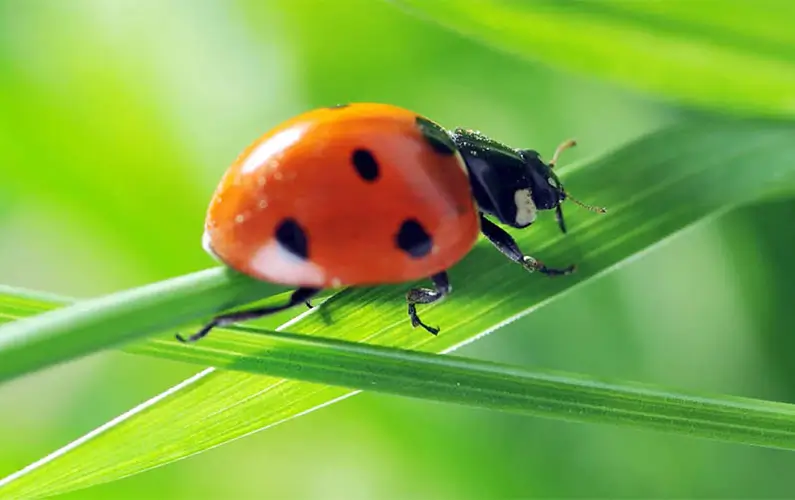
Ladybugs (Coccinellidae) are often seen as small, harmless insects—and even symbols of good luck—but there is far more to them than meets the eye. Found in gardens, forests, and fields around the world, these brightly colored beetles play an important role in nature while hiding a surprising number of unusual traits.
From their unexpected defense mechanisms to their complex life cycle and surprising behavior, ladybugs are full of secrets most people never notice. In this article, we explore ten fascinating facts that reveal why these tiny insects are far more interesting than you might think.
1 Ladybugs are actually related to fireflies…
A classic sign of summer is seeing ladybugs flying around in gardens or among flowering plants. But did you know that these tiny, colorful beetles are closely related to fireflies? Despite their very different appearances, they belong to the same large beetle family, sharing more in common than most people realize. [source]
2 Cannibalism among ladybugs is not uncommon…
That cute little ladybug can quickly turn into a true cannibal! When food is scarce, older or weaker ladybugs may become prey for younger and healthier ones. However, their preferred food is aphids, and cannibalism is usually only a last resort. [source]

3 A ladybug’s spots have nothing to do with its age…
You may have heard that you can tell a ladybug’s age by counting the black spots on its shell. Unfortunately, this is just an old myth. Every ladybug is unique, and its size and spot pattern vary greatly from one individual to another. [source]
4 Ladybugs also need a winter rest…
Just like bears and many other animals, ladybugs enter a state of hibernation during winter. Normally, a ladybug tends to live alone, but during the colder months—when their bodies switch into energy-saving mode—they often gather together in large groups. In some cases, over one million ladybugs have been found clustered together, resting through the cold winter period. [source]

5 Welcome ladybugs when aphids become a problem…
If aphids are devouring the greenery in your garden, you should welcome ladybugs with open arms. They absolutely love aphids! Over the course of its lifetime, a single ladybug can eat more than 5,000 aphids, making it one of nature’s most effective pest controllers. [source]
6 They don’t live very long…
Ladybugs have a relatively short lifespan, typically ranging from a few weeks to several months, depending on the species, environmental conditions, and food availability. They tend to live longer as adults than as larvae. [source]
You may also like
7 Frogs are among their biggest enemies…
Ladybugs don’t have many natural enemies—their bright colors and distinctive spots tend to scare off most predators, both small and large. In addition, when threatened, a ladybug releases a sticky yellow substance from its legs that smells bad and tastes unpleasant, making it far from an appealing meal.
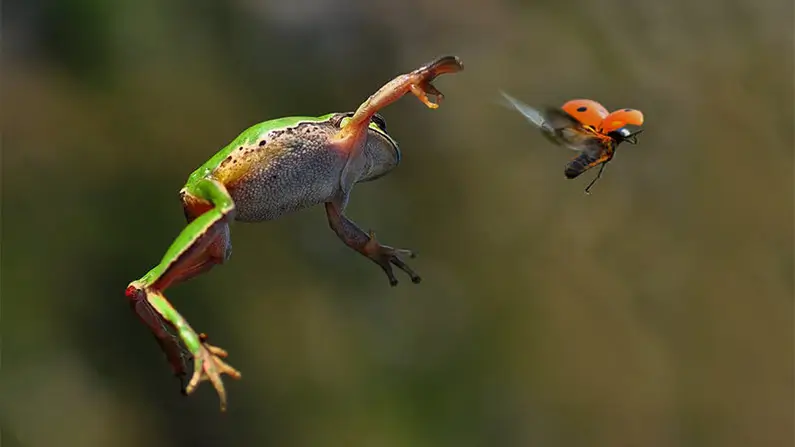
Despite these defenses, ladybugs are still vulnerable to certain predators. Their biggest threats include frogs, dragonflies, wasps, spiders, and other larger insects. [source]
8 Ladybugs are much faster than previously believed…
For a long time, it was thought that ladybugs had a top speed of around 25 km/h (15 mph). However, new studies have shown this to be incorrect. In fact, ladybugs can fly at speeds comparable to a running horse—around 60 km/h (37 mph).
For comparison, a dragonfly can reach speeds of nearly 100 km/h (62 mph), making it one of the fastest flying insects in the world. [source]
9 Not all eggs are fertilized…
Over the course of its lifetime, a ladybug can lay more than 1,000 eggs. However, not all of these eggs are fertilized—some instead become food for the larvae, helping them survive during their early stages of life. [source]

10 Ladybugs develop relatively quickly…
A ladybug goes through four distinct life stages before becoming fully grown. It begins as an egg, then becomes a larva, followed by a pupa, and finally emerges as an adult. The entire process takes about four to five weeks from egg to adult ladybug. [source]
5 Common Questions About Ladybugs
Ladybugs are extremely beneficial for gardens. They feed mainly on aphids and other plant pests, making them natural and effective pest controllers.
Ladybugs primarily eat aphids, but they also consume mites, scale insects, and other small pests. A single ladybug can eat thousands of aphids during its lifetime.
No, ladybugs are harmless to humans. They do not sting and rarely bite. If they feel threatened, they may release a yellow defensive fluid, but it is not dangerous.
A ladybug’s spots are not related to its age. Instead, the number, size, and pattern of spots depend on the species and serve as a warning signal to predators.
During winter, ladybugs hibernate in sheltered places, often gathering in large groups under bark, in cracks, or inside buildings. This helps them conserve energy and survive cold temperatures.