
In the animal kingdom, there exists a fascinating diversity of strength and adaptation, with each species equipped with unique traits for survival. One of the most impressive of these traits is bite force, which determines how effectively an animal can capture and handle its prey. From ancient ocean predators to powerful land animals, the bite is not only a tool for feeding but also a symbol of strength and dominance.
In this article, we explore ten of the most remarkable animals with the strongest bite forces in the world, examining how their evolutionary adaptations have made them masters of their respective habitats.
10 Hyena – 1,000 PSI…
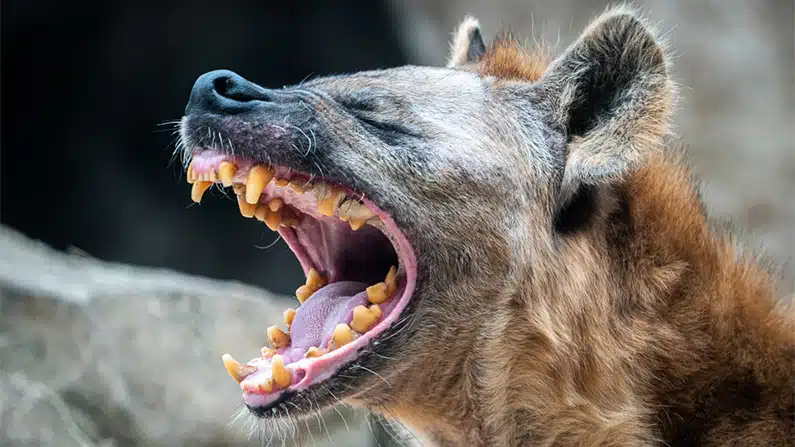
Interestingly, although they look like members of the dog family, hyenas are more closely related to cats — yet they actually belong to neither. They are so unique that they form their own family. Hyenas live in sub-Saharan Africa and parts of Asia, and they possess a surprisingly powerful bite for their size.
With an estimated bite force of 77.1 kg/cm², designed to crush the marrow inside their prey’s bones, hyenas have a stronger bite than wolves (whose maximum bite force is estimated to reach nearly 1,000 PSI) and a much stronger bite than domestic dogs (the strongest of which, the Kangal, measures around 743 PSI). Compared with members of the cat family, hyenas also surpass lions — their main competitors in the wild — as lions have “only” about 650 PSI of bite force.
Although hyenas are often viewed as carnivores, they are above all survivors and scavengers. If fresh meat isn’t available to hunt, they will feed on the leftovers from other animals’ kills. They also eat vegetation when no meat is available. Their teeth and digestive system have evolved to chew and process bone, ensuring that nothing goes to waste for a hyena.
9 Grizzly Bear – 900 to 1,200 PSI…
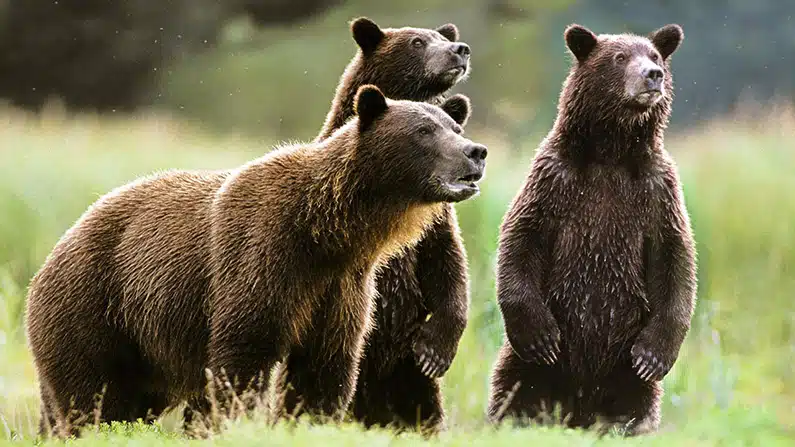
Grizzly bears live in North America and can weigh up to 640 kg. Their bite force ranges between 900 and 1,200 PSI. Unlike polar bears, grizzlies are not strictly carnivorous; they are omnivores and require a diet that also includes plant matter. Grizzly bears happily eat berries, roots, grass, and fish, and it’s believed that they are nearly 85% herbivorous. They also hunt deer and elk when the opportunity arises, although these prey animals can be more difficult to catch.
Grizzlies can also scavenge and feed on the remains of other animals’ kills when necessary. When they do hunt, they use their powerful bite force, sharp claws, and large bodies to subdue bigger prey. Because they are not as agile as other predators, they often target sick or injured animals.
Before winter hibernation, grizzly bears need to eat enough to sustain themselves throughout the entire season. During this time, they can consume up to 40 kg of food per day and may even double their body weight.
Despite their relatively slow hunting methods, grizzly bears can be extremely dangerous to humans. Their bite force — though weaker than that of a polar bear — is strong enough to crush a bowling ball, or a human skull, with ease.
8 Polar Bear – 1,200 PSI…
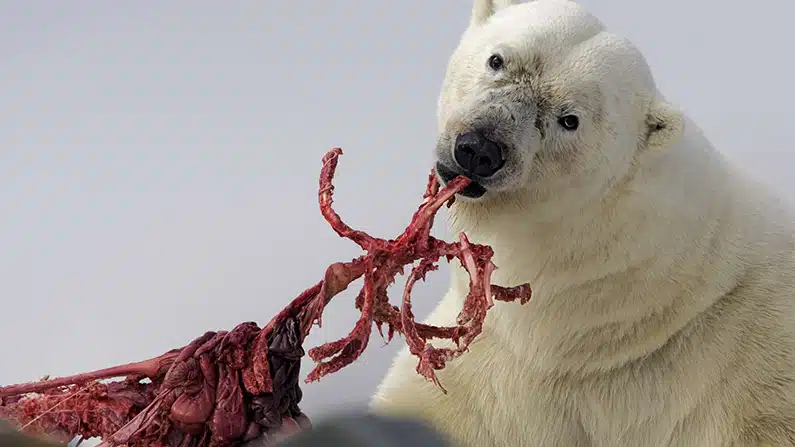
Polar bears live in the Arctic, where they struggle to survive in some of the harshest temperatures on Earth. They are apex predators of the Arctic marine ecosystem and feed primarily on seals. Their bite force exceeds 1,200 PSI, the strongest within the bear family. This is partly because they sometimes go three or four months without food and therefore need to store as much fat as possible when prey is abundant.
To stay warm in the extreme cold, polar bears must consume large amounts of fat. Their stomachs are extremely efficient at extracting the nutrients they need to survive in this frozen landscape.
Although polar bears are the most carnivorous of all bear species, they sometimes hunt on land as well, searching for berries or seaweed. When young polar bears are learning to hunt, they may need to feed on the leftovers from other bears to survive.
Due to climate change, polar bears are increasingly unable to reach their hunting grounds. They are forced to wait longer each year for the sea ice to form so they can access their prey, which can amount to around 1.8 kg of seal fat per day. Human activity also has a negative impact, as polar bears may be drawn to the scent of trash in nearby communities. They have extremely sensitive noses and rely heavily on their sense of smell for hunting.
7 Gorilla – 1,300 PSI…
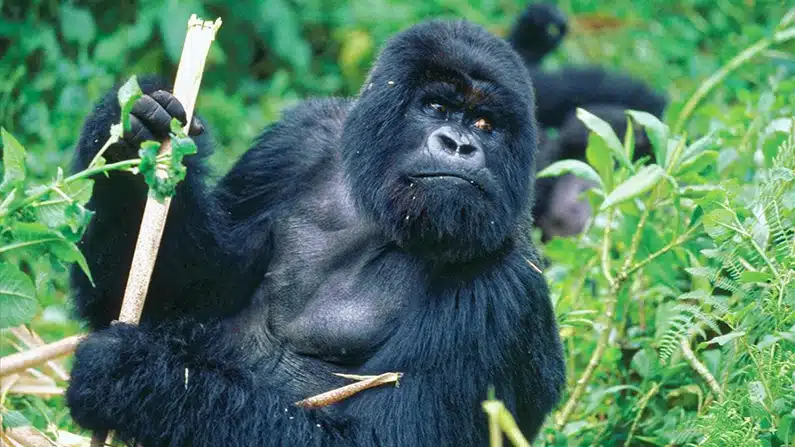
Despite having an impressive bite force of around 1,300 PSI, gorillas are primarily herbivores, meaning they mostly eat plant-based food. Their habitat lies in the tropical forests of equatorial Africa, where they spend most of their time on the ground. Gorillas use their powerful jaws to strip bark from trees, but they also enjoy eating ants, snails, and larvae. When available, they love to eat fruit and sometimes even flowers.
Interestingly, gorillas don’t need much protein in their diet because their digestive system can produce protein through the bacteria that live inside them. Even with a diet low in protein, gorillas can weigh up to 200 kg and grow as tall as an adult human. They share nearly 98% of their DNA with humans, which makes them susceptible to human illnesses, such as the common cold.
Gorillas are social animals that live in family groups. Both males and females care for the young, and the whole group sleeps together in nests at night. Unfortunately, gorilla populations are declining due to climate change and industrialization, and their habitats are threatened by expanding cities. According to the latest count, only 1,063 mountain gorillas remain in the wild, and they are listed as an endangered species by the World Wildlife Fund.
6 Jaguar – 1,500 PSI…
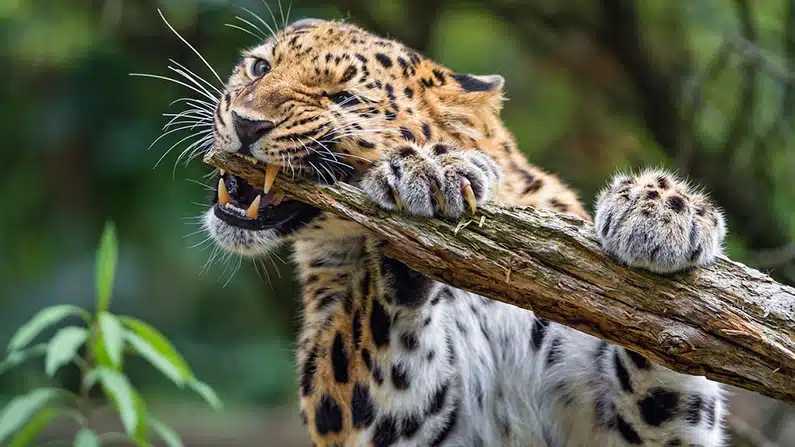
Jaguars live in Central and South America as well as the southwestern United States. They are large cats that can reach up to 1.8 meters in length and weigh nearly 100 kg. They are extremely fast runners and can reach speeds of up to 130 km/h. With a bite force of up to 1,500 PSI, they are capable of hunting animals up to four times their own size. The name “jaguar” comes from the Indigenous word yaguar, which means “he who kills with one leap“.
A jaguar’s bite force allows it to pierce the hard shell of a turtle, the armored skin of a crocodile, and crush the skull of almost any animal it can catch. They are opportunistic carnivores that eat a wide variety of animals, including snakes, lizards, large and small mammals, and fish. Like many other species, jaguars are threatened by deforestation and climate change. The industrialization of agriculture and meat production contributes to shrinking habitats and fewer prey animals for jaguars to hunt. They are also vulnerable to illegal poaching.
5 Hippopotamus – 1,800 PSI…
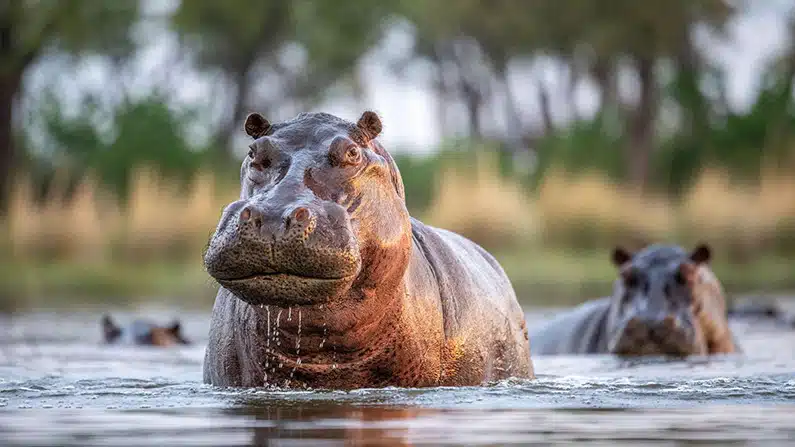
The hippopotamus ranks fifth on our list of animals with the strongest bite force, measured at around 1,800 PSI. They are the third-largest living land mammal, are semi-aquatic, and live in sub-Saharan Africa.
Despite their powerful bite, hippos are herbivores. Their bite has evolved primarily for defending themselves against apex predators and fighting other hippos for dominance within the herd. They are considered extremely dangerous to humans and can be quite aggressive. Weighing up to 3,600 kg, they can move surprisingly fast for their size, reaching speeds of up to 48 km/h. With their massive jaws, they can inflict fatal injuries on people.
Like many animals on this list, hippos are threatened by shrinking habitats, and the World Wildlife Fund estimates their population at 115,000–130,000 individuals.
4 Alligator – 2,000 PSI…
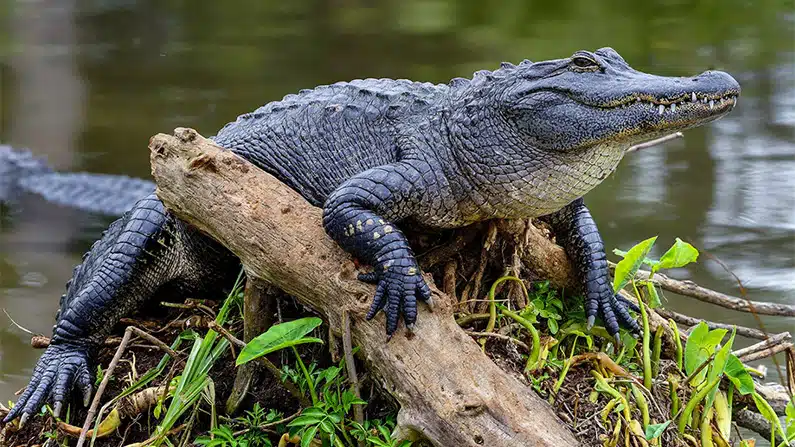
With a bite force of over 2,000 PSI, alligators take fourth place on the list. They live in parts of the United States, Mexico, and China, and primarily thrive in freshwater environments because they lack the salt glands that allow crocodiles to tolerate seawater. Alligators are generally considered less aggressive than crocodiles, but both should of course be avoided.
Alligators typically eat only once a week and are opportunistic predators. They may occasionally eat fruit, but prefer meat as the main part of their diet. When young alligators learn to hunt, they are more energetic and may even go after low-flying birds. As they get older, they become more opportunistic and prefer to eat snakes, fish, and mammals that come near the water.
Florida has the highest number of recorded alligator attacks on humans in the world. Researchers say that an alligator’s bite force is strong enough to lift a vehicle when measured in raw power, making attacks on humans potentially deadly, despite the fact that alligators naturally fear humans and are less aggressive than crocodiles.
3 Great White Shark – 4,000 PSI…
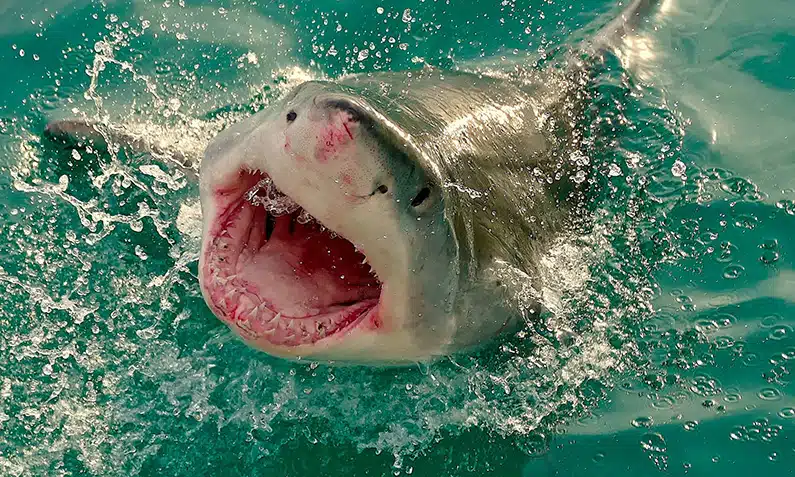
Great white sharks use their estimated bite force of 4,000 PSI to hunt pinnipeds such as seals and sea lions, although young great whites often target smaller prey like fish. These predators are found in coastal waters across the world’s major oceans. Although many great white sharks do not survive to adulthood, those that do can live up to 70 years.
Despite having nearly 300 teeth, sharks do not chew their food. They rip off chunks of their prey, which they then swallow whole. Great white sharks can grow up to six meters in length.
The World Wildlife Fund (WWF) classifies the great white shark as a vulnerable species. This is due both to climate change and to decades of shark hunting for fins, teeth, and trophies.
2 Crocodile – 3,700 to 5,000 PSI…
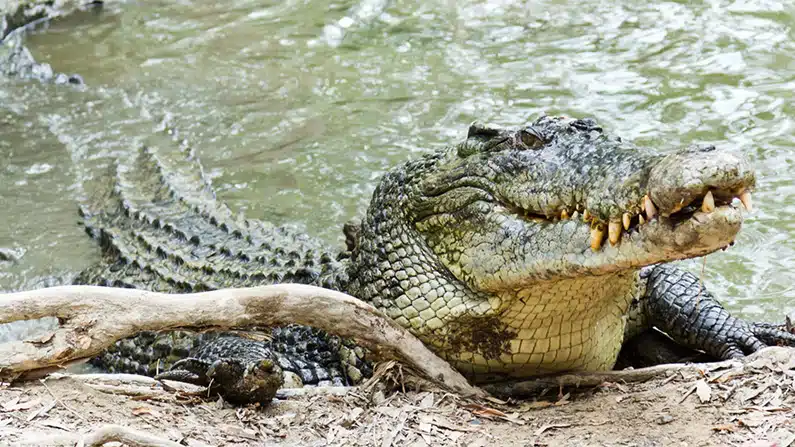
Both Nile crocodiles and saltwater crocodiles have a bite force ranging from 3,700 to 5,000 PSI. The saltwater crocodile is the largest living reptile in the world, and although Nile crocodiles are smaller, they possess the strongest bite force of any reptile.
Saltwater crocodiles use their enormous bite force to catch prey, which they then spin in a “death roll” in the water. As adults — when they can weigh up to 1,000 kg — they are apex predators with no natural enemies except humans. They can live up to 70 years and are often called “living fossils” because they have changed very little throughout the species’ history. Saltwater crocodiles eat anything they can pull into their death roll, including turtles, snakes, fish, wild boar, and buffalo that venture too close to the water.
Nile crocodiles are native to sub-Saharan Africa and live primarily in freshwater, though they can survive in salt and brackish water as well. Despite being smaller than their saltwater relatives, some Nile crocodiles weigh over 1,000 kg. Nile crocodiles have an even stronger bite than saltwater crocodiles and are highly territorial, often lying in ambush to strike at prey that comes too close. These social animals live in hierarchical groups where size determines feeding order.
1 Orca – 19,000 PSI…
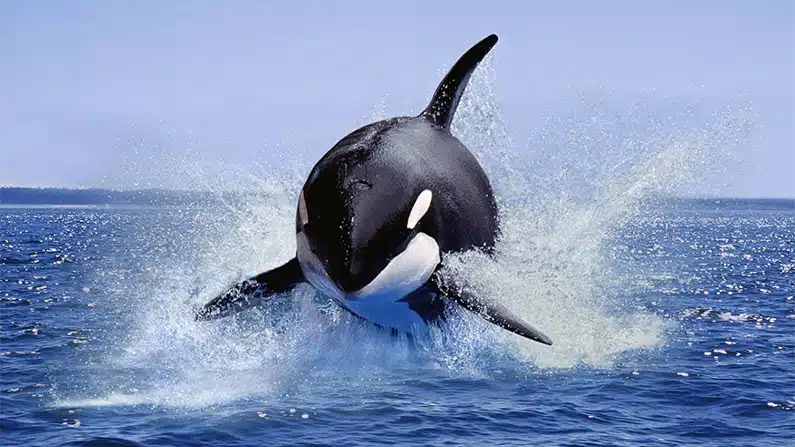
Orcas are the reason Nile and saltwater crocodiles are combined on this list, as their bite force is believed to surpass all others by a wide margin. Orcas in captivity have been measured with a bite force of around 19,000 PSI.
Orcas are generalist predators, and pods hunt a wide range of marine animals, including fish, squid, dolphins, seals, sea lions, and other whales. They are apex predators with no natural enemies and need to eat about four percent of their body weight each day. Females can weigh up to 4,000 kg and live for up to fifty years.
Despite their English nickname “killer whales“, orcas are not whales but the largest members of the dolphin family, and they inhabit nearly every ocean on Earth. They are a protected species and are threatened in several parts of the world due to climate change and difficulties in finding sufficient prey.