
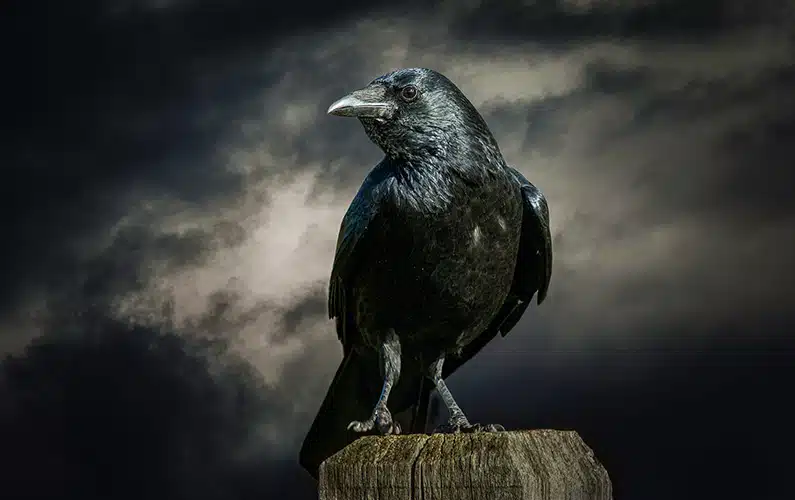
Crows (Corvus cornix) have long had a reputation for being intelligent — but their abilities go far beyond what most people realize. Beneath their black feathers lies a surprisingly advanced brain, capable of problem-solving, planning, and even using tools. They live in complex social structures, recognize faces, and at times seem almost to possess a culture of their own. Here are ten fascinating facts that show why crows can rightfully be called nature’s little professors.
1 Crows gladly give something in return for food…
Eight-year-old Gabi Mann from Seattle, Washington, receives gifts from crows in her backyard. She regularly feeds the birds, and in return they bring her small “treasures”. These tiny treasures include a miniature silver ball, a black button, a blue paperclip, a yellow bead, a blue Lego brick, and a pearl-colored heart. Just what you need! [source]
2 The crow is an incredibly intelligent bird…
When a crow dies, other crows often gather around the body — not to mourn, but to understand what happened. Researchers believe they use these moments to identify potential threats in the area, such as predators or humans. By remembering the location and warning others, they learn to avoid the danger in the future. [source]

3 Can create their own tools…
Crows in New Caledonia have been observed bending twigs into hook-shaped tools to extract food hidden inside tree trunks. This confirms that wild birds are capable of making tools. They are better at tool construction than any primate (except humans) and invent new tools by modifying existing ones, then passing these innovations on to other individuals and even across generations. [source]
You may also like
4 Crow families stick together…
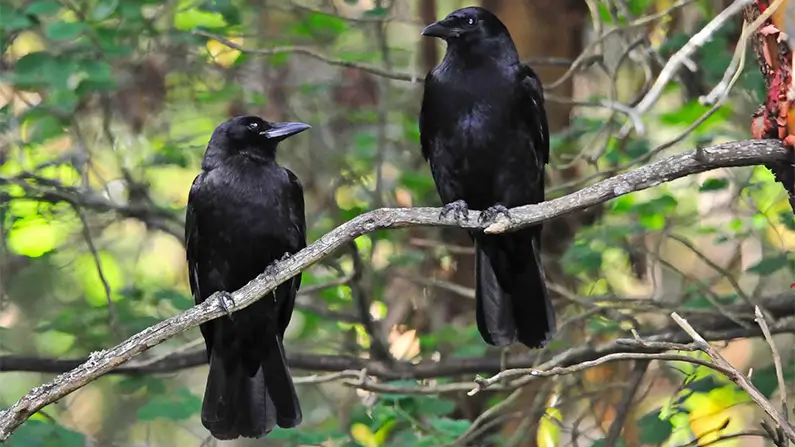
Crows often live in strong family units and are monogamous, meaning they mate with the same partner year after year. Both the male and female take part in raising the young, and it’s not uncommon for offspring from previous broods to stay and help care for their new siblings. This cooperative behavior makes crow families tightly knit groups in which everyone contributes to the survival of the flock. [source]
5 Have passed the famous marshmallow test…
Crows have been shown to pass the so-called “marshmallow test“: they resist the temptation to eat food if they know that a tastier reward will come later. This test of self-control is also used to assess cognitive development in humans. [source]
6 Recognize our faces — and warn others…
Crows have an impressive memory and can distinguish between different people. Research shows that they remember individuals who have treated them poorly — sometimes for years — and that they can even spread the warning to other crows. This means a single bad encounter can mark you as an “enemy” to an entire flock. This ability to recognize faces and communicate threats is a clear sign of just how social and intelligent a crow’s life truly is. [source]

You may also like
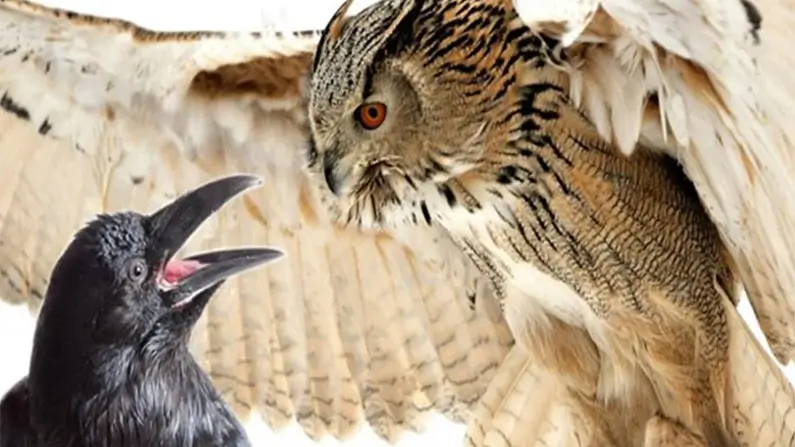
7 Crows and owls — rivals in the wild…
Crows and owls have a complicated relationship and rarely meet as friends. Because owls sometimes prey on young crows, crows see them as a threat and often attack when given the chance — especially during the day, when owls are most defenseless. However, this isn’t driven by instinctive hatred, but rather by self-preservation and territorial defense. In areas where their paths rarely cross, they live side by side without conflict. [source]
8 Have different calls for different dangers…
Crows are incredibly communicative and use a wide range of vocalizations to warn one another. Researchers have discovered that they can distinguish between different types of threats — such as a sneaking cat, a hunting hawk, or an approaching human. Each danger has its own warning call, allowing other crows to quickly understand what is happening and how they should react.
Their vocal repertoire is impressively varied, and although the exact number of sounds is unknown, studies suggest that crows can adjust both pitch and rhythm to convey different messages. [source]
You may also like
9 If you need help with a puzzle, ask a crow…
Research from Moscow State University and the University of Iowa in the United States found that crows show strong behavioral signs of analogical reasoning, with the ability to solve simple puzzles such as “a bird is in the air, and a fish is in…?” Analogical reasoning typically develops in humans between the ages of three and four. Crows have also been used in various puzzle-like experiments that have left researchers thoroughly impressed. [source]

10 They hold funerals for one another…
You may have heard this before, but it is still worth mentioning because it’s considered so remarkable. Crows actually hold funerals for other crows that have died. Often, nearby birds of the same species — ones that didn’t know the deceased crow or even witness its death — will still gather for these funerals. [source]
You may also like
5 Common Questions About Crows
Yes, crows are among the most intelligent birds in the world. They can solve complex problems, use tools, recognize human faces, and even plan for the future.
Absolutely. Crows can remember and recognize individual human faces, especially if someone has been kind—or threatening—to them. This memory can last for years.
Crows gather in large groups, called roosts, mainly for safety, warmth, and social interaction. These gatherings also help younger crows learn survival skills.
Yes. Crows are one of the few animals known to regularly use and create tools, such as bending wires into hooks or using sticks to extract food from tight spaces.
Generally no. They are not dangerous to humans, but they may act defensively during nesting season if they feel their young are threatened.


