
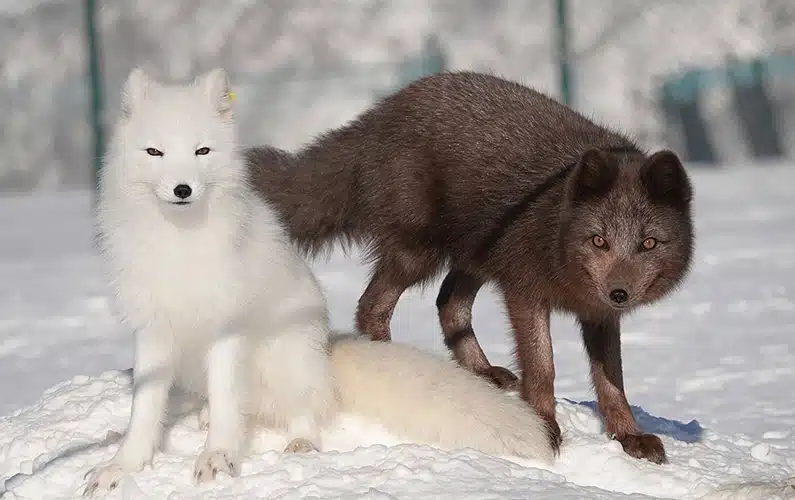
The Arctic fox (Vulpes lagopus) is a fascinating creature that survives under extreme conditions in the Arctic. Its adaptations and behaviors have long captivated both researchers and nature enthusiasts around the world. By exploring some of the most interesting facts about Arctic foxes, we can gain a deeper understanding of how these small yet resilient animals navigate and survive in one of the most unforgiving environments on Earth.
1 Where do Arctic foxes live…?
One of the most commonly searched questions about Arctic foxes is where they actually live. It’s not surprising that people are curious — after all, they’re not animals most of us learn much about in school. Arctic foxes primarily inhabit Arctic and subarctic regions across the Northern Hemisphere, including northern Europe, Asia, North America, and Greenland.
They are highly adapted to cold climates and thrive in tundra environments, where their thick fur, compact bodies, and behavioral strategies allow them to survive extreme temperatures and seasonal resource scarcity. [source]
2 Why the Arctic fox changes color with the seasons…
Arctic foxes change the color of their fur depending on the season. This adaptation, known as molting, means they have brown or gray-brown fur in the summer and white or whitish fur in the winter. This color change helps them blend into the snowy landscape during winter and into the brown or green tones of the tundra during summer, making them harder for predators to spot and easier for them to catch prey. In the image below, you can see how they look in their summer and winter coats. [source]

3 The Arctic fox is highly dependent on voles and lemmings as a food source…
Arctic foxes rely heavily on voles—especially lemmings—as their primary food source in the inland regions of the Arctic. Lemmings undergo natural cycles of population booms and crashes, which greatly influence food availability for the foxes. When lemming numbers rise, Arctic fox populations tend to increase as well because food is abundant. Conversely, when lemming populations decline, the reduced food supply can negatively impact Arctic fox numbers. [source]
You may also like
4 How Arctic foxes survive extreme cold…
As mentioned earlier, they are highly adapted to life in freezing environments such as the Arctic and the alpine tundra of the Northern Hemisphere. They are significantly smaller, stockier, and more compact than many other members of the canine family (Canidae), which reduces heat loss thanks to a smaller surface area. Their fur is also specially adapted for winter conditions; it becomes thicker during the cold season to help maintain a stable core body temperature and endure the harsh, frigid climate of the Arctic.
Arctic foxes also have the ability to physiologically adapt to winter, meaning they do not need to hibernate. Their survival strategies include relying on their dense fur and compact body shape to withstand extreme temperature changes and the long periods of darkness that characterize Arctic winters. [source]

5 Arctic foxes can dive straight into the snow when hunting their prey…
These foxes use different strategies when hunting, especially when targeting their primary prey, such as lemmings. Lemmings often live in complex tunnel systems hidden deep beneath the snow to protect themselves from predators. Arctic foxes use their sharp hearing to detect lemmings moving or digging below the surface, pinpointing their location by tilting their heads and listening carefully.
Once an Arctic fox has located its prey, it may leap into the air and dive headfirst into the snow to catch the lemming. This is an impressive and highly effective hunting method that allows them to surprise their prey. However, it can sometimes take several attempts before the fox successfully secures its meal. [source]
6 However, the Arctic fox has a relatively short lifespan in the wild…
In the wild, Arctic foxes typically have an average lifespan of about 3–4 years. However, this can vary depending on several factors, such as food availability, competition from other predators, and the climatic conditions of their habitats. In regions where food is more abundant and predator pressure is lower, Arctic foxes may live longer, while those in harsher environments may not reach the same age.
In captivity, however, it’s not uncommon for them to live between 10–15 years, or in some cases even longer. This is of course due to consistent access to food, protection from predators, and veterinary care, all of which can significantly extend their lifespan. [source]

You may also like
7 Climate change is causing them to lose ground — and the advantage of their camouflaged fur…
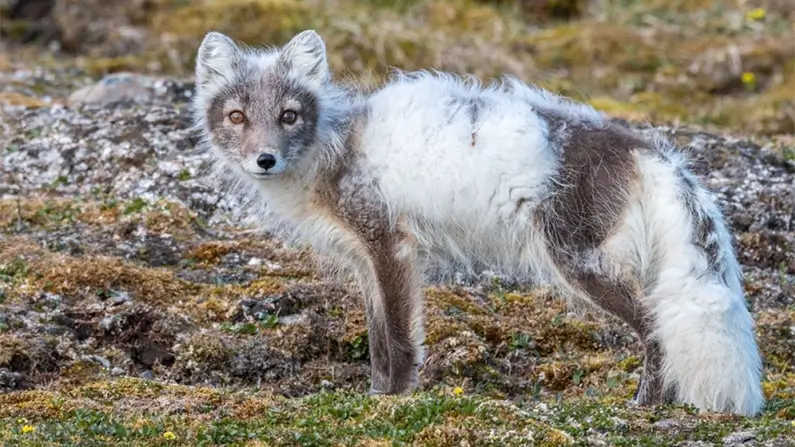
The Arctic is warming almost three times faster than the rest of the world, leading to many changes throughout the polar region. This includes thawing permafrost, melting sea ice, reduced snow cover, and rising sea levels worldwide. As the snow melts, the iconic white coat of the Arctic fox also loses its advantage against competitors and prey.
The Arctic fox has also begun losing territory to the more adaptable and larger red fox, whose range has expanded northward over several decades as a result of climate change. In some areas, Arctic foxes have responded by shifting even farther north in search of food, shelter, and space. [source]
8
A young female made one of the longest solo journeys ever recorded for the species…
In 2018, a young female Arctic fox made a remarkable journey from Svalbard, Norway, to Ellesmere Island in northern Nunavut, Canada. This trek covered more than 3,500 kilometers across sea ice and through the desolate, frozen Arctic landscape. She completed this epic solo journey in just 76 days, and on some days she traveled as far as 155 kilometers — the fastest movement rate ever recorded for the species.
Unfortunately, the young fox’s fate remains unknown, but the tracking data from her journey has been invaluable to researchers. It has helped deepen our understanding of the importance of sea ice for their migration between areas in search of food and new territory. This event also highlights the Arctic fox’s adaptability and its ability to navigate long distances and extreme conditions in the Arctic. [source]
You may also like
9 Their fur is among the warmest and most resilient in the entire Arctic…
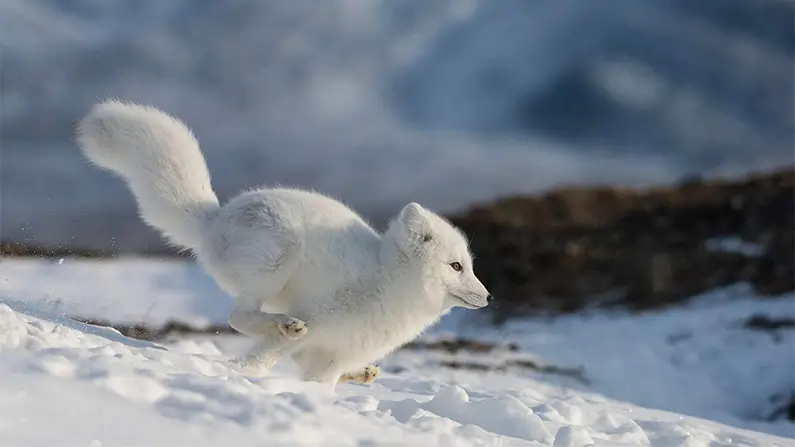
We’ve mentioned their fur several times already — and for good reason, because it truly is remarkable. The Arctic fox’s coat is one of the warmest in the animal kingdom among Arctic species. They can withstand temperatures as low as –70 °C thanks to their incredibly insulating fur and their ability to adjust their metabolism when the cold intensifies. As temperatures drop, their metabolic rate increases to generate more heat and maintain a stable body temperature in the frozen environments they inhabit. It’s the kind of natural insulation many of us could only wish for during harsh winter days. [source]
10 They are monogamous animals and raise their offspring together…
This means they typically form monogamous pair bonds and mate for life. In other words, a male and female stay together throughout their reproductive lives, which usually results in both parents taking part in caring for their young. [source]

You may also like
5 Common Questions About Arctic Foxes
Arctic foxes live across the Arctic regions of the Northern Hemisphere, including Greenland, Iceland, Alaska, Canada, Scandinavia and Siberia.
They survive thanks to thick insulating fur, compact bodies, fur-covered paws and a highly efficient metabolism that helps them endure temperatures as low as –50°C.
Yes. Most Arctic foxes change fur color with the seasons, turning white in winter for camouflage in snow and brown or gray in summer.
Arctic foxes are opportunistic feeders. Their diet includes lemmings, birds, eggs, fish, insects and carrion, especially leftovers from larger predators like polar bears.
Globally, Arctic foxes are not endangered, but some regional populations are threatened, particularly in parts of Scandinavia due to climate change and competition from red foxes.