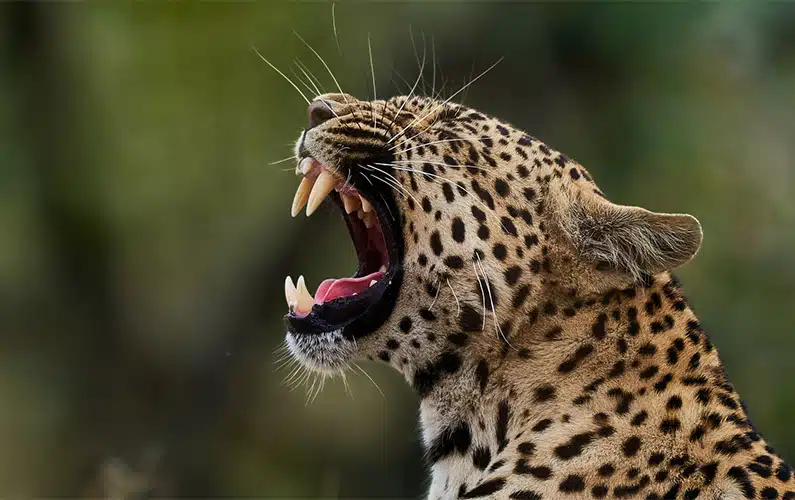
Leopards (Panthera pardus) are among the world’s most fascinating predators — stealthy, elegant, and almost invisible as they move through the shadows. Their golden coats covered in black rosettes make them instantly recognizable, but behind their striking appearance lies a range of unexpected traits. Did you know, for example, that leopards can drag prey heavier than themselves, or that they inhabit more regions than any other big cat?
Here are ten spot-on facts that reveal the secrets behind one of nature’s most enigmatic hunters.
1 Leopards are absolutely crazy about Calvin Klein’s cologne…
Leopards love the scent of Calvin Klein’s “Obsession for Men“. In fact, this fragrance is often used to lure the big cats toward camera traps in the wild. [source]
2 A panther is really just a black leopard or jaguar with melanism…
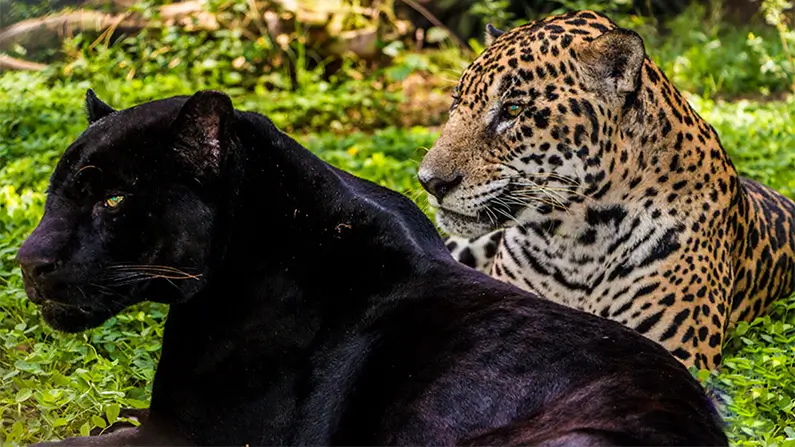
A panther isn’t actually a separate species — it’s simply a leopard or jaguar with melanism, which is the opposite of albinism. This condition results from an increased concentration of melanins, either eumelanin (the most common) or pheomelanin. The effect is a much darker — often completely black — pigmentation. Below you’ll find an image of a panther alongside a leopard. [source]
3 Russia built a 575-meter tunnel to protect the Amur leopard…
In 2016, Russia opened a 575-meter highway tunnel near its Siberian border with China to divert traffic away from the habitat of the critically endangered Amur leopard. Only around 30 of these animals remain in the wild. [source]
You may also like
4 Mumbai has the highest leopard density in the world…
Mumbai — the Indian city with over 20 million inhabitants — is also home to one of the highest concentrations of leopards anywhere on the planet. [source]
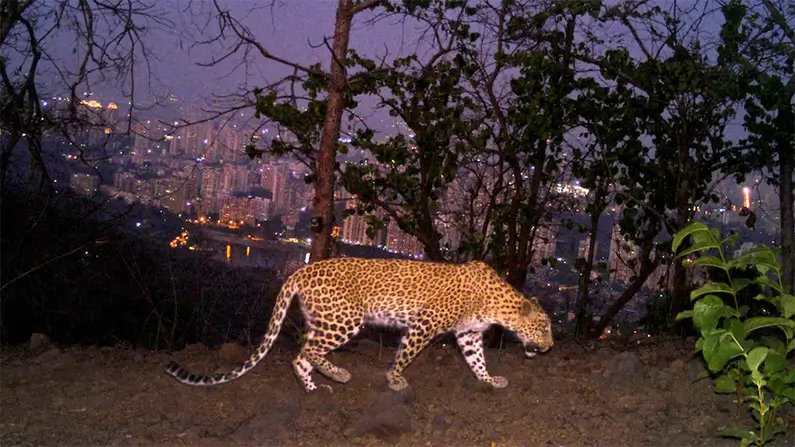
5 It’s not at all uncommon for leopards to hunt dogs…
In certain regions, leopards commonly prey on dogs. They have no trouble taking on dogs larger than themselves, such as Tibetan Mastiffs or Newfoundlands. In some areas, an iron collar is used to protect a dog’s neck, giving it a chance to survive a potential leopard attack. [source]
6 A leopard with more than 400 human lives on its conscience…
It may sound like a myth or a horror story, but the so-called Leopard of Panar in northern India is in fact documented as one of the deadliest predators in history. According to Guinness World Records, it is believed to have killed over 400 people before it was finally taken down by the legendary hunter Jim Corbett in the early 1900s. Corbett was also the man who stopped the infamous Champawat Tiger, another predator responsible for around 436 deaths in the same region just a few years earlier.
Though the two animals terrorized the area during different years, both operated in the mountainous region of Kumaon in northern India — and both were hunted by the same man. A combination of tigers and leopards that had lost their natural prey and begun seeing humans as easier targets made the period a dark and frightening time for the local population. Corbett’s efforts later became world-famous and contributed to him becoming a strong advocate for wildlife conservation and the protection of big cats later in life. [source]

You may also like
7 Leopards have no trouble taking down prey over 100 kilos…
A leopard’s body length varies greatly, ranging from one meter to almost two meters for head and torso combined, with a weight between 28 and 70 kilograms. On top of that comes a tail measuring 70 to 95 centimeters. Their shoulder height typically sits between 45 and 80 centimeters. Females are usually smaller than males, at roughly 85% of the male’s total body weight. Individuals living on open savannas also tend to be larger than those in forested habitats. Despite their size and weight, it’s not uncommon for leopards to hunt and kill prey weighing more than 100 kilos! [source]
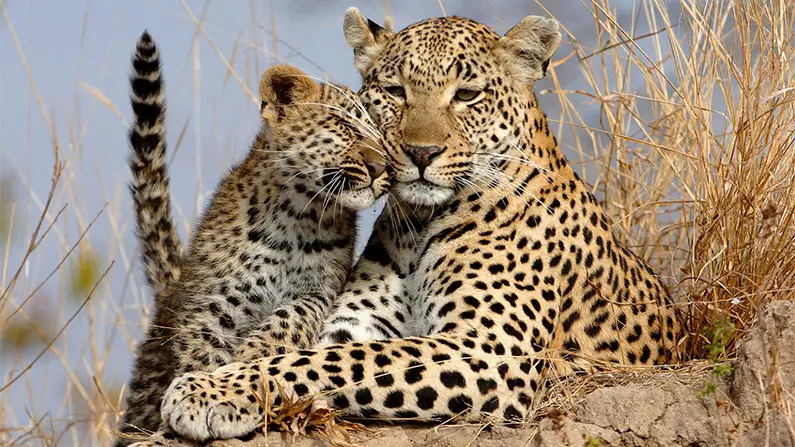
8 Leopards mate — a lot…
When leopards enter their mating period, things can get intense — to say the least. During these days, a pair may mate several times per hour, sometimes reaching up to a hundred sessions in a single day. Each mating is brief, lasting only a few seconds, but they are repeated over and over for several days until the female becomes pregnant.
Snow leopards follow a similar pattern, though with a slightly lower frequency. Field studies have shown that they may mate several times a day during their short breeding periods, which usually occur between January and March. This high frequency increases the chances of successful fertilization — especially since females are receptive for only a few days each year. [source]
You may also like
9 Leopards can also mate with other big cats…
Speaking of mating: leopards, lions, tigers, and jaguars are all capable of interbreeding, resulting in as many as 12 different hybrid combinations. [source]
10 Leopards are a vulnerable species…
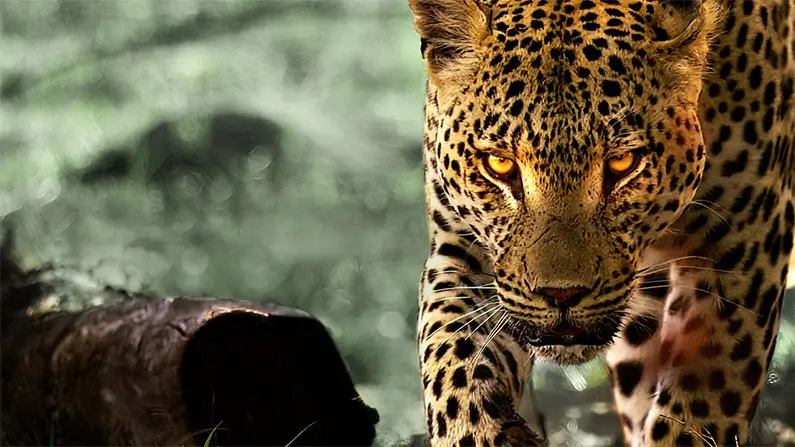
The future of the leopard is far from secure. Today, the species is classified as Vulnerable by the International Union for Conservation of Nature (IUCN), and several subspecies are even more threatened — such as the Amur leopard in East Asia and the Arabian leopard on the Arabian Peninsula. The main reason for their decline is the conversion of forests and savannas into farmland and grazing areas, which deprives leopards of their natural hunting grounds.
As human expansion continues, many of the prey species leopards depend on are also disappearing. In some regions, this forces leopards to hunt livestock, leading to conflict with humans — and in many cases, they are killed in retaliation. In areas such as northern Iraq and parts of the Middle East, populations have plummeted and may never fully recover. Despite their adaptability, leopards face an uncertain future, and their survival will largely depend on how effectively we protect their remaining habitats. [source]
You may also like
5 Common Questions About Leopards
Leopards have a wide range and live across Africa and parts of Asia, including forests, savannas, mountains and even semi-desert regions.
Leopards are highly adaptable predators. They hunt deer, antelope, monkeys, birds and smaller animals, and will eat almost anything they can overpower.
Leopards usually avoid people, but they can be dangerous if threatened or surprised, especially in areas where habitats overlap with human settlements.
Leopards are smaller and more agile than jaguars and less specialized for speed than cheetahs. Their rosette-shaped spots and tree-climbing ability set them apart.
Globally, leopards are listed as Vulnerable, with populations declining due to habitat loss, poaching and human–wildlife conflict.