
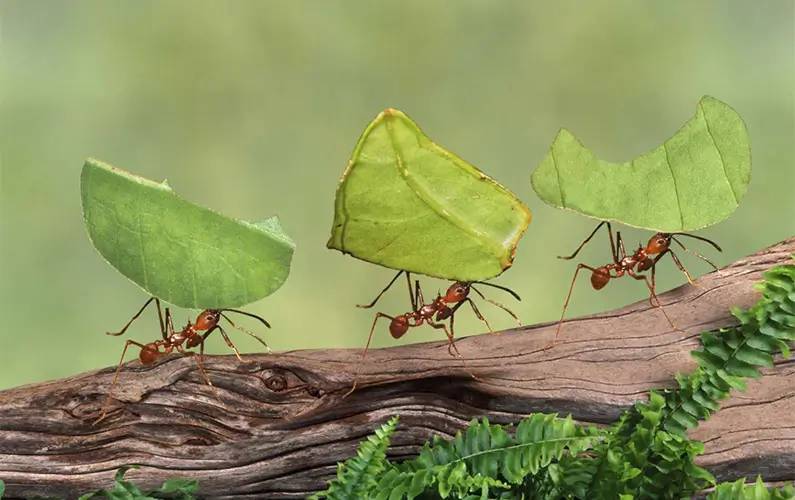
Ants (Formicidae) are a family of stinging insects made up of small, eusocial species. Together with wasps and bees, they belong to the order Hymenoptera. This remarkably diverse family includes around 12,000 known species, with the vast majority living in tropical regions. Still, chances are you’ve encountered ants in your everyday life—or perhaps noticed entirely different species while traveling abroad. Either way, here are ten fascinating facts you probably didn’t know about these tiny but extraordinary creatures!
1 A popular myth about ants and humans…
There is a widespread myth claiming that there are millions of ants for every human on Earth, and that the total weight of all ants equals that of humanity — but there is actually very little truth to this claim.
The number of ants per person varies greatly depending on species, habitat, and environment. Because so many factors are involved, it’s impossible to calculate an exact ants-per-human ratio.
When it comes to total weight, humans are far heavier than ants. The average adult human weighs much more than a million ants combined — or even several million. Myths like this are often used to illustrate scale and abundance, rather than represent accurate scientific facts. [source]
2 Some ant species can carry up to 100 times their own weight…
Certain ant species, including those from the genus Pheidole, can carry up to 100 times their own body weight, even while moving upside down. Ants are well known for their extraordinary strength relative to their size, which makes this feat possible.
This impressive ability is largely due to their muscle structure and favorable scaling laws, meaning smaller animals can carry proportionally heavier loads than larger ones. Research has shown that ants rely on their powerful jaws and muscles to lift and transport objects far larger and heavier than themselves.
In addition, their exoskeleton provides stability and structural strength, allowing them to manage such extreme loads without injury. Below, you can see an image of an ant from the Pheidole genus, a species easily recognized by its characteristically large head. [source]

3 Even though it’s rare, some ant queens can live up to 10 years…
In certain cases, an ant queen can live for up to 10 years in a natural environment. Ants have very different lifespans depending on their role within the colony. The queen, whose primary responsibility is reproduction and maintaining the colony, can live significantly longer than worker ants.
While a lifespan of 10 years is quite uncommon even for a queen, documented cases do exist, making ant queens some of the longest-living insects in the world. [source]
4 The largest ant colony in the world is truly massive…
The largest ant colony ever discovered spans more than 6,000 kilometers, stretching from northern Italy through southern France to the Atlantic coast of Spain. It consists of an invasive species known as the Argentine ant (Linepithema humile), which was introduced to Europe around 100 years ago.
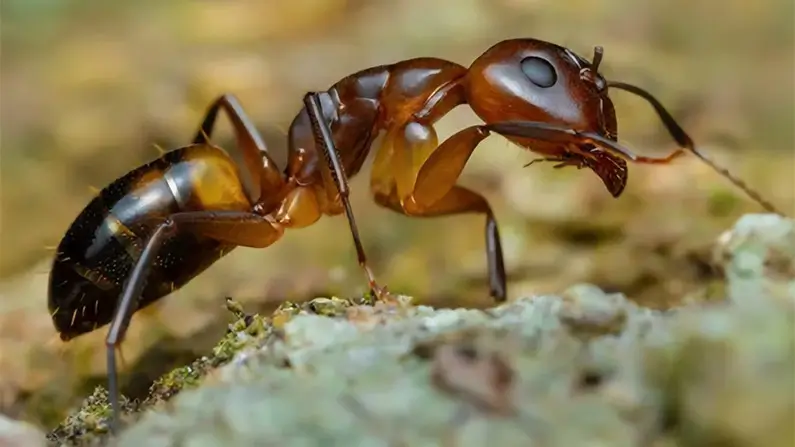
Originally, the ants existed in many small, separate colonies, but over time these colonies expanded and merged, eventually forming one enormous supercolony. Below, you can see a close-up image of this species. [source]
5 Some ant species can “clone” themselves…
Certain ant species reproduce by “cloning” themselves, a process known as parthenogenesis. This means that females can produce offspring without mating with a male. It is a natural reproductive strategy used by some ant species and is similar to the asexual reproduction seen in certain other animals and organisms. [source]
6 Some ants cooperate to build living bridges to overcome obstacles…
Certain ant species can use their own bodies to create “bridges” in order to overcome obstacles such as puddles of water or gaps in the ground. They form a living structure where each individual links itself to its neighbors, creating a stable pathway that allows the rest of the colony to cross safely.
This phenomenon is known as “ant bridges” and is a remarkable example of cooperation, collective intelligence, and teamwork in ants, where individuals sacrifice their own mobility for the benefit of the entire colony. [source]
You may also like
7 Some ant species can “enslave” other ants…
Did you think slavery only existed among humans? Think again. Some ant species are capable of “enslaving” other ants. One well-known example is Polyergus rufescens, also called the Amazon ant. These ants raid colonies of other ant species and capture their individuals, forcing them to work as slaves within the Polyergus colony.
The enslaved workers handle essential tasks such as food storage, brood care, and nest maintenance, serving their “masters” — the Polyergus ants themselves.
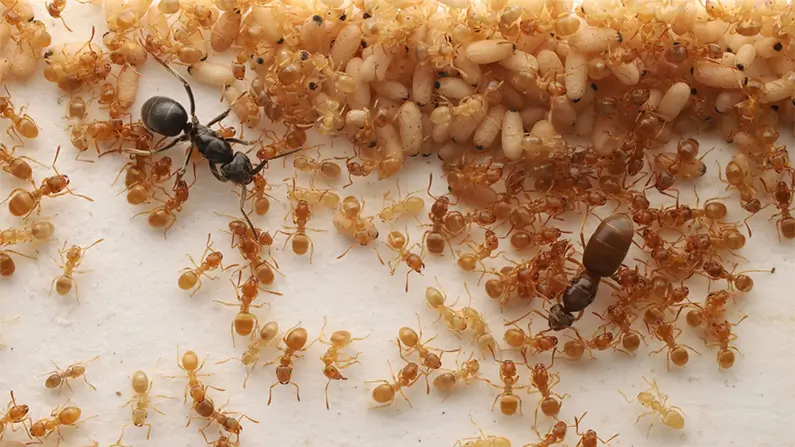
This phenomenon is known as social parasitism and represents a fascinating aspect of ant societies, where certain species have evolved highly specialized strategies to exploit the labor of other ants. The large red ant shown in the image below belongs to the species Polyergus rufescens. [source]
8 Ants are found all over the world — almost…
These tiny insects are distributed across every continent on Earth except Antarctica. They have adapted to an extraordinary range of environments worldwide, from rainforests to deserts. Antarctica, however, is simply too extreme — with its severe cold, harsh climate, and lack of vegetation, no known ant populations can survive there. [source]
9 Almost all ant species live on land – with a few rare exceptions…
Most of the roughly 12,000 known ant species cannot swim. The vast majority of ants are adapted to life on land and lack the physical traits needed for swimming.
However, there are a few rare species that have developed the ability to survive and move in aquatic or semi-aquatic environments, such as wetlands or areas close to water. These little insects may possess special adaptations, including longer legs or other traits that help them cope with moist conditions.
Overall, those social little workers are primarily land-dwelling insects, and most species are poorly equipped to handle water. [source]

10 An ant can survive underwater for up to a full day…
Many ant species have the ability to survive underwater for up to 24 hours or even longer. An ant can effectively hold its breath and endure submersion thanks to various adaptations, including physiological mechanisms that help maintain oxygen balance and prevent drowning.
This remarkable ability is especially useful during flooding events or when ants need to cross bodies of water as part of their daily survival. [source]
You may also like
Xtra Humans are not actually ants’ greatest enemy…
Although humans can affect ant populations through habitat destruction and pesticides, it is in fact other small creatures that pose the greatest natural threat to ants. Predators such as spiders, beetles, birds, and other insects can be significant dangers to ants and their colonies.
It’s also important to remember that these natural enemies play a vital role in the ecosystem by keeping ant populations in balance and influencing their behavior and distribution. [source]
5 Common Questions About Ants
Yes. They belong to the insect class and are closely related to bees and wasps. They have six legs, segmented bodies, and antennae, which are defining insect traits.
Lifespan varies greatly depending on role and species. Workers often live from a few months to a couple of years, while queens can survive for decades in some cases.
Living in large groups allows efficient division of labor. Different individuals specialize in tasks like foraging, defense, or reproduction, which increases survival and efficiency.
They are extremely strong for their body weight and can lift objects many times heavier than themselves. This is due to their muscle structure and small size, which gives them mechanical advantages.
They do not sleep in the same way humans do, but they do have rest periods. These occur in short cycles throughout the day and help conserve energy and maintain coordination.