
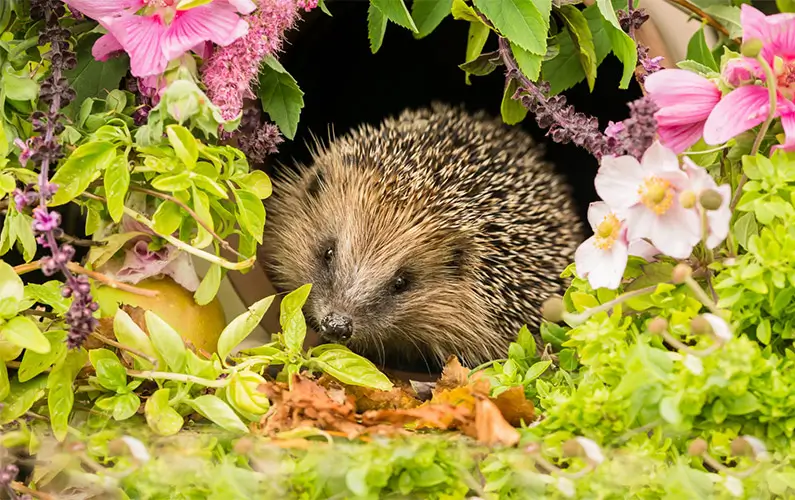
The hedgehog (Erinaceus europaeus) is a ground-dwelling mammal native to the Western Palearctic region and belongs to the hedgehog family (Erinaceidae). As protection against predators, it is covered in sharp spines on its back and primarily feeds on insects, worms, and millipedes. The species suffered significant declines in the past due to environmental toxins and traffic, but has fortunately begun to recover in recent years. If you grew up in a house or similar setting, chances are you’ve encountered one of these charming little creatures in your garden at some point. Below are ten fascinating facts you should know about our beloved hedgehogs!
1 A hedgehog has thousands of spines…
Hedgehogs have between 5,000 and 7,000 spines covering their bodies. These spines serve as their primary defense against threats and predators. When a hedgehog feels threatened, it can use its muscles to raise its spines, making it much harder to attack or grab.
In other words, sitting on a hedgehog would definitely result in a very unpleasant experience, with plenty of sharp spines to deal with — an outcome that would be painful for a human and harmful for the hedgehog itself. [source]
2 This is how many hedgehog species exist…
There are 17 different species of hedgehogs belonging to the genus Erinaceus. Among them, the European hedgehog (Erinaceus europaeus) is one of the most widespread and best-known species, found across large parts of Europe and frequently encountered in human-dominated landscapes.
While all hedgehog species share their iconic spines and nocturnal habits, they vary in size, habitat, and geographic distribution, making the group more diverse than many people realize. [source]

3 This is why hedgehogs prefer to be active at night…
Hedgehogs rely primarily on their sense of hearing and smell to navigate their surroundings and find food. Their eyesight is relatively poor, but they can see better in low-light conditions than in bright environments. This adaptation allows them to forage more efficiently and remain active during nighttime hours, when they are most alert and least exposed to predators. [source]

You may also like
4 Don’t chase hedgehogs away — welcome them instead…
Hedgehogs’ appetite for insects and garden pests has long made them a welcome presence in gardens. Their activity helps naturally control pest populations, reducing the need for chemicals and supporting a healthier garden ecosystem.
Many gardeners appreciate hedgehogs for their role in keeping gardens free from harmful insects, viewing them as beneficial — and adorable — helpers within the natural environment. [source]
5 Not all hedgehogs hibernate…
Hedgehogs use different strategies to survive the winter. Some hedgehogs enter hibernation to conserve energy when food is scarce and temperatures drop. During hibernation, they lower their metabolism and become inactive for extended periods.
However, other hedgehogs may remain active during winter, especially in milder conditions where enough food is available. It’s important to remember that hedgehogs are individuals, each with their own behaviors and survival strategies, just like many other animals in the wild. [source]
6 The truth about hedgehogs’ immunity to snake venom…
Hedgehogs have a certain level of resistance to snake venom, but it is not complete immunity. They are relatively resistant to small amounts of venom from some snake species they may encounter in their natural habitats. This trait is especially useful since hedgehogs often live in areas where snakes are present.
However, despite this partial immunity, hedgehogs can still be injured or even killed by snakes, particularly if they are bitten in sensitive areas where the venom can have a stronger and more dangerous effect. [source]

You may also like
7 Hedgehogs are surprisingly good swimmers…
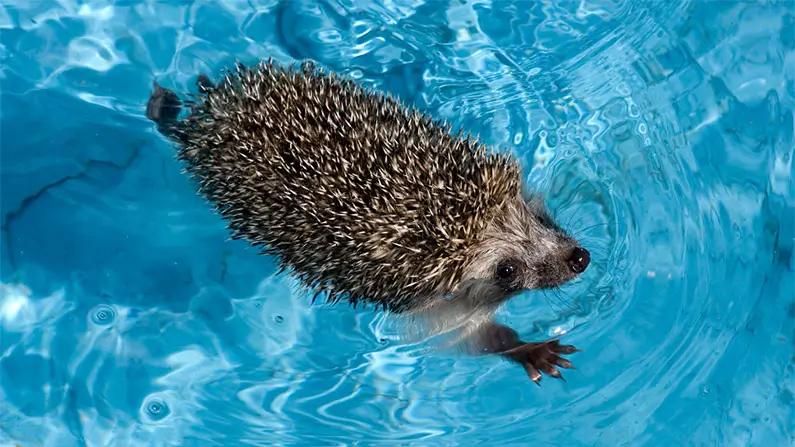
Did you know that hedgehogs can swim? Despite their short legs and round bodies, they are surprisingly capable swimmers. They use their small feet to paddle and are able to cross streams, ponds, and other bodies of water when necessary.
This skill can be especially useful when they are searching for food or moving to a new territory. In the image below, you can see a hedgehog swimming. [source]
8 A political party once tried to get a hedgehog elected to parliament in New Zealand…
In New Zealand, the McGillicuddy Serious Party ran a humorous and satirical political campaign in which they attempted to elect a hedgehog to parliament. The stunt was part of the party’s deliberately absurd and unconventional political strategies, designed to mock traditional politics and highlight its own viewpoints.
Naturally, the attempt to elect a hedgehog was never successful, but the campaign became a well-known and memorable incident, showcasing the party’s unique approach to political satire. And who knows — perhaps the world’s parliaments could use a few more hedgehogs after all? [source]

You may also like
9 This is why you should never give a hedgehog milk…
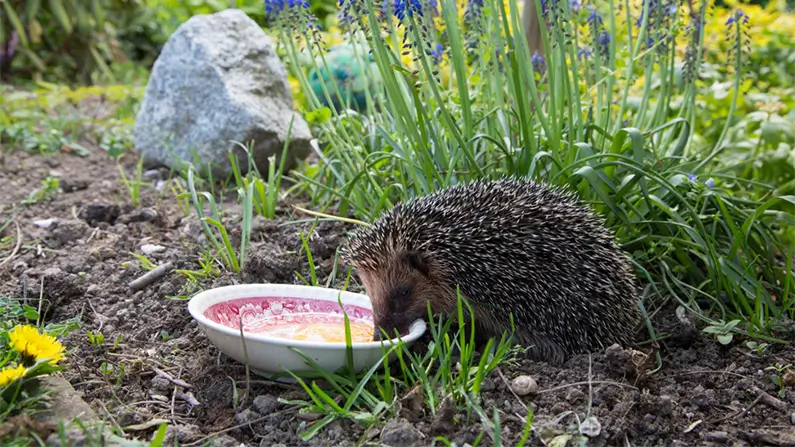
They are generally lactose intolerant and cannot properly digest milk. Giving them milk can cause serious stomach problems and may even be harmful to their health. In other words, milk and dairy products should be avoided if you want to help hedgehogs in your garden.
A much better option is to offer fresh water, which supports their well-being without causing digestive issues. And the good news is — water is exactly what they’ll be happy to receive. [source]
10 The Brothers Grimm’s “Hans My Hedgehog” never became a major success…
Among the Brothers Grimm’s fairy tales is a lesser-known story called “Hans My Hedgehog” (German: “Hans mein Igel”). The tale tells the story of a boy born with both human and hedgehog traits — he has a human upper body, but the lower body and spines of a hedgehog.
The story follows Hans’s journey through life, focusing on his experiences, struggles, and eventual search for love and acceptance despite his unusual appearance. While the tale is part of the rich folklore and fairy-tale collection of the Brothers Grimm, it never achieved the same popularity as many of their more famous works. [source]
Xtra Hedgehogs are known for their unusually wide range of vocal sounds…
These little animals have an unexpectedly large variety of sounds that they use to communicate. They can squeak, huff, snort, grunt, and even scream. Each sound carries its own meaning and is used in different situations — such as when they are afraid, hungry, annoyed, or trying to communicate with other hedgehogs.
It’s almost as if hedgehogs have their own small language, full of expressive noises that reveal how they’re feeling at any given moment. [source]
5 Common Questions About Hedgehogs
Hedgehogs are primarily insectivores. Their diet mainly consists of insects, worms, beetles, and other invertebrates, but they may also eat fruits or small amounts of plant matter when available.
No, they are not dangerous. They are shy, non-aggressive animals and rely on their spines for defense, not attacks. When threatened, they typically curl into a ball rather than confront a human.
Yes, they can swim surprisingly well. They are capable of crossing ponds and small bodies of water, although they should always have an easy exit point to avoid exhaustion or drowning.
Many of them hibernate during colder months, especially when food is scarce and temperatures drop. However, not all hibernate, particularly in milder climates where food remains available.
No, hedgehogs are lactose intolerant. Giving them milk can cause serious digestive problems. If you want to help a hedgehog, fresh water is the safest and best option.