
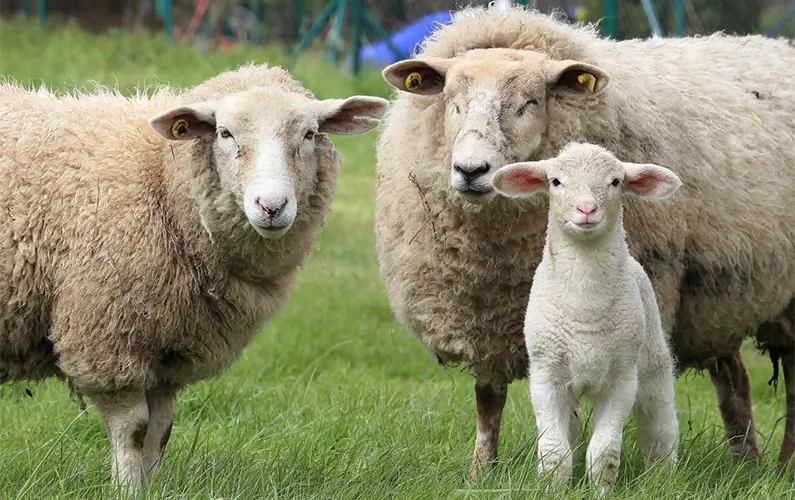
Sheep (Ovis) are a fascinating group of ruminant mammals that include several wild species found across large parts of the world. They are widely known and valued, both as livestock and as a familiar presence in rural landscapes. Females are called ewes, males are known as rams, and a castrated male is referred to as a wether. The small and adorable lambs are a welcome and beloved sight in fields and on farms during the spring.
Sheep have even inspired playful language quirks in different cultures, reflecting both the animal’s long relationship with humans and its role in everyday life.
With this appreciation in mind, we now want to share ten fascinating and perhaps unexpected facts about sheep — facts you may not have known before. Join us as we explore these remarkable animals that have lived alongside humans for thousands of years.
1 How sheep differ from their closest relative – the goat…
Sheep differ from goats in several key ways. They typically lack beards and have a stockier, heavier body build. In addition, sheep possess tear glands and specialized scent glands between their hooves, features that goats do not have. While these traits apply to most species, there are exceptions, and some sheep may lack one or more of these characteristics.
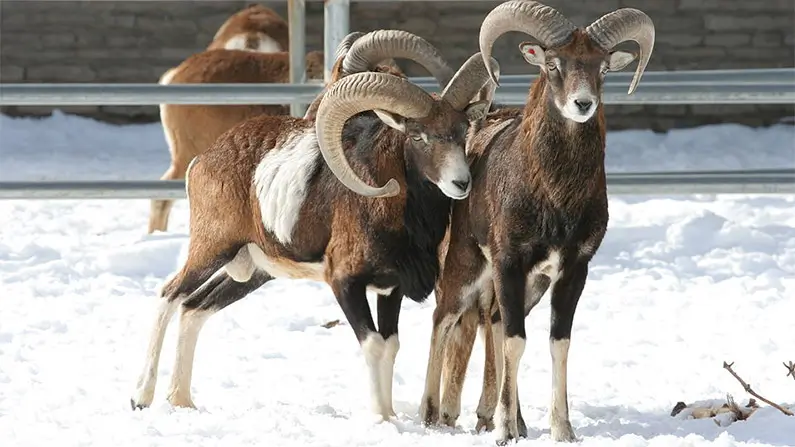
Both males and females are usually horned, but horn size varies greatly between the sexes. Males, often called rams, have large, powerful horns that are frequently curved or spiraled and can grow to impressive sizes. For example, the horns of the Asian urial can reach up to one meter in length, while the argali boasts even larger horns. Females, known as ewes, typically have smaller horns that curve gently backward.
Another clear difference lies in chromosome count. Sheep have 54 chromosomes, compared to 60 chromosomes in goats, reflecting their genetic and evolutionary differences. [source]
2 European wild sheep species went extinct around 3,000 years ago…
The original wild sheep today are mainly found in regions such as East Asia, North America, and North Africa, where several species still live freely in the wild. In Europe, the European mouflon remains as a wild-living sheep, primarily on the islands of Corsica and Sardinia. However, the origin of the mouflon is still debated among researchers. One theory suggests that it was introduced by humans as early as the Stone Age, possibly making it one of the earliest domesticated sheep forms in the region.
All other European wild sheep species disappeared around 3,000 years ago, with the last remaining populations found in the Balkan Peninsula. This extinction process was likely caused by a combination of climate change, hunting, and competition with other species. The loss of these animals marks an important chapter in Europe’s natural history and highlights early human impact on the landscape and wildlife. [source]
3 Wild sheep are mostly found in mountainous regions…
Most wild sheep species have adapted to life in challenging mountain environments, where the terrain is steep and vegetation is often sparse. These regions provide natural protection from predators and allow sheep to escape quickly when threatened, which is crucial for their survival. The varied climates and plant life of mountain areas have also helped shape different subspecies with unique adaptations.
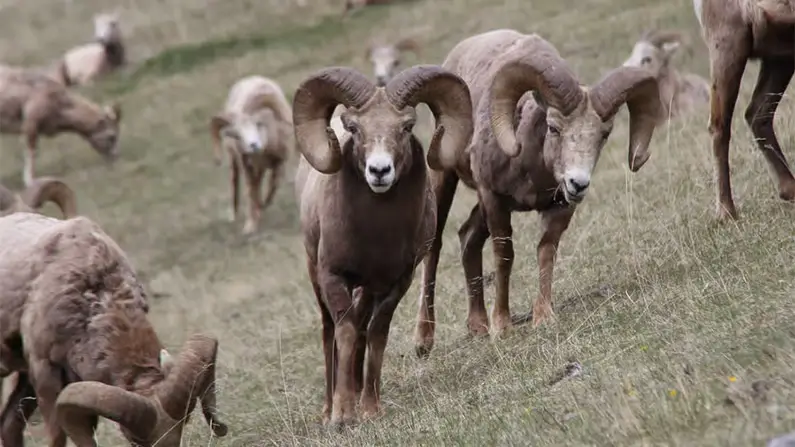
However, wild sheep are not limited to mountainous landscapes. Some populations have successfully adapted to very different environments. For example, certain groups of bighorn sheep (Ovis canadensis) live in arid desert regions, where they must cope with extreme temperatures and limited access to water and food. Surviving in such harsh conditions requires additional behavioral and physiological adaptations. [source]

You may also like
4 Biggest horns decide…
These animals are mostly active during the daytime, but when temperatures peak around midday, they may rest and resume feeding during the cooler evening or nighttime hours. Females typically live together with their offspring in small groups, which sometimes merge into larger herds to increase safety and grazing efficiency.
Males, on the other hand, usually remain separate from females outside the breeding season. They often live alone or in male-only groups, where a clear social hierarchy is established. This hierarchy is largely determined by horn size, with individuals sporting the largest and most powerful horns typically holding the highest rank.
When two males have similarly sized horns, intense confrontations may occur to determine dominance. These clashes can be physically demanding and decisive for their status within the group — and ultimately for their opportunities to mate. [source]
5 Lambs are standing within an hour after birth…
In many species, such as bighorn sheep in North America (Ovis canadensis), it is common for only a single lamb to be born at each birth. This is a natural adaptation that gives the newborn the best possible chance of survival, especially in harsh and demanding environments. In other species, such as the Asian argali (Ovis ammon), multiple lambs may be born at the same time, placing different demands on both the young and their mothers.
One particularly impressive trait is that lambs are able to stand firmly on their legs within just one hour after birth. This rapid development is crucial for survival, allowing the lamb to follow its mother closely and stay near the flock, reducing the risk of falling prey to predators. During the early period, the female is highly protective and continues to nurse her young for several months before they begin to live more independently.
It typically takes between one and seven years for young sheep to reach sexual maturity and contribute to the next generation. During this time, they develop their physical strength and social skills, while learning to navigate the herd’s hierarchy and their surrounding environment. [source]
6 Sheep have an exceptionally good memory…
Sheep are capable of remembering at least 50 individual members of their flock, as well as humans they have encountered, for several years. This ability is based on a neural process in the brain similar to the one humans use to store and recall memories. As a result, sheep can easily recognize familiar faces and voices, a skill that plays an important role in their social interactions and survival.
In addition to their strong memory, sheep have also demonstrated problem-solving abilities in various studies. Their level of intelligence is considered comparable to other domesticated animals, such as cattle and pigs, meaning they are able to adapt, learn new tasks, and navigate complex situations. This highlights just how much more cognitively advanced sheep are than many people might expect. [source]
You may also like
7 They communicate using a variety of sounds…
Like many other animal species — and humans as well — sheep use a wide range of vocal sounds to express their emotions and needs. Through different types of bleats and calls, they can signal stress, alarm, calmness, or curiosity. This vocal communication helps them stay connected within the flock and allows them to warn one another quickly when danger is present.
However, communication is not limited to sound alone. Sheep also convey emotions through subtle facial expressions, such as changes in the position of the eyes and mouth. Research has shown that ear position and movement are especially important signals, revealing mood and reactions — for example, ears pointed forward may indicate interest, while ears held back can signal irritation.
This combination of vocalizations and body language enables sheep to maintain rich social interactions within the flock, which is essential for their safety, cooperation, and overall well-being. [source]
8 Like humans, sheep can self-medicate…
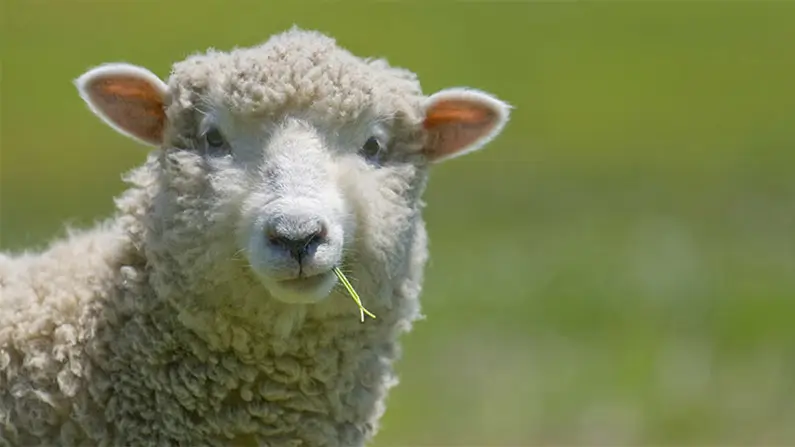
Just like humans, sheep have the ability to sense what their bodies need when they are ill or experiencing discomfort. They can instinctively seek out and consume specific plants and herbs that help relieve pain, fight infections, or improve overall health. This natural form of self-medication is a fascinating example of animal intelligence and adaptability.
By selecting the right plants, sheep may reduce inflammation or help rid their bodies of parasites, increasing their chances of recovery without human intervention. This behavior has been observed and documented in various environments, where sheep deliberately choose plants with medicinal properties when they are unwell. [source]
You may also like
9 These animals also have an incredibly wide field of vision…
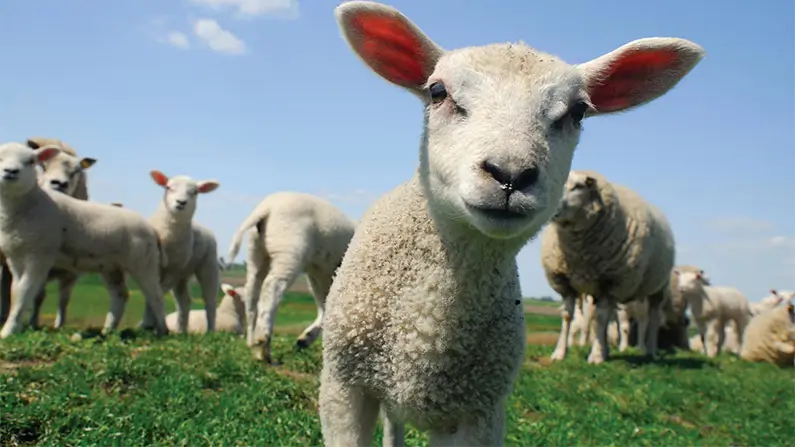
Sheep have an impressive field of vision thanks to their large, horizontally rectangular pupils. The position of their eyes on the sides of the head allows them to perceive almost everything happening around them — up to nearly a 360-degree view. This means they can see what’s happening behind them without turning their heads, an invaluable trait for a prey animal in the wild.
The only areas outside their view are small blind spots directly behind them and just in front of the nose. Aside from these, sheep possess one of the widest visual fields in the mammal world, helping them detect predators early and react quickly to danger. [source]
10 Ancient Egyptians considered these animals sacred…
In ancient Egypt, animals played a central role in both religion and everyday life. Certain species were closely associated with gods and viewed as symbols of power, fertility, or protection. These woolly creatures were linked to specific deities and were used in religious rituals and ceremonial festivals.
It was not uncommon for animals to be believed to carry divine presence, and they were therefore treated with great reverence. Mummification was one way of honoring these sacred beings even after death. Alongside cats and certain bird species, these four-legged herbivores were also among the animals that were embalmed and buried in temples or tombs — often with the same level of care as humans. [source]

You may also like
5 Common Questions About Sheep
Yes, they are more intelligent than many people assume. They are capable of recognizing faces, remembering individuals for years, and solving simple problems. Studies show that their intelligence is comparable to animals such as cattle and pigs, allowing them to learn, adapt, and navigate social hierarchies.
While sheep and goats are closely related, they are different species with distinct traits. Sheep generally have a stockier build, lack beards, and have specialized scent glands between their hooves, which goats do not. Sheep also have 54 chromosomes, compared to 60 in goats, reflecting their genetic differences.
On average, they live between 10 and 12 years, although some may live longer under good conditions. Wild sheep often have shorter lifespans due to predators and harsh environments, while domesticated sheep can live longer with proper care.
Yes, they can recognize individual humans. They are able to remember faces and voices for several years, especially those of people they interact with regularly. This ability helps them feel safer around familiar individuals and improves their social interactions.
These animals are herbivores and primarily eat grass, plants, leaves, and herbs. They are ruminants, meaning they have a specialized digestive system that allows them to break down tough plant material efficiently. In some cases, sheep also select specific plants to help maintain their health.