
Standing along the Nile with its majestic pyramids and rich cultural heritage, Ancient Egypt remains one of the world’s most fascinating civilizations. For thousands of years, this ancient kingdom has captivated historians, archaeologists, and curious travelers alike, drawn in by its mysteries and enigmatic beauty. In this article, we uncover ten interesting, intriguing, and inspiring facts about Ancient Egypt — and hopefully, you’ll learn something new along the way!
1 A woman claimed she had been a priestess in Ancient Egypt in a past life — and went on to make significant contributions to the study of Egyptian history and archaeology…
A woman named Dorothy Eady, later known as Omm Sety, was born in England in 1904 and experienced a life-changing incident as a child when she fell and hit her head. After this event, she began claiming that she had memories from a past life as a priestess in Ancient Egypt.
Eady eventually became a respected Egyptologist and made major contributions to the study of Egyptian history and archaeology. Her story and her life have fascinated researchers in areas such as reincarnation and psychology, even though there is, of course, no actual evidence that she had lived a previous life as a priestess in Ancient Egypt. [source]
2 Wedding ceremonies were mostly reserved for the upper class…
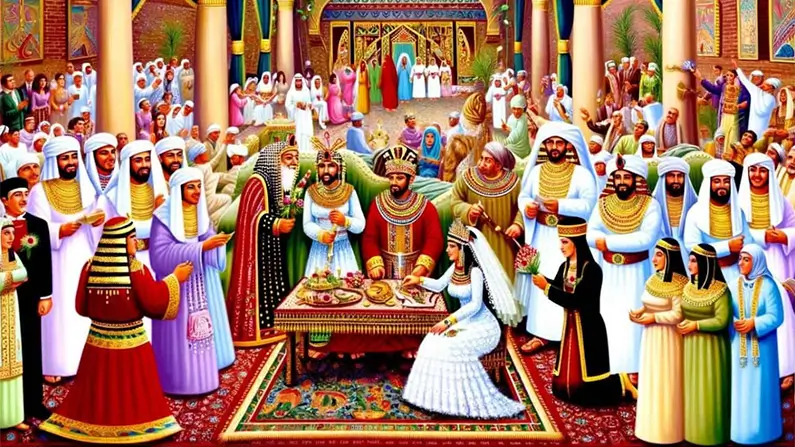
In Ancient Egypt, it was not uncommon for couples to be considered married simply by beginning to live together. This practice was especially common among ordinary people and within more relaxed communities, while formal wedding ceremonies were largely reserved for the elite and royalty. [source]
3 The Library of Alexandria’s role in book copying in Ancient Egypt…
In Ancient Egypt, any book found on a ship arriving in the harbor was immediately taken to the Library of Alexandria to be copied. The original manuscript was kept in the library, while a copied version was returned to the owner. This practice helped the library become one of the greatest centers of knowledge in the ancient world. [source]

You may also like
4 Napoleon’s invasion of Egypt taught us a great deal about its culture, history, and archaeology…
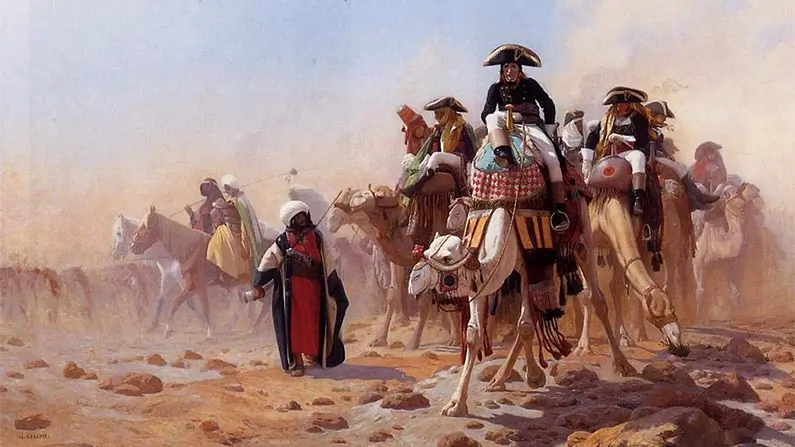
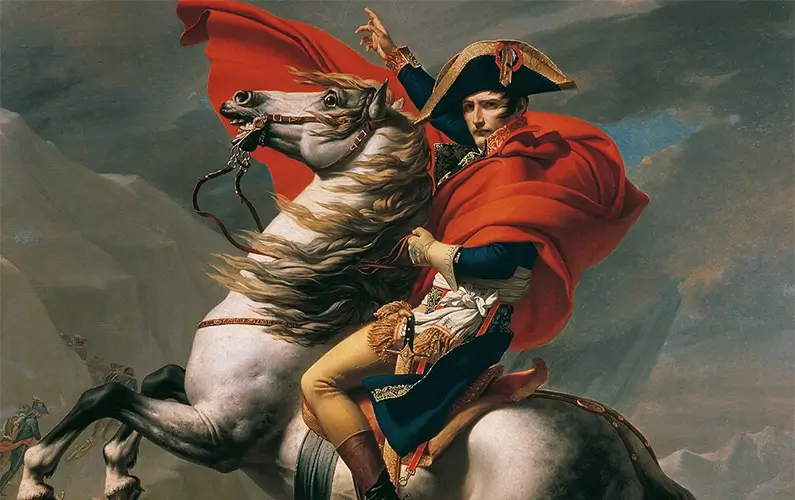
Napoleon Bonaparte’s invasion of Egypt in 1798 played a major role in expanding Western knowledge of Ancient Egypt. He brought with him a large group of experts — including scholars, archaeologists, artists, engineers, and other specialists — to study and document Egypt’s culture, history, and archaeology.
These experts carried out extensive surveys and documentation of Egyptian monuments, temples, and inscriptions, greatly contributing to the Western world’s understanding of ancient Egyptian civilization. [source]
5 Short-statured people were believed to possess heavenly gifts, were treated with great respect, and enjoyed the highest social positions…
Historical evidence suggests that short-statured individuals (often referred to as dwarfs) in Ancient Egypt were sometimes held in high regard and valued for their unique qualities. Dwarfs were occasionally employed at the royal court as entertainers or entrusted with special duties, and could enjoy elevated social status and notable privileges. Their small stature and unusual appearance were at times believed to be divine or magical, associating them with protective or luck-bringing powers.
However, there are also examples showing that dwarfs could face prejudice or discrimination and be treated as different or inferior. Their social standing varied widely — in some regions they enjoyed admiration and respect, while in others they might be marginalized. In other words, the status of short-statured people ranged from very high to very low depending on where in Egypt they lived. [source]
6 One of the oldest known board games in history was played here…
Senet is one of the oldest known board games, played in Ancient Egypt as far back as 3500 BCE. Archaeological evidence shows that the game was enjoyed across Egyptian society — from pharaohs to ordinary citizens — and it also carried religious and symbolic significance.
The game consisted of a board with squares and was played using pieces and dice-like throw sticks. Senet is considered a predecessor to many modern board games, making it one of the most iconic and culturally important games from Ancient Egypt. [source]

You may also like
7 Ancient Egypt is considered to have created some of the world’s first animal protection laws…
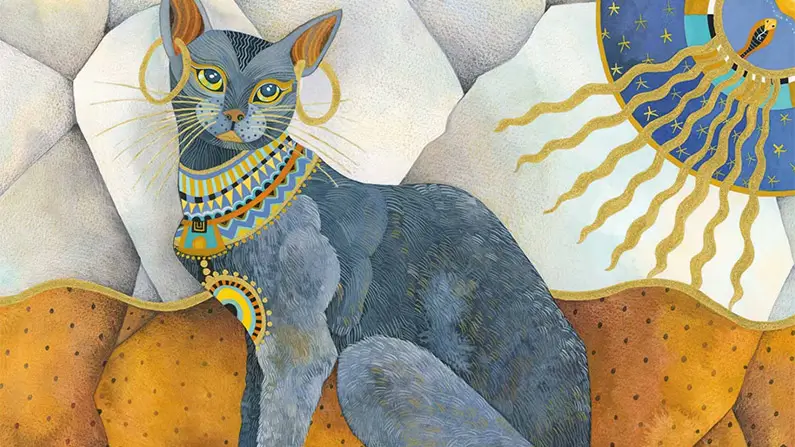
It is well known that cats held a special and highly respected place in Ancient Egypt. They were associated with the goddess Bastet and were regarded as sacred animals. There were even laws and punishments specifically designed to protect cats from being harmed or killed — a remarkable early example of animal welfare.
Cats were treated with deep reverence, and when they died, they were often buried with honors, sometimes even mummified to reflect their esteemed status in society. [source]
8 The oldest preserved peace treaty in history was discovered here…
The earliest documented peace treaty known in history is the Treaty of Kadesh, signed around 1259 BCE between Pharaoh Ramesses II of Egypt and King Hattusili III of the Hittite Empire. The treaty was created to end a long-standing conflict between the two powers over control of the city of Kadesh in the region of modern-day Syria.
The agreement was inscribed on clay tablets, which are still preserved today and can be viewed at the discovery site in Boğazköy (present-day Turkey). This remarkable document is considered the oldest surviving, officially recorded peace treaty in human history. [source]
You may also like
9 Makeup and perfume were used extensively by both men and women…
In ancient Egypt, both men and women wore makeup and used perfume. The use of cosmetics and fragrance had both cosmetic and ritual purposes in Egyptian society.
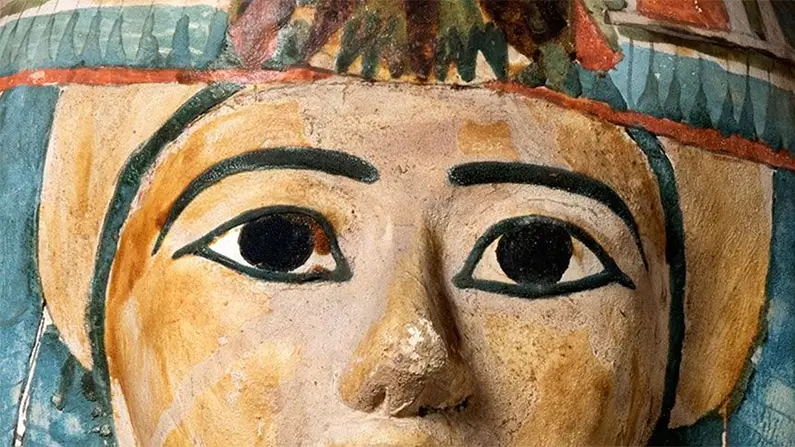
Many Egyptians applied kohl—a substance made from black galena or other minerals—to outline their eyes and give them a darker contour. This wasn’t only for appearance; it also protected the eyes from the sun’s glare and reduced the risk of infections.
Perfume was equally popular among both genders. Egyptians crafted scents from natural ingredients and plant extracts, using them daily as well as during ceremonies. Perfume wasn’t just for masking body odor; it was believed to please the gods, enhance social status, and increase personal attractiveness. [source]
10 This was also the site of the first documented strike in history…
If you thought workplace strikes were a modern invention, think again! Historical evidence shows that workers in ancient Egypt organized one of the first documented strikes in human history. This occurred around 1150 BCE during the construction of the tombs and monuments in Queen Hatshepsut’s mortuary complex at Deir el-Bahari.
The workers were dissatisfied with their working conditions, including the workload and wages, and decided to organize a strike to protest against their superiors. This event is recorded in inscriptions found at the site, where the workers clearly present their complaints and demands to the authorities.
This is considered one of the earliest known strikes in history, demonstrating that Egyptian laborers were capable of organizing themselves and defending their rights even in ancient times. [source]
Xtra The Egyptian pyramids were not built by slaves…
Research indicates that the ancient Egyptian pyramids were not primarily built by slaves. Instead, most of the construction was carried out by skilled laborers and craftsmen, working under the supervision of experienced architects and engineers.
There is evidence showing that these workers were employed laborers who came from various regions of Egypt, and that they were paid for their work in the form of food, drink, and housing. [source]
5 Common Questions About Ancient Egypt
Daily life in Ancient Egypt varied depending on social class, but most people lived in small mud-brick homes, worked as farmers, craftsmen, or merchants, and followed seasonal routines shaped by the Nile River. The majority of Egyptians lived modest lives, while priests, nobles, and royalty enjoyed far greater wealth and influence.
The pyramids were constructed as elaborate tombs for pharaohs and high-ranking individuals, designed to ensure their safe passage into the afterlife. The most famous pyramids, including those at Giza, were built during the Old Kingdom as part of complex funerary systems that reflected the Egyptians’ deep belief in immortality.
Yes—mummification was central to their religion. Egyptians believed that preserving the body was necessary for the soul’s survival in the afterlife. The mummification process removed moisture from the body, wrapped it in linen, and placed it in decorated coffins, often accompanied by grave goods for use in the next world.
Ancient Egyptians spoke the Egyptian language, written in hieroglyphs, hieratic, and later demotic script. Modern understanding of these writing systems became possible after the discovery of the Rosetta Stone, which allowed scholars to decode hieroglyphs thanks to its parallel inscriptions.
Religion played a central role in Egyptian life. They worshipped hundreds of gods and goddesses, each representing aspects of nature, society, and the afterlife. Some of the most important included Ra (sun god), Osiris (god of the afterlife), Isis (goddess of magic), and Anubis (god of mummification). Temples, rituals, and offerings were essential parts of everyday spiritual practice.