

Throughout history, Cleopatra VII Thea Philopator has remained an iconic and captivating figure. Born into an era marked by political intrigue and constant change, Cleopatra rose to power as the queen of ancient Egypt and became a central figure in Roman history. Her intelligence, political skill, and passionate relationships with Roman leaders — including Julius Caesar and Mark Antony — have created a legacy that extends far beyond her own time. So now it’s time to uncover ten interesting, exciting, and surprising facts about the last reigning queen of the Ptolemaic Kingdom of Egypt!
1 Cleopatra probably didn’t look like Elizabeth Taylor…
The famous actress Elizabeth Taylor portrayed Cleopatra VII in the 1963 film Cleopatra. But unfortunately for Cleopatra, she likely never matched her iconic portrayer in appearance. Archaeologists have found ancient coins depicting her face, showing that she looked rather ordinary. The ancient Greek historian Plutarch also claimed that her intelligence, charm, and voice were far more captivating than her physical looks. The academic consensus today is that her political brilliance and magnetic personality were her true sources of allure. [source]
2 Cleopatra used Julius Caesar to reclaim the throne…
Cleopatra had a clear political agenda when she began her relationship with Julius Caesar — it was a strategic alliance meant to strengthen her rule and protect Egypt from the growing threat of Roman influence.
In 48 BCE, Cleopatra sought asylum in Alexandria after being driven out by her brother, Ptolemy XIII. When Julius Caesar arrived in Alexandria the following year, Cleopatra was introduced to him. She used her intelligence, charm, and likely her sexuality to secure his support and win back the Egyptian throne.
Cleopatra’s relationship with Caesar was politically motivated, and their son Caesarion was born as a result of their union. After Caesar’s death, Cleopatra later entered a similarly strategic relationship with Mark Antony. This period in Egyptian history is marked by intense intrigue and a power struggle between Egypt and Rome. [source]
3 Cleopatra declared herself a goddess…
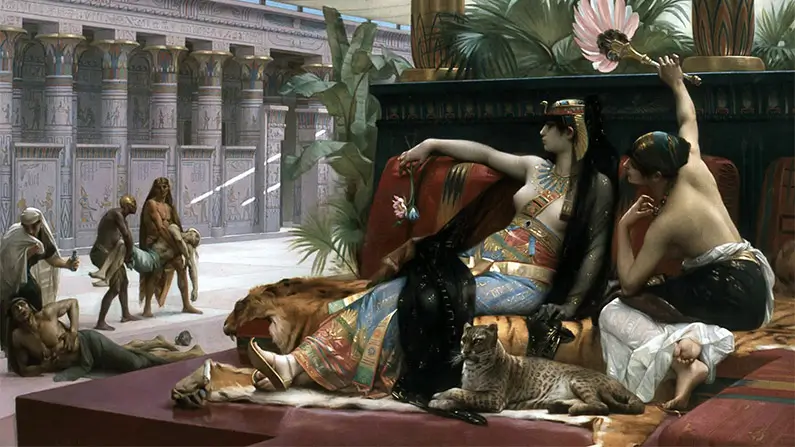
Cleopatra presented and proclaimed herself as a goddess during her reign. Egyptian culture had a long tradition in which royal rulers were considered divine or closely connected to the gods, and Cleopatra followed this tradition to strengthen her political and religious influence.
She specifically identified herself with the goddess Isis, an important figure in Egyptian mythology. Isis was a goddess associated with love, motherhood, and magic. By aligning herself with Isis, Cleopatra sought to increase public support and establish a stronger connection to the ancient Egyptian religion. [source]

You may also like
4 She married two of her own brothers (and may have killed one of them)…
Cleopatra was married to two of her brothers, Ptolemy XIII and Ptolemy XIV, at different points in her life. There are also historical indications that Ptolemy XIV may have died during her reign, possibly under suspicious circumstances.
She married her brothers as part of the political and dynastic traditions of the Ptolemaic Kingdom. In Ptolemaic Egypt, it was customary for royal siblings to marry one another in order to preserve the royal bloodline and secure dynastic succession. [source]
5 Unlike her Greek ancestors, she learned Egyptian…
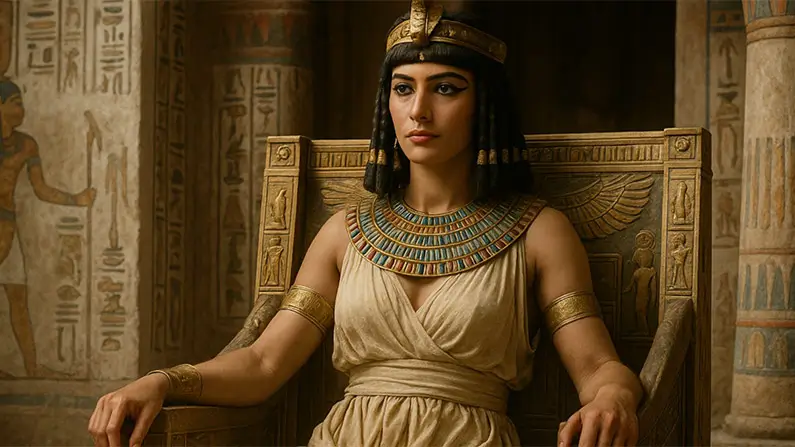
Cleopatra was ethnically Greek, belonging to the Ptolemaic dynasty — a Macedonian-Greek royal line that ruled Egypt after the conquests of Alexander the Great. But unlike her predecessors, she actually took the time to learn the Egyptian language, which meant she could communicate directly and effectively with her subjects. [source]
6 Her two sisters were failed queens (and Cleopatra had both of them killed)…
Cleopatra had two sisters who had also been queens of Egypt: Arsinoe IV and Berenice IV.
Arsinoe IV was Cleopatra’s younger sister. After Cleopatra was driven out of Egypt by her brother Ptolemy XIII, Arsinoe fled to Alexandria, where she declared herself queen. She challenged Cleopatra and her Roman ally Julius Caesar. After Caesar’s victory and Cleopatra’s return to the throne, Arsinoe was captured—first by Caesar and later by Mark Antony. Despite Arsinoe’s pleas for mercy, she was executed on Cleopatra’s orders to eliminate a potential political threat.
Berenice IV was Cleopatra’s older sister. She also ruled Egypt, though her reign was short-lived. After Julius Caesar defeated Ptolemy XIII and restored Cleopatra to power, Berenice was exiled. She later returned to Alexandria and claimed the throne, which led to her being executed on Cleopatra’s command to remove her as a rival and secure Cleopatra’s political position. [source]

You may also like
7 Egyptian wasn’t the only language she mastered…
Another interesting fact about Cleopatra is that she spoke several languages fluently, including Egyptian, Greek, and even Latin. Some historical sources claim she spoke up to eight languages. Her multilingual abilities reportedly helped her charm and communicate effectively with important political leaders and allies.
She was known for her intelligence and diplomatic skill, and her ability to speak multiple languages gave her a significant advantage in navigating the complex political intrigues that defined her time in power. [source]
8 She had four children — and one of her descendants may have been another rebel queen…
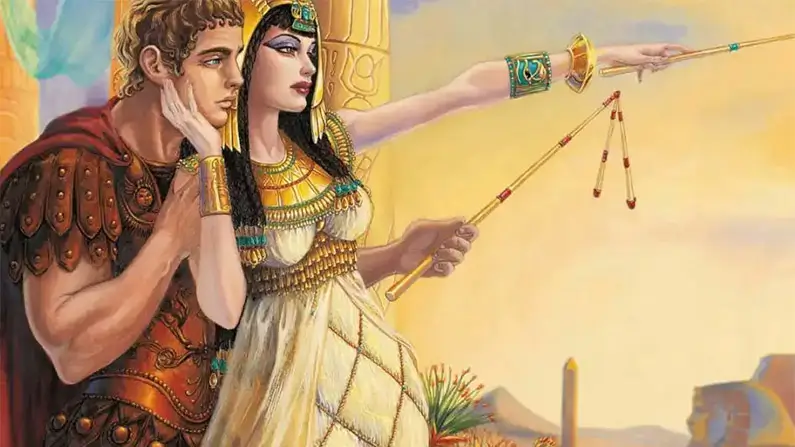
Cleopatra had four known children, and one of her descendants who may be linked to another rebel queen was her daughter Cleopatra Selene II.
Cleopatra Selene II was the daughter of Cleopatra and Mark Antony. After the defeat and death of her parents in 30 BCE, she grew up in Rome. She later married King Juba II of Mauretania, and together they ruled the kingdom and had children, including a son named Ptolemy of Mauretania, who became king after them. His descendants played a role in Roman history, and one of his distant descendants was possibly Queen Zenobia of Palmyra. Zenobia was a famous rebel ruler who challenged the Roman Empire during the reign of Emperor Aurelian in the 3rd century CE. [source]

You may also like
9 She became known for her interest in beauty and cosmetics…
A fun curiosity about Cleopatra is that she is said to have experimented with various beauty products and used different beauty techniques to preserve her youth and appearance. She was well-known for her interest in beauty and cosmetics, and it’s said that she used mixtures of milk and honey to keep her skin soft and radiant. According to some historical accounts, Cleopatra even took regular baths in donkey’s milk, which was believed to have beneficial effects on the skin. [source]
10 She chose suicide rather than becoming a prisoner and losing her kingdom…
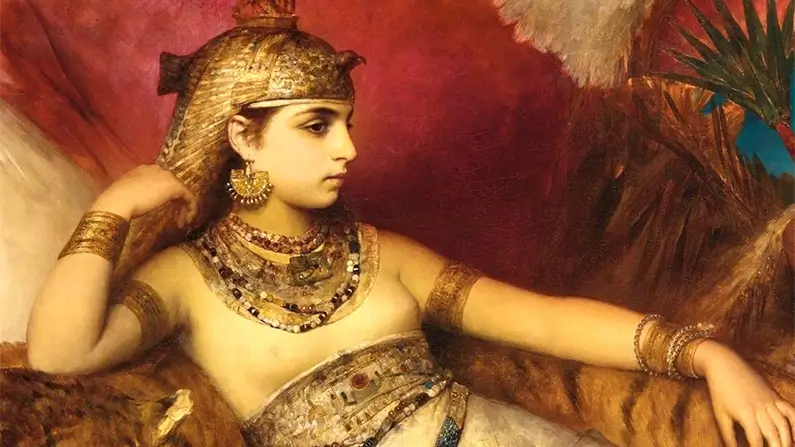
It is well known and well documented that Cleopatra took her own life after her relationship with Mark Antony collapsed and Octavian (later Emperor Augustus) captured Alexandria in 30 BCE. Cleopatra chose death rather than becoming a prisoner and losing her kingdom.
According to the most famous account, Cleopatra allowed a venomous snake — likely an asp — to bite her. An alternative version claims that she used a needle or injected herself with poison. It is also possible that a combination of methods was used, and the details vary between different historical sources. [source]
5 Common Questions About Cleopatra VII
Cleopatra VII was the last reigning pharaoh of the Ptolemaic Kingdom of Egypt, known for her political intelligence, diplomacy, and influence over Roman leaders such as Julius Caesar and Mark Antony.
Despite ruling Egypt, Cleopatra was ethnically Greek, descended from the Macedonian Ptolemaic dynasty. However, she was the first of her dynasty to learn and speak the Egyptian language, strengthening her connection to the people she ruled.
Historical evidence suggests that Cleopatra’s charm, intelligence, and voice were considered more captivating than her physical appearance. Ancient coins show she likely had more ordinary features, not the Hollywood beauty often depicted today.
Cleopatra had politically significant relationships with Julius Caesar and later Mark Antony. Both alliances helped her maintain power in Egypt during a period of intense political struggle with Rome.
Cleopatra committed suicide in 30 BCE after Octavian defeated her and Mark Antony. The most famous account says she let an asp (venomous snake) bite her, though other sources suggest she used a poisoned needle or another method.