
Dogs have long been humanity’s best friend — loyal companions who have stood by our side for thousands of years. They’re not just beloved family members but also fascinating creatures with unique traits and behaviors.
In this article, we take you on a journey through 10 exciting — and perhaps surprising — facts about dogs that both dog owners and the simply curious can enjoy. Whether you want to learn more about why dogs behave the way they do, their incredible senses, or their unexpected history, you’ll find something here that’s sure to capture your interest.
1 A dog’s nose is as unique as a human fingerprint…
Did you know that every dog’s nose print is completely unique, just like our fingerprints? The pattern of ridges and lines on a dog’s nose differs from one individual to another and can even be used for identification. There are now systems and apps that use nose-print recognition to track and verify dogs — much like the police use fingerprints for humans!
This unique nose structure also helps dogs capture scent molecules more efficiently, contributing to their extraordinary sense of smell. [source]
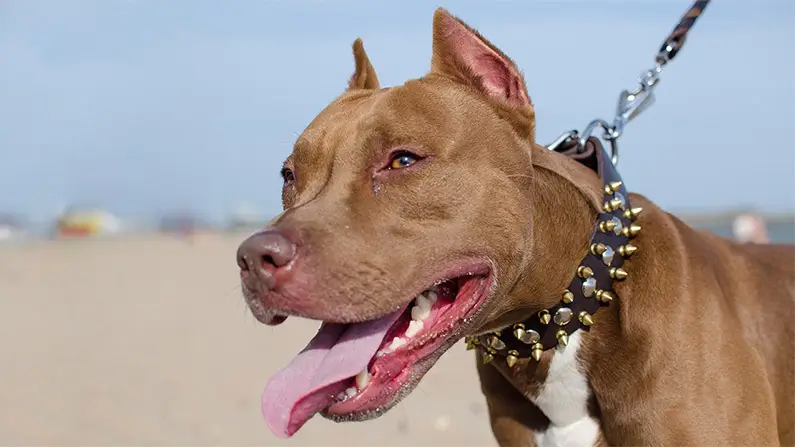
2 This is why spiked dog collars exist…
Spiked dog collars (like the ones you often see in movies) are commonly associated with guard dogs — especially in American films. But these collars originally had a very practical purpose. They were invented in ancient Greece and were designed to protect a dog’s neck from wolf attacks. [source]
3 What do dogs eat? And can you give them human food…?
Dogs are omnivores, which means they can eat a varied diet that includes both animal and plant-based products. You can give dogs certain types of human food, but it’s important to know which foods are safe and which can be dangerous.
For example, you can give your dog cooked meat, vegetables, fruit without pits or seeds, rice and pasta, eggs, peanut butter, and yogurt, just to name a few.
However, you should never give your dog foods such as chocolate, onions and garlic, grapes and raisins, avocado, caffeine, alcohol, xylitol, nuts, or fatty and heavily seasoned foods.
And of course, it’s always important to feed your dog in moderate portions and introduce new foods gradually. [source]
You may also like
4 A new dog breed played the wolves in Game of Thrones…
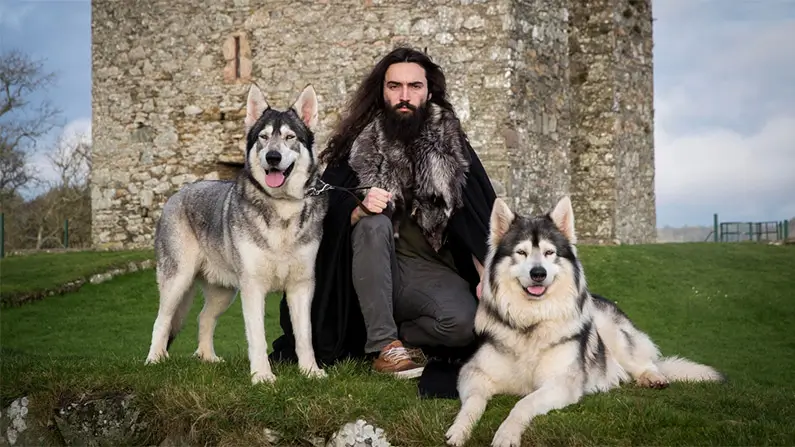
In the first season of HBO’s hit series Game of Thrones (2011–2019), viewers were introduced to the iconic direwolves — massive, majestic, almost supernatural predators. But what many fans didn’t know is that these “wolves” were actually played by real dogs, specifically a then relatively new breed called the Northern Inuit Dog.
This breed was developed in the United Kingdom with the goal of creating a dog that looked like a wolf but had a friendly and trainable temperament. Thanks to their striking wolf-like appearance, they were cast as the Stark children’s direwolves in the show, which quickly boosted their popularity worldwide. The image below was taken directly from the set — showing how these dogs brought some of the series’ most beloved animal characters to life. [source]
5 3-year-old survived 11 days in the wilderness — thanks to her dog…
In 2014, a near-miraculous event took place in the Russian taiga, one of the world’s most unforgiving forest regions. A 3-year-old girl disappeared into the Siberian wilderness — but survived against all odds for eleven days. She managed to stay alive by drinking water from a stream and eating berries she found in nature.
But the true hero of the story was her Siberian Husky. The dog stayed by her side, kept her warm during freezing nights, and protected her from wild animals. After nine days, the dog suddenly left the girl — to look for help. Incredibly, he managed to find people who led rescuers back to her. She was found alive and made a full recovery — thanks to her loyal and courageous four-legged friend. [source]
6 Did you know the Canary Islands were named after dogs — not birds…?
Despite what many believe, the Canary Islands did not get their name from birds, but actually from dogs. The name comes from the Latin term Canariae Insulae, which means “Island of Dogs“. According to historical sources, early explorers are thought to have encountered large numbers of dogs on the islands — or possibly seal-like animals referred to as “sea dogs” — which led to the name.
The canary birds, on the other hand, were named after the islands, not the other way around. So when you hear the word “canary”, it’s actually an echo of a name that originally referred to four-legged creatures, not winged ones. [source]

You may also like
7 Why every hospital should be equipped with dogs…
Using a simple food-reward system, researchers have successfully trained ordinary household dogs to detect serious diseases such as lung and breast cancer — solely by smelling a patient’s breath. In tests confirmed by biopsies, the dogs demonstrated an accuracy rate of 90–100%, which is nothing short of remarkable.
The most astonishing part? The training only took a few weeks. A dog’s sense of smell is so sensitive that they can detect even the tiniest chemical changes in the body, long before symptoms become noticeable to humans. With this ability, dogs could become an invaluable asset in future healthcare — perhaps even saving lives simply by using their noses. [source]

8 Why dogs love being scratched behind the ears…
Scratching your dog behind the ears is more than just cozy — it’s actually a biological pleasure. When you touch that specific area, nerve impulses are sent to the hypothalamus and pituitary gland, two key parts of the brain that regulate emotions and hormone production. These glands then release endorphins, the body’s natural pain-relieving and calming chemicals. They’re the same “feel-good hormones” humans release when we exercise or laugh.
For the dog, this creates a sensation of deep relaxation — sometimes even euphoria. That’s why many dogs close their eyes, lean into your hand, or even sigh happily when you scratch them there. In short: you’re giving your dog a natural happiness boost, simply through a bit of loving touch. [source]
You may also like
9 This dog breed is the best at guarding sheep…
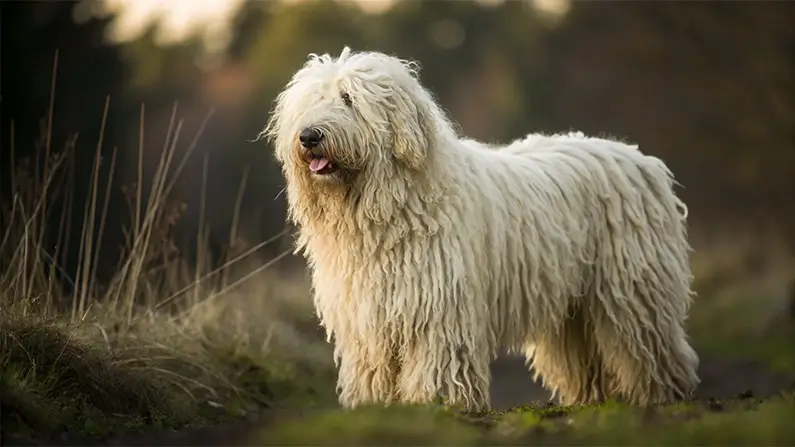
There is a Hungarian dog breed called the Komondor (pictured below), known for its unique and characteristic coat that resembles dreadlocks. This unusual coat isn’t just for show — it has a very practical purpose. Komondors were originally bred to guard sheep, and their thick, corded coat acts as natural armor. The fur is so dense and compact that it’s nearly impossible for predators like wolves to bite through, making them incredibly resilient in confrontations.
Ironically, another advantage of their appearance is that they blend in easily with the sheep they guard, especially from a distance. This means potential predators may not even realize the flock is protected until it’s too late. The Komondor’s coat continues to grow throughout its life and requires special care to stay clean and free from parasites — but in the wild, it served as part of their protective shield.
10 Talk about incredible hearing…
During World War II in Australia, there was an Australian Kelpie named Gunner whose hearing was so sharp that he could warn air force personnel of incoming Japanese aircraft 20 minutes before they arrived — and before they showed up on radar. He could even distinguish the sounds of allied planes from enemy aircraft. [source]
You may also like
5 Common Questions About Dogs
Doggies wag their tails to communicate. A wagging tail doesn’t always mean happiness — it can signal excitement, nervousness, curiosity, or even aggression depending on speed, direction, and body language.
They bark because it’s their primary form of communication. They may bark to alert, play, express fear, guard their territory, or get attention. The tone and frequency often reveal the underlying emotion.
Dogs lick for several reasons, but most commonly as a sign of affection. It can also be a way to taste, explore, show submission, or get attention. Some dogs lick more when they feel anxious.
The answer depends on breed and coat type, but most dogs only need a bath every 4–8 weeks. Bathing too often can remove natural oils and irritate the skin, so always consider your dog’s grooming needs.
Some human foods are extremely toxic to them. The most dangerous include chocolate, grapes/raisins, onions, garlic, xylitol, alcohol, and caffeine. Even small amounts can cause severe illness.