In our modern world, the environment and environmental issues are more relevant and urgent than ever before. With rising temperatures, the loss of biodiversity, and pollution affecting our oceans and air, it is clear that we are facing challenges that require immediate action. Humans have historically struggled to take proper care of the environment around us — and that remains true today. That’s why here are ten important facts about the environment that everyone should know.
1 How many times do you need to reuse a cloth bag before it becomes more eco-friendly than a plastic bag…
According to a study published by Sweden’s Environmental Protection Agency, a reusable cotton shopping bag must be used at least 131 times before its environmental impact becomes lower than that of a single-use plastic bag. This is due to the significant environmental costs associated with producing cotton bags, including manufacturing, transportation, and waste management.
The study highlights that while reusable bags are often seen as the greener choice, their environmental benefits depend heavily on how often they are actually reused. [source]
2 The closed and artificial environment project failed because of a simple detail…
Biosphere 2 was an ambitious experiment in which researchers created a fully enclosed and artificial environment. However, the project ultimately failed for a reason the scientists had not anticipated. The artificial ecosystem experienced serious problems with tree growth and stability.
The issue was caused by a lack of wind inside the closed system, which meant that the trees did not develop reaction wood (also known as stress wood). This type of wood is crucial for a tree’s structural strength and its ability to remain upright. Without it, the trees grew tall but weak, leading to unexpected failures within the ecosystem. [source]

3 Cow emissions have an impact on our climate that is at least as significant as cars…
Methane produced by cows — released through both flatulence and burping — has a major impact on the greenhouse effect. Methane is around 20 times more powerful as a greenhouse gas than carbon dioxide (CO₂). According to some estimates, cows account for approximately 14.5% of the world’s total human-caused methane emissions.
To address this issue, it has been suggested that adding alfalfa and flaxseed to cattle feed may help reduce methane emissions. The France-based company Valorex SAS has researched and implemented such methods in efforts to lower methane output from cows. [source]
4 Toothpaste used to contain microplastics that were harmful to the environment…
In the past, some toothpastes contained tiny plastic particles known as microplastics, which were used for abrasive or cosmetic purposes. Over time, these microplastics became increasingly controversial due to their negative impact on the environment and potential health risks.
As awareness grew, many countries introduced regulations to ban or restrict the use of microplastics in cosmetic products, including toothpaste. Today, most toothpaste brands have replaced plastic particles with natural or biodegradable alternatives, helping to reduce environmental harm and limit pollution. [source]

5 This is why you no longer see colored toilet paper in stores…
Colored toilet paper was once very popular, especially during the 1970s, when people liked to match it with their bathroom décor. However, its popularity declined after doctors began warning that certain dyes and chemicals used in production could be harmful to health.
In addition to health concerns, the manufacturing process raised environmental issues. The chemicals and dyes used were seen as problematic, particularly because of how they broke down in sewage systems and affected the environment. Together, these health and environmental concerns led to a drop in consumer demand, and manufacturers eventually stopped producing colored toilet paper on a large scale. [source]
6 Farting in a sterile environment can cause contamination…
The gases produced when you fart are actually sterile and do not contain bacteria that can contaminate a sterile environment. However, microscopic particles of fecal matter may be released along with the gas and can pass through clothing, potentially causing contamination under certain conditions. [source]
7 A gigantic artificial salt mountain in Germany threatens to contaminate land and groundwater…
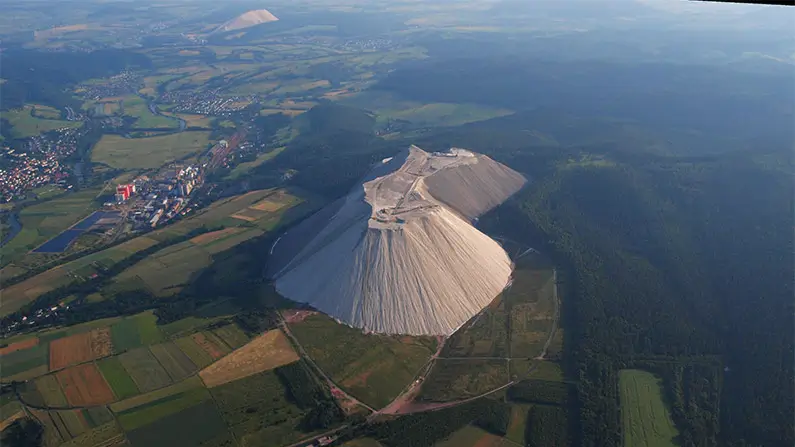
There is a massive salt waste site in Germany known as Monte Kali (called Sondershausen Salt Mine in German), formed as a result of decades of salt extraction. The accumulated salt has created a mountain-like structure, and there are growing concerns that salt runoff could leak into the surrounding environment.
Such leakage poses a risk of contaminating nearby soil and groundwater, potentially causing long-term environmental damage to the region. A photo of this gigantic artificial salt mountain can be seen below. [source]
8 The solvent used after the Torrey Canyon oil tanker spill likely caused more environmental damage than the oil itself…
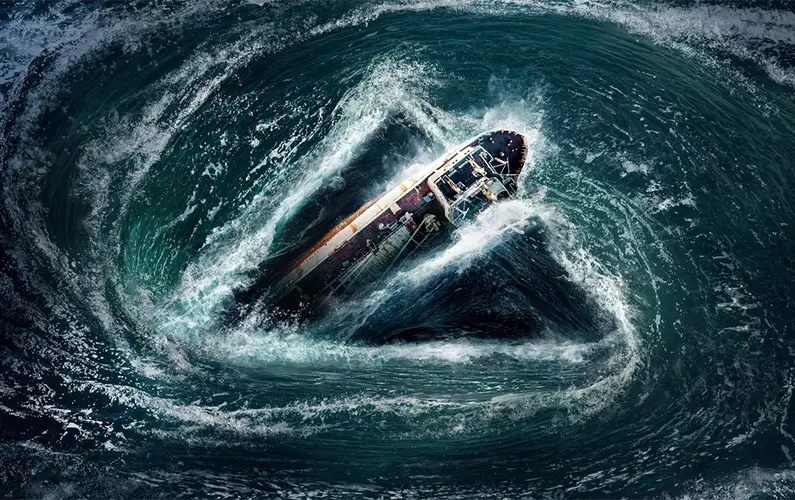
The solvents used to clean up the oil spill from the wrecked Torrey Canyon oil tanker off the coast of England in 1967 are believed to have caused more environmental harm than the oil spill itself. At the time, it was common practice to use chemical dispersants to break up oil and make it easier to remove.
However, these chemicals can be highly harmful to marine life and ecosystems. While dispersants may reduce the visible impact of oil pollution, they can increase the risk of long-term damage to marine organisms and the surrounding environment. [source]

You may also like
9 An artificial Christmas tree is significantly more damaging to the environment than a real one…
Artificial Christmas trees are often thought to be a “green” alternative. However, in reality, they tend to have a larger environmental impact than using a real Christmas tree (considering transportation and all associated factors). An artificial tree can only become environmentally justifiable if it is used for over 20 years, which is rarely the case. [source]

10 20th Century Fox tried to “beautify” a beach for filming — damaged the ecosystem and was sued…
20th Century Fox made extensive alterations to a beach in Thailand (Ko Phi Phi Leh) where the film The Beach (2000) was shot, in an effort to make it appear more pristine and paradise-like. These changes included removing natural vegetation and modifying the landscape, causing significant environmental disruption.
The actions sparked strong criticism from environmental organizations and local authorities, and 20th Century Fox was taken to court for damaging the ecosystem. The legal case did not only affect Fox — the Thai production company involved in the filming was also found liable, highlighting the serious environmental consequences of the project. [source]
Xtra Small, controlled forest fires are often beneficial for the environment…
Small, controlled forest fires can actually be beneficial for the environment. These fires help clear away dead wood and excess vegetation, release nutrients back into the soil, and reduce the risk of larger, more destructive wildfires by lowering the amount of flammable material.
They can also benefit certain plant and animal species that are adapted to fire-based ecosystems, making controlled burns an important tool in modern forest management and ecological balance. [source]
5 Common Questions About the Environment
There is no single issue, but climate change is widely considered the most pressing environmental problem. It affects weather patterns, ecosystems, sea levels, and food production, while also intensifying other problems such as biodiversity loss and pollution.
Climate change increases global temperatures, leading to melting ice caps, rising sea levels, and more extreme weather events. It also disrupts ecosystems and wildlife habitats, making it harder for many species to survive.
Individuals can make a difference by reducing waste, conserving energy, choosing sustainable products, and cutting down on meat consumption. Small actions, when multiplied across millions of people, can have a significant environmental impact.
Not always. Reusable products are only more environmentally friendly if they are used enough times to offset their production impact. For example, cotton bags must be reused many times before they become greener than single-use plastic bags.
Biodiversity helps ecosystems remain stable and resilient. A wide variety of species supports pollination, clean water, soil health, and food production, making biodiversity essential for both nature and human survival.