
Coca-Cola is one of the world’s most recognizable beverages – but behind the familiar logo lies a series of unexpected and sometimes downright astonishing details. From secret recipes and historical scandals to scientific myths and cultural influence, there is far more to discover than just the classic taste. Here are ten facts that may make you look at your favorite soft drink with completely new eyes.
1 Coca-Cola Both Sinks… and Floats…
If you drop a regular can of Coca-Cola into water, it will sink immediately. The diet version, however, does the exact opposite – it floats.
The difference comes down to what’s inside. Classic Coca-Cola is sweetened with sugar, which increases the liquid’s density enough to make the entire can heavier than the surrounding water. Diet Coke, on the other hand, is sweetened with artificial sweeteners, which require only tiny amounts to achieve the same sweetness. As a result, the drink contains far less mass, making the can lighter overall – and light enough to float.
This phenomenon is a clear example of how small changes in ingredients can affect physical properties like weight and buoyancy. It’s also a fun experiment to try at home – perfect if you want to impress someone with a bit of everyday physics! [source]
2 Would cure your sex life…
Rumors have long circulated that the soft drink was originally created as a cough medicine. This claim is partly true. In its earliest days, the beverage was marketed as a remedy for numerous ailments, including reduced sexual desire.
The company’s founder, John Pemberton, was later forced to remove alcohol from the original recipe due to prohibition laws. The idea that Coca-Cola would boost your libido simply because it once contained alcohol is therefore better seen as a clever marketing gimmick rather than actual medical reality. [source]
3 Employees tried to sell the secret recipe to Pepsi…
Three former employees were behind one of the most sensational cases of corporate espionage in the history of the beverage industry. Their goal? To sell the secret recipe of the world’s most iconic soft drink to its biggest rival, Pepsi, for a price tag of $1.5 million.
What they didn’t anticipate was the competitor’s response. Instead of taking the bait, Pepsi immediately contacted the company that owns the recipe and alerted them to the attempt. This, in turn, led to the FBI getting involved and a full-scale investigation being launched.
Those involved were arrested and brought to trial, and the world-famous recipe remained secure where it belongs. The incident quickly became a reminder of how far some are willing to go – and of the importance of loyalty, even between rivals. [source]
4 Extracted from dried coca leaves…
In order for the drink to be produced in the United States, the company operates under a special agreement with the U.S. Drug Enforcement Administration (DEA). “Drugs and Coca-Cola” again, you might be thinking – but the truth is that the company does in fact extract substances from dried coca leaves.
The reason such an agreement is required is that the leaves are imported from Peru (and in smaller amounts from Bolivia) – and we’re talking about large quantities, not minor shipments. However, it is a separate company in New Jersey that handles the dangerous compounds in the coca leaves, which are used for medical purposes.
Once those substances are removed, the remaining material is sent on to the beverage company – and ultimately ends up in your can of soda. [source]
5 Sold in almost every country – almost…
There are only two countries in the entire world where Coca-Cola is not officially sold: North Korea and Cuba.
However, there is a strong possibility that North Korea may soon stand alone. As relations between the United States and Cuba have gradually improved and long-standing conflicts have begun to fade, Coca-Cola’s absence from Cuba may not last forever. [source]
6 A marshal drank colorless Coke to avoid upsetting Stalin…
A Soviet marshal became so fond of the taste of Coca-Cola during the 1940s that he requested a colorless version of the drink – one that would resemble vodka.
The reason it was transparent was simple: he didn’t want to anger Joseph Stalin by openly consuming an American beverage. To complete the disguise, the bottle cap was even decorated with a Soviet star, making the drink appear politically acceptable at a glance. [source]
7 Guaranteed free drinks for all American soldiers… during World War II…
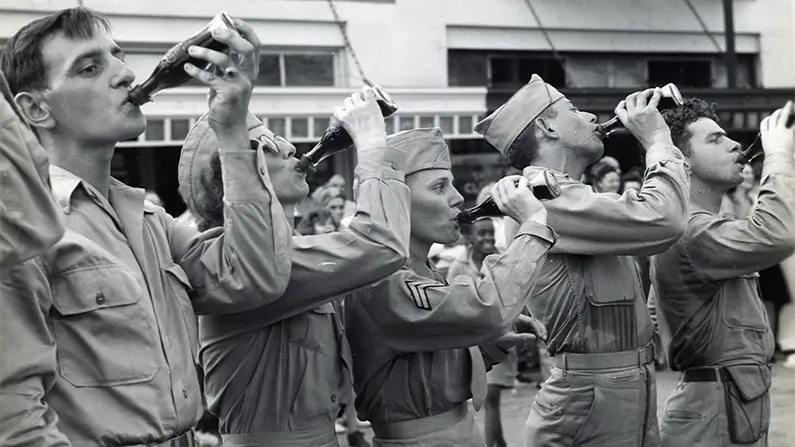
During World War II, Coca-Cola’s leadership publicly announced that they would do everything in their power to ensure that every American in uniform would receive a bottle of Coke – no matter where they were stationed and regardless of the cost to the company. [source]
8 Coca-Cola wanted to set prices based on the weather…
In the 1990s, the beverage company explored the idea of introducing dynamic pricing for its products. The plan was for vending machine prices to automatically adjust depending on the outdoor temperature.
However, the concept never made it through legally, and the weather-based pricing model was ultimately abandoned before implementation. [source]
9 Refused to buy Pepsi…
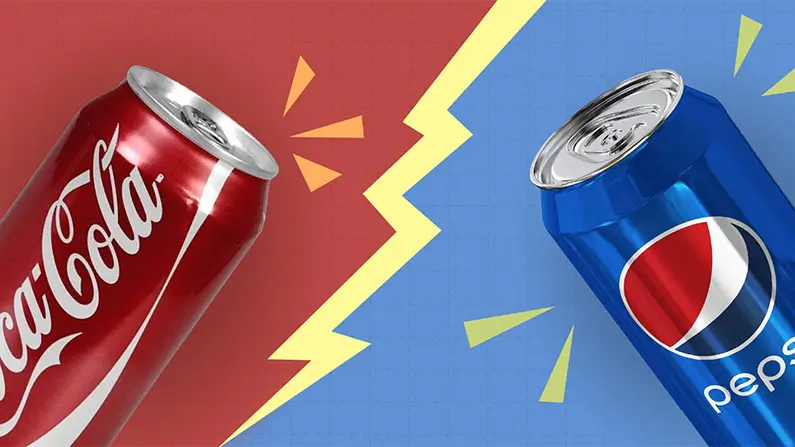
Between 1922 and 1933, Coca-Cola was offered the opportunity to acquire Pepsi-Cola on three separate occasions. Coca-Cola declined every time – and today, the two companies stand as each other’s biggest competitors. [source]
10 An advertisement image sparked major backlash…
A few years ago, the company was forced to pull an advertising campaign worth a total of $200,000. The reason? The graphic designer behind the image had decided to slip in a hidden detail in the background – a woman performing oral sex on a man.
Once the image was discovered, the campaign quickly drew heavy criticism and was immediately withdrawn. [source]
5 Common Questions About Coca-Cola
Yes. The Coca-Cola recipe is one of the world’s most famous trade secrets. Only a few people are believed to know the full formula, and it has never been publicly disclosed.
Partly. Early versions of Coca-Cola did contain extracts from coca leaves, which naturally include cocaine. However, all cocaine was removed from the recipe by the early 1900s, and today the drink contains no narcotics.
Because of sugar. Regular Coke contains large amounts of sugar, increasing its density so the can sinks. Diet Coke uses artificial sweeteners, which weigh far less, allowing the can to float.
Almost. the drink is sold in nearly every country, with North Korea long being the most notable exception. Availability can also vary due to political or economic restrictions.
In excess, yes. Coca-Cola contains high levels of sugar (or sweeteners) and acids, which can contribute to weight gain, tooth erosion, and other health issues if consumed frequently. Moderation is key.