Eva Braun is, for many, known solely as Adolf Hitler’s partner, but she was also a complex individual with her own life and interests that often remain hidden in the shadows of history. Who was the woman behind the name? In this article, we reveal ten unexpected and fascinating facts about Eva Braun — details that offer a fresh look at her life beyond the well-known events of the era.
1 Eva Braun was born in Munich, Germany, on February 6, 1912…
Her parents, Friedrich and Fanny Braun, had three daughters — Ilse, Eva, and Gretl — with Eva being the middle child.
In 1921, her parents separated, but remarried just a year later in November 1922, most likely for economic reasons during the harsh years of hyperinflation in Germany. [source]
2 Eva Braun met Hitler at age 17 while working for a Nazi Party photographer…
At 17 years old, Eva Braun began working for Heinrich Hoffmann, the official photographer of the Nazi Party, where she learned to use a camera and develop film. During this time, she met Adolf Hitler, who was 23 years older than she was. At that point, Hitler was involved with his half-niece Geli Raubal, but after Raubal’s tragic suicide in 1931, Braun and Hitler grew closer.
Their relationship was complicated and emotionally tense. Braun made two suicide attempts, and after recovering from the first in 1932, she and Hitler became more romantically involved. She soon began spending nights at his Munich apartment, becoming a more permanent — if hidden — part of his life. [source]
3 Hitler refused to be seen publicly with Eva Braun…
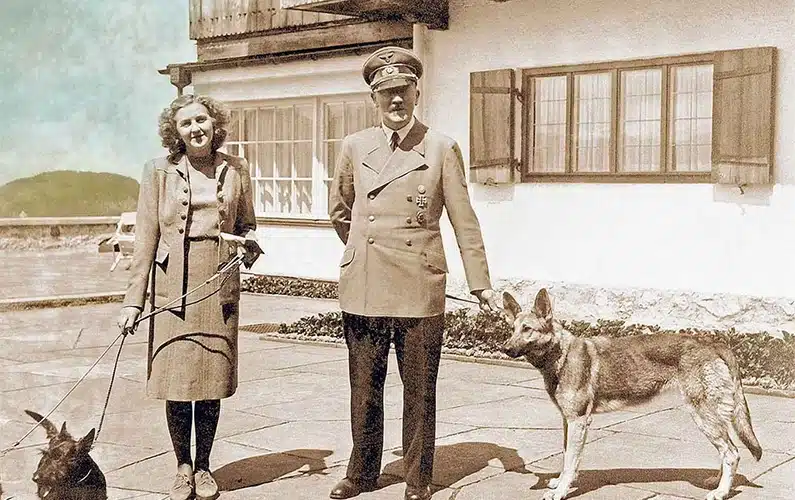
Adolf Hitler wanted to appear unmarried and unattached to appeal to female supporters and maintain his carefully crafted public image. Because of this, he kept his relationship with Eva Braun a secret, and the two were rarely seen together in public. It wasn’t until after the war — and their deaths — that the full extent of their relationship became widely known.
As a photographer working under Heinrich Hoffmann, Braun was able to travel with Hitler’s entourage without drawing too much attention. By 1944, she gained more access to official events, especially after her sister Gretl married high-ranking SS officer Hermann Fegelein. Through that connection, Braun could be presented socially as Fegelein’s sister-in-law, giving her a legitimate reason to appear in elite circles. [source]

You may also like
4 Braun and Hitler had adjoining bedrooms at the Berghof…
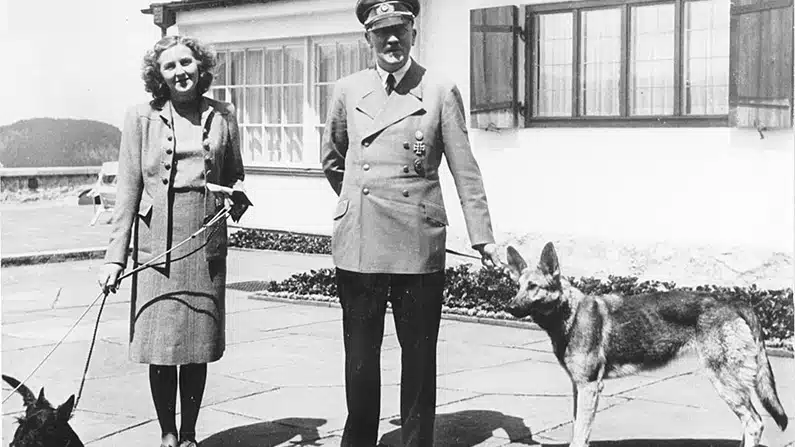
The Berghof was Hitler’s private chalet in Berchtesgaden, where he could withdraw with his inner circle away from public view. Eva Braun and Hitler had adjoining bedrooms, giving them greater freedom to spend time together without scrutiny.
Braun often acted as a hostess, inviting friends and family to the Berghof, and she was even involved in designing uniforms and workwear for the household staff. Many historians believe Braun helped cultivate an idyllic lifestyle in the Bavarian Alps, which is reflected in her casual home videos of Hitler and his closest Nazi associates. [source]
5 Her home videos offer a rare glimpse into the private lives of Nazi leaders…
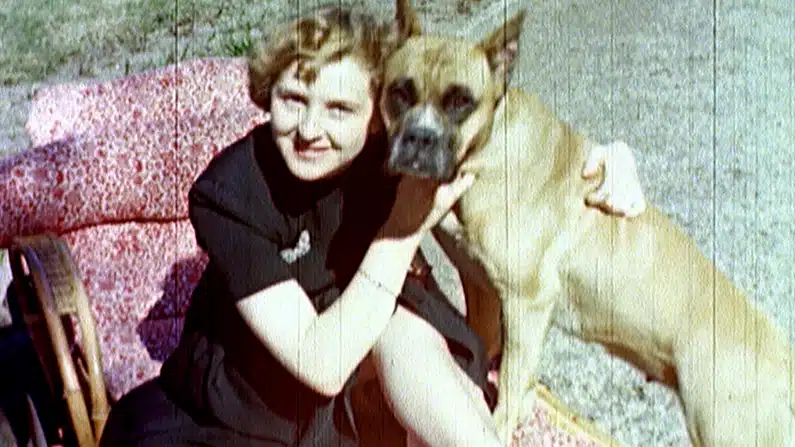
Eva Braun was known for creating a large collection of home movies documenting life at the Berghof, Hitler’s retreat in the Bavarian Alps. Her films captured everyday moments and casual interactions between Hitler and prominent Nazis, including Joseph Goebbels, Albert Speer, and Joachim von Ribbentrop.
These videos reveal a more relaxed and personal side of Hitler and his inner circle — laughing, socializing, and enjoying downtime together. When they were discovered in the 1970s, the footage shocked researchers and the public, showing Hitler in a disturbingly human and informal light, a stark contrast to his role as dictator and architect of the Third Reich. [source]
6 It is believed that Eva Braun had little interest in politics…
Eva Braun was often described as being entirely uninterested in politics, despite her long-term relationship with Adolf Hitler. She wasn’t even a member of the Nazi Party. Historically, it has been said that her focus was on private life and social circles, rather than Hitler’s political agenda or the ideology surrounding him.
However, there is one incident from 1943 that suggests she could take action on political matters — at least when they directly affected her. When a proposal was made to ban the production of cosmetics and luxury items, she reportedly became upset and raised the issue with Hitler. As a result, cosmetic production was halted rather than outlawed entirely, preserving access to the luxuries she valued. [source]

You may also like
7 It is believed that Eva Braun had little interest in politics…
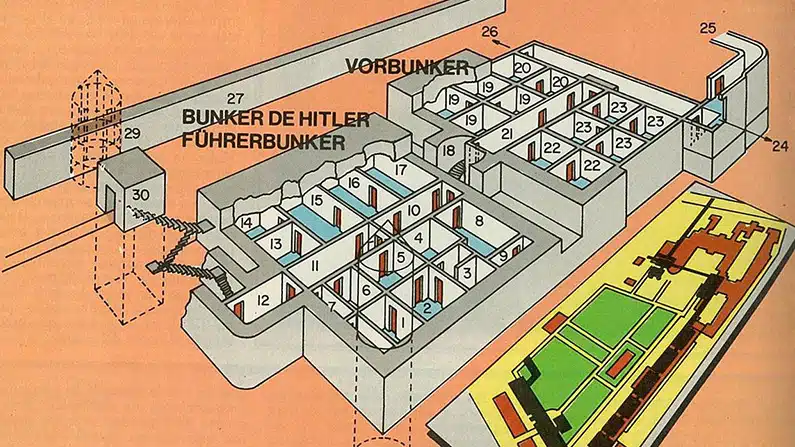
Eva Braun insisted on staying at Hitler’s side in the Führerbunker during the final stages of the war. In the spring of 1945, as the situation for Nazi Germany grew increasingly desperate and Berlin was encircled by the Red Army, Braun made it clear that she intended to remain with him.
She joined Hitler in the bunker in April 1945, where they spent the last days of their lives together below the shattered city. [source]
8 Hitler’s dog Blondi was a gift to Eva Braun…
Eva Braun had a more distant relationship with Blondi, the German Shepherd Hitler gave her, than many might expect. Although she didn’t necessarily dislike the dog, she was not particularly attached to her. Reports suggest Braun sometimes showed disinterest toward Blondi and was not always the one caring for her.
Blondi may have been a gift from Hitler to Braun, but their bond never appeared especially close. Many of Braun’s photos and home movies focus more on Hitler’s relationship with the dog than her own. Hitler’s affection for Blondi is well documented, and it’s possible he used the dog as a symbol of his authority and personality.
Although Blondi was part of their daily lives, Braun seemed to view the dog more as part of Hitler’s world than her own. Her connection to animals — like her broader interests — tended to revolve around the life she lived beside Hitler, rather than anything independent of it. [source]

You may also like
9 Eva Braun and Adolf Hitler were married for less than 40 hours…
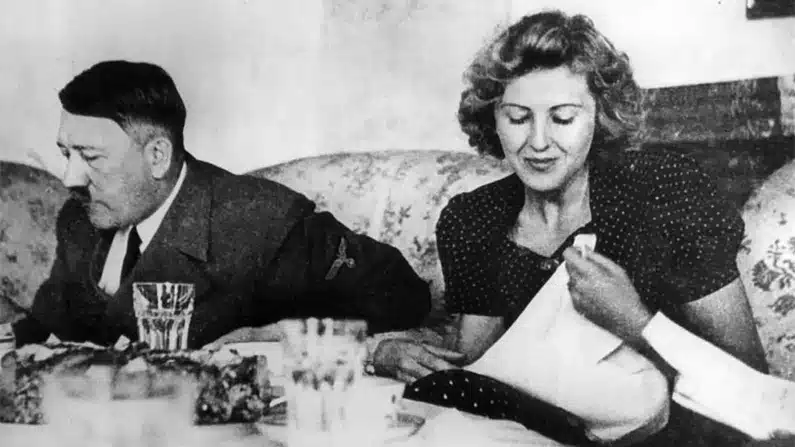
They were married in the bunker on 28 April 1945, while the Red Army was bombarding Berlin overhead. The ceremony was brief and attended by only a handful of witnesses, including Joseph Goebbels and Martin Bormann. Afterward, the couple shared a small breakfast and signed their marriage certificate.
Braun first signed her name as “Eva B“, but quickly changed it to “Eva Hitler“, marking her new status as the dictator’s wife. Their marriage, however, was tragically short-lived — the pair committed suicide less than 40 hours later, on 30 April 1945. [source]
10 The rest of Eva Braun’s family survived the war…
Eva’s parents and sisters lived on after her death. Her sister Gretl, who was also part of Hitler’s inner circle, gave birth to a daughter shortly after Eva died — a girl named Eva, in honor of her aunt.
Gretl possessed a vast collection of documents, photos and home movies belonging to her sister, and she was later persuaded to reveal their location to an undercover U.S. Army agent. These materials helped uncover the identities of key figures in Hitler’s inner circle, and shed new light on Hitler’s private life — as well as on Eva Braun, who lived in the shadows of the dictator for over a decade. [source]
You may also like
5 Frequently Asked Questions About Eva Braun
She was Adolf Hitler’s longtime companion and eventual wife, living mostly outside public view. She spent much of her adult life in his private residences and inner social circle.
She met him at age 17 while working for photographer Heinrich Hoffmann. Their relationship slowly developed privately over several years.
By most accounts she was not politically engaged and held no official position. Her world revolved around private life, social events and Hitler’s entourage, not policymaking.
She spent much of her time at Berghof in the Bavarian Alps, and later followed Hitler into the Führerbunker in Berlin, where she stayed until the end.
She died alongside Hitler on 30 April 1945, after the couple married in the bunker. They both committed suicide as Berlin fell to Soviet forces.