

In the darkest chapters of human history, the name Josef Mengele is etched as one of its most terrifying figures. Known as the infamous ‘Angel of Death’ at Auschwitz, Mengele carried out horrific experiments on innocent prisoners under the Nazi regime’s reign of terror. His cruel and inhumane actions are difficult to comprehend, and even harder to forgive. In this article, we will examine ten of the most chilling facts about Josef Mengele — a man whose name will be remembered with shame and condemnation for all eternity.
1 Josef Mengele harbored an obsession with twins…
One of the most notorious facts about Josef Mengele is his chilling fascination with twins. His experiments began as an attempt to advance the Nazi Party’s favored concept of eugenics, a philosophy that claimed humanity could be “improved” by systematically eliminating what were seen as undesirable genetic traits. After working alongside Professor Otmar Freiherr von Verschuer, Mengele believed that studying twins could offer insight into how so-called genetic flaws might be removed.
Because twins were considered valuable to his research, they were granted certain basic rights that other Auschwitz prisoners were ruthlessly denied — such as being allowed to keep their hair and wear their own clothing. However, that was where the benefits of being one of “Mengele’s children” came to an abrupt end. The twins were subjected to gruesome and often senseless experiments, which seemed far more focused on inflicting fear and suffering than on any genuine scientific discovery. [source]
2 The United States actually had him in custody…
This is without a doubt one of the most maddening chapters in Josef Mengele’s story, and it highlights just how chaotic and disorganized the situation was at the end of World War II. Immediately after Germany surrendered in 1945, Mengele was briefly held in American custody. However, U.S. officials were unaware that his name appeared on a list of wanted war criminals — and as a result, they released him.
From the summer of 1945 until the spring of 1949, the doctor lived quietly in Bavaria, near Rosenheim, working as a farmhand under forged documents. Eventually, his wealthy family stepped in and helped him escape to South America, where he remained hidden for decades. [source]
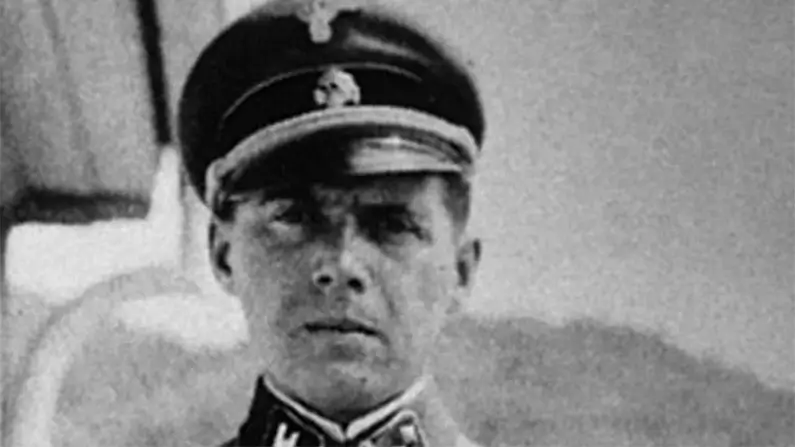
3 He gave prisoners with medical anomalies “preferential” treatment at Auschwitz…
Mengele conducted many of his experiments on people with physical abnormalities. Part of this obsession stemmed from his belief that the key to perfecting eugenics might lie hidden within deformed, disabled, or otherwise “unusual” bodies. He may also simply have been fascinated by extreme genetic variation. So much has been written about his fixation on twins that people sometimes overlook another disturbing interest — a very specific family who arrived at Auschwitz.
Mengele became obsessed with the Ovitz family, a group of traveling performers from Transylvania consisting of ten siblings — seven of whom were little people. He allowed them to keep their clothing and hair, small privileges denied to most prisoners, even as Nazi doctors drained their blood, pulled their teeth, and subjected them to harrowing psychological examinations. Despite the torment they endured at the camp, every member of the Ovitz family survived their imprisonment. [source]

You may also like
4 Josef Mengele assumed another man’s identity to live in anonymity after the war…
After World War II, Mengele fled Germany and escaped across the Atlantic to South America, where he encountered an Austrian named Wolfgang Gerhard, a devoted Nazi sympathizer. Gerhard was so thrilled to meet a prominent figure like Mengele that he handed over his own ID papers.
To remain hidden, Josef Mengele used Gerhard’s identity for the rest of his life, and when he died in 1979, he was even buried under a headstone bearing Gerhard’s name. The truth did not come out until 1985, when Mengele’s son finally revealed the deception in an interview. [source]
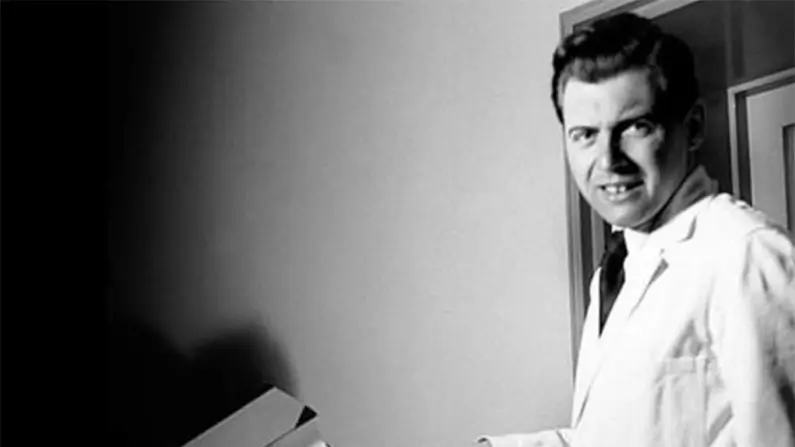
5 Mengele experimented on people’s irises in attempts to change their eye color…
Among the many bizarre obsessions Josef Mengele pursued, he developed a particular fascination with heterochromia — a condition in which a person’s two irises are different colors. In his gruesome eye experiments, he attempted to alter eye color by injecting chemicals directly into prisoners’ irises.
When those methods failed, Mengele would simply remove the entire eyeball and send it to his colleague, Karin Magnussen, a researcher specializing in ocular pigmentation, for further study. These experiments served no real scientific purpose — only brutality masked as research. [source]
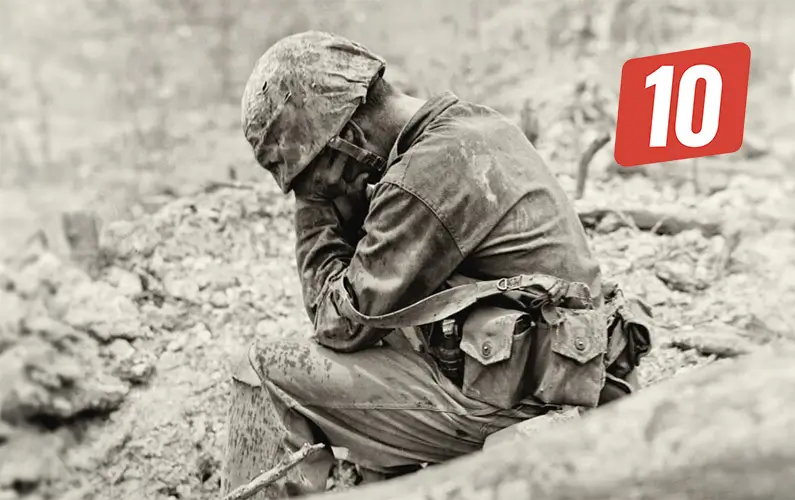
6 Josef Mengele carried out horrific crimes with chilling calmness…
According to survivors of Auschwitz, one of the things that made Mengele such a figure of terror in the camp was his complete disregard for human life. Sam Pivnik, who was just 14 years old during the Holocaust, told the Sunday Express that when Mengele decided the fate of new arrivals, he would often make the choice with a simple flick of his gloved hand — to the right for those allowed to live, or to the left for those condemned to die. [source]
You may also like
7 He never felt any guilt for his crimes…
It remains unclear whether Josef Mengele’s son, Rolf, always knew his father was alive and living in South America, or whether he tracked him down later. What we do know is that in 1977, Rolf visited his father in Brazil and found an older — and in many ways even more repugnant — Nazi.
During their meeting, Josef Mengele claimed that he had “never personally harmed anyone in his entire life“, a statement that reveals the deep and disturbing delusion he clung to. This was a man who not only tortured prisoners in his brutal experiments, but also served as a major cog in a system engineered to exterminate an entire race of people. [source]
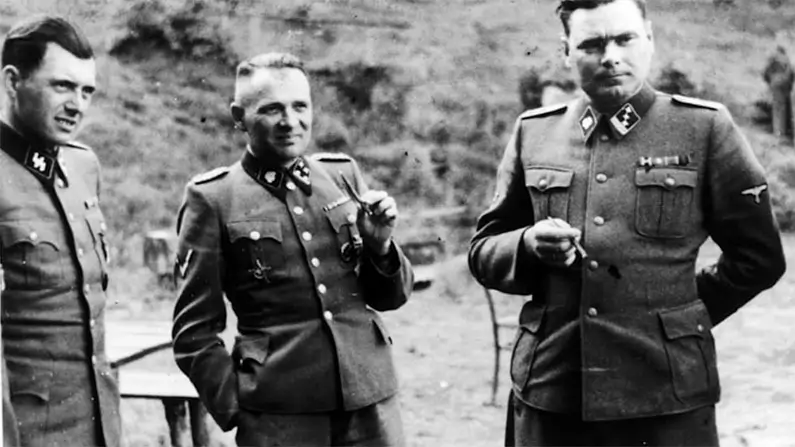
8 He acted kind and gentle to trick children into trusting him…
Calling him a wolf in sheep’s clothing barely captures the deceptive mask Mengele wore to calm the children of Auschwitz. Not only did he hand out sweets, but he even established a makeshift daycare inside the camp and played violin for the children — all to lull them into a false sense of safety and affection.
When the time came to take them away, he had the children delivered to his medical laboratory in vehicles painted with Red Cross symbols, or in his own private car. What appeared to be kindness was nothing more than a trap cloaked in gentleness. [source]
You may also like
9 Mengele even used prisoners as his “assistants”…
Rather than relying on the trained doctors and soldiers already at his disposal, Mengele sometimes played psychological games with the inmates at Auschwitz by “hiring” them to assist him in his experiments. As twisted as this method of recruitment was, it is actually the reason we now know so much about what he did inside the camp.
One of the men he enlisted was Dr. Miklós Nyiszli, a prisoner-physician forced to serve Josef Mengele. Nyiszli later published his experiences in the book His Auschwitz: A Doctor’s Eyewitness Account, providing a chilling firsthand record of the atrocities. [source]
10 Josef Mengele’s early work focused on cleft palate…
Before he became known as the “Angel of Death“, Josef Mengele held a respectable position as a physician, concentrating on oral embryology and the developmental abnormalities involved in cleft palate and cleft lip. This early interest in correcting genetic anomalies may have served as a stepping stone toward his later, monstrous experiments—a chilling reminder of how medical curiosity can be twisted into cruelty. [source]
Xtra Mengele was never the chief medical officer of the death camp…
Although his infamy may paint him as a kind of twisted Nazi “super-scientist”, Josef Mengele was not actually in charge at Auschwitz. His real title was camp doctor at Auschwitz II, working under the authority of SS Captain Dr. Eduard Wirths.
Despite this lower rank, Mengele was unquestionably the most feared doctor in the entire camp, earning a reputation that would haunt history far beyond his formal position. [source]
5 Common Questions About Josef Mengele
Josef Mengele was a German SS physician stationed at Auschwitz during World War II, infamous for performing inhumane medical experiments on prisoners, especially twins.
He earned the nickname because he personally selected who lived and who died upon prisoners’ arrival at Auschwitz — often with nothing more than a gesture of his gloved hand.
Mengele carried out brutal and unscientific experiments, focusing on twins, genetic abnormalities, eye color manipulation, and physical deformities. These experiments killed or maimed thousands.
After WWII, Mengele fled Europe, first hiding in Germany, then escaping to South America under a false identity. He avoided capture for decades and never stood trial for his crimes.
Mengele died in 1979 after suffering a stroke while swimming near São Paulo, Brazil. His true identity was not confirmed until DNA testing in 1985–1986.