
There are big ones, small ones, flat ones and round ones. Butts come in all shapes and sizes, and without a doubt, they’ve always fascinated us humans. Some more than others. We all have one, yet it seems everyone else’s gets a whole lot more attention. Here are 10 interesting facts you should know about your very own (and everyone else’s) butt!
1 Big butts are more psychologically appealing to men…
Some psychologists believe that the shape of women’s behinds evolved on an evolutionary level. In general, women carry more fat in their buttocks than men, which—according to theory—may signal that they have sufficient fat reserves for a healthy pregnancy. This, in turn, is suggested to make the trait more attractive and appealing to men. [source]
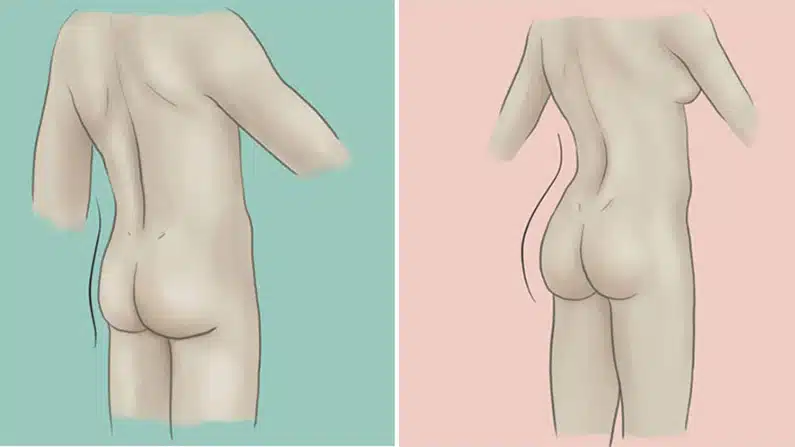
2 Men and women tend to have differently shaped behinds…
Men and women usually have different sizes and shapes when it comes to their butts. The main reason is that the hormone estrogen stores fat differently in the sexes — for women, it’s deposited mostly in the buttocks, hips and thighs, while men distribute fat elsewhere. [source]
3 The butt may be our first sexual hotspot in primitive behavior…
It’s not unusual for someone to ask whether you’re a boobs- or butt-person. Some sociobiologists believe that the butt was our earliest sexual trigger in primitive human behavior, and that people who prefer breasts do so because they resemble the butt in shape and function. So in reality, we’re probably all “butt people” at heart. [source]

You may also like
4 Jennifer Lopez is just one of many celebrities who insured their butt…
Jennifer Lopez (see image below) has actually insured her famous behind. Meaning that if her butt were to suffer permanent damage, she could collect a staggering $27,000,000 in insurance money. Kylie Minogue has done something similar, insuring her rear for $5,000,000. [source]

5 Butt implants are becoming more and more common…
Cosmetic butt procedures have surged in popularity worldwide over the last decade. In the early 2010s, only a few thousand butt implant surgeries were performed each year, but demand has skyrocketed. By the 2020s, the number had more than doubled, and surgeons now report year-over-year growth in both implants and fat transfers (like the popular Brazilian Butt Lift).
While serious complications and fatalities are rare, they do occur, which is why many surgeons urge patients to thoroughly research clinics and practitioners before undergoing a procedure. [source]
6 These days, you can even become famous for your backside…
While some celebrities are known for standout features — think Pamela Anderson’s iconic bust or Tina Turner’s legendary legs — others have gained attention for what’s behind them. Some of the most spotlighted booties in pop culture belong to Nicki Minaj, Kim Kardashian, Tom Cruise, Rihanna, Scarlett Johansson and Beyoncé, all of whom have sparked headlines, memes or fan fascination simply because of their backsides. [source]

You may also like
7 Sitting too long can harm more than your back — your butt takes a hit too…
Spending long periods sitting can lead to loss of muscle mass in the glutes, simply because those muscles aren’t being used. As they weaken, it can impact posture and stability, often resulting in lower-back pain due to increased stress on the spine.
Reduced strength in the glutes can also make everyday movements harder — even walking up stairs becomes more challenging, since the glute muscles are essential for hip and leg power.
To combat this, it’s smart to take regular movement breaks and perform exercises that activate and strengthen the glutes, such as squats, lunges and hip thrusts. So what are you waiting for? Time to get up and move! [source]

8 A bigger butt has been linked to better cognitive performance…
A 2008 study from the University of Pittsburgh and the University of California found that women with larger buttocks scored higher on cognitive tests. Researchers suggest the reason may be that women with more fat stored in their hips and buttocks tend to have higher levels of omega-3 fatty acids, which play an important role in healthy brain function. [source]

You may also like
9 A butt fetish is more common than you might think…
The correct term for being sexually aroused by looking at or touching a butt is “pygophilia“. The word comes from the Greek “pygo”, meaning “rear” or “buttocks”, and “philia”, meaning “love” or “attraction”. The term is sometimes used in psychological and sexological contexts to describe a sexual attraction specifically focused on buttocks. [source]
10 Jen Selter has the world’s most popular butt…
With nearly 14 million followers on Instagram, Jen Selter is widely considered to have the most popular behind on social media. Click the source link to visit Jen Selter’s Instagram (opens in a new tab). [source]
You may also like
Xtra Apes and humans are the only mammals with a butt that “sticks out”…
Most animals have flat or sloping backsides, but humans and apes are special — we’re among the few species with rounded, protruding butts. The main reason? Upright walking.
As our ancestors began walking on two legs, the glute muscles evolved into powerful stabilizers to keep us balanced, and that curved shape we call a butt is the result of millions of years of evolution — form meets function, literally. [source]
5 Frequently Asked Questions About Butts
It’s completely normal for one cheek to be fuller or shaped differently. Muscles and fat rarely develop perfectly symmetrically, and daily habits — like which leg you favor or how you sit — can make the difference more noticeable.
Movements that target the glute muscles directly tend to work best, such as squats, lunges, hip thrusts and deadlifts. Progressively lifting heavier weights and being consistent are what actually build size over time.
Long periods of sitting reduce activation of the muscles, which can gradually weaken them. When the muscles don’t get used, they may appear less lifted or rounded, especially if there’s limited movement the rest of the day.
Yes — genetics play a huge role in where your body stores fat and how your muscles attach to your bones. Some shapes are easier to build or change with training, while others are mostly determined at birth.
Research suggests that biological factors, cultural influences and personal taste all contribute. In some theories, a fuller rear may signal health or fertility, while in others it’s simply what media and trends have popularized.