
In the wondrous world of anatomy, there is a humble focal point that carries a story from our earliest days — the belly button. This small feature, once connected to our existence in the womb, represents a fascinating journey of change and connection. While it no longer serves any major purpose after we leave our mother’s body, here are ten facts you should know about it!
1 Your belly button is really nothing more than a scar…
That small spot in the middle of your stomach marks where your umbilical cord once connected you to your mother’s placenta. When the cord is cut, a small, shriveled piece is left behind. This remnant eventually falls off — usually within the baby’s first week of life — and what remains is a scar. And of course, “belly button” sounds much cuter than “stomach scar”. [source]
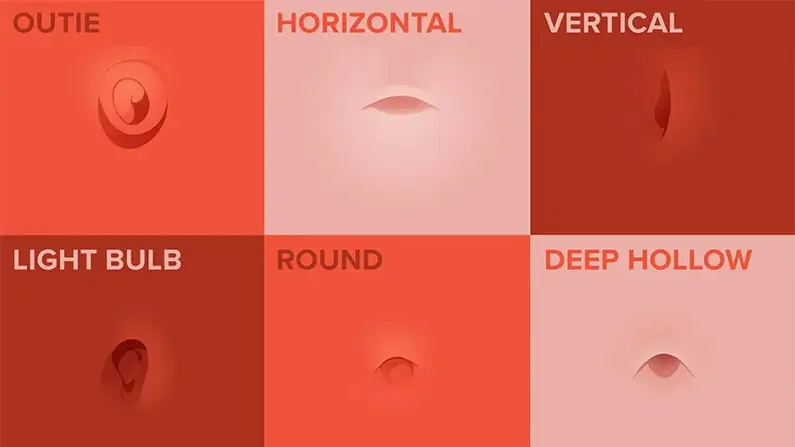
2 About 90% of people have an “innie” belly button, while the rest have an “outie”…
Whether a belly button sticks out or sinks inward depends on the amount of skin and scar tissue left behind when the umbilical cord is cut at birth. According to experts, it’s mainly the distance between the skin and the abdominal wall that determines whether a belly button becomes an “innie” or an “outie”. Less skin leading into the cord usually results in an innie, while more skin can create an outie.
Roughly 90% of people have an innie, while the remainder have an outie. In some cases, an outie can be the result of an umbilical hernia, where part of the intestine pushes through an opening in the abdominal wall at the navel. This usually closes naturally before the age of two, but more persistent cases may require surgical treatment. [source]
3 Cosmetic surgery can turn an “outie” into an “innie”…
For those who aren’t fond of their outie, cosmetic surgery is an option — albeit a drastic one. Umbilicoplasty is a procedure that alters the size or shape of the belly button, often by removing excess skin or tightening the abdominal skin. [source]

You may also like
4 Yes, you can actually have a belly button phobia…
Omphalophobia is the term used for a fear of or discomfort related to the belly button. This can include fear of touching your own navel, having someone else touch it, or even seeing someone else’s bare stomach where the belly button is visible. It’s often believed to be linked to associations with fetal development, the umbilical cord, and the womb.
Information about Khloé Kardashian publicly admitting to her fear of belly buttons has also received international attention, helping raise awareness of this unusual but real phobia. [source]
5 Most mammals have a belly button…
Dogs, chimpanzees, lions, armadillos, and many others have one — but their belly buttons are not always easy to spot. For one thing, most mammal mothers chew off the umbilical cord attached to their newborns, leaving behind a flat scar that’s harder to notice than a human belly button. Gorillas and chimpanzees are particularly interesting to belly-button enthusiasts because they have what some researchers call an “in-betweeny” — a navel that resembles a human one but is neither an innie nor an outie.
Platypuses, which lay eggs, don’t have an umbilical cord and therefore no belly button at all. Marsupials such as kangaroos and koalas usually lose their umbilical cords while still in their mother’s pouch, meaning no visible scar is formed. [source]
6 This is why poking your belly button can suddenly make you need to pee…
When you stick a finger into your belly button and feel a tingling or uncomfortable sensation, it’s due to the stimulation of nerves that run through the abdominal cavity. Touching the navel can activate nerves connected to the spinal cord, and since that same region also relays signals from the bladder and urethra, the sensation can be perceived as similar discomfort or tingling in those areas. [source]
You may also like
7 This is why belly button lint forms…
Belly button lint forms when dead skin cells, clothing fibers, and other tiny particles collect inside the navel. The hair around the area can act like a trap, catching these particles and keeping them in place. Factors such as types of clothing, body hair levels, and even daily activities can affect how much lint a person experiences. Keeping the area clean — and possibly avoiding certain fabrics — can help reduce belly button lint if it’s bothering you. [source]

8 They can even leak urine…
When urine leaks through the belly button, it’s usually the result of an abnormality involving the urachus — a tube-like structure that connects the bladder to the navel during fetal development. Normally, the urachus shrinks and closes before or shortly after birth, leaving behind a small scar between the bladder and the belly button.
If the urachus doesn’t close properly, it can form a cyst or open channel, creating a pathway for urine to leak out through the navel. It’s important to note that this condition is very rare, and treatment usually requires surgical intervention. [source]
You may also like
9 Your belly button contains thousands of bacteria — but they help protect you…
Beyond lint, your belly button is also home to dead skin cells, discarded oils, and thousands of bacteria. A 2011 study led by the aptly named Belly Button Biodiversity Project documented 2,368 different types of bacteria living in the navels of just 66 participants. But don’t worry — these microbes actually help protect you from harmful pathogens. Without them, our immune system wouldn’t function the way it does. [source]

10 The belly button also holds cultural significance in many societies…
In some parts of the world, the belly button carries cultural — and even spiritual — meaning. Certain Hindus believe that a lotus flower emerged from the navel of Vishnu, with Brahma — the creator of the universe — seated at its center. Similarly, in Japan, the belly button can represent the point where life begins. During the Middle Jōmon period (2500–1500 BC), Japanese artists emphasized belly buttons on their humanoid figurines.
Today, a belly button festival is held annually in the city of Shibukawa in central Japan. “The belly button is traditionally believed to be located at the center of the body and to be the most important part“, festival organizer Kazuo Yamada told Reuters. “Our city, Shibukawa, is also known as the belly button of Japan, and that’s how the festival began“, Yamada concluded. [source]

You may also like
5 Common Questions About the Belly Button
Lint forms when dead skin cells, fabric fibers, and sweat get trapped by body hair and clothing friction. Hair helps funnel these particles inward, causing buildup over time.
Yes, it can happen. Odor is usually caused by bacteria, sweat, or poor hygiene. Gently cleaning the area regularly often solves the problem.
Yes. The area is connected to sensitive nerves linked to the spinal cord, which can cause discomfort or strange sensations when touched.
It depends on how the umbilical cord healed after birth, including the amount of scar tissue and the distance between skin and abdominal wall.
In rare cases, yes. This is usually due to a congenital condition involving an undeveloped fetal structure and typically requires medical evaluation.