
Blue eyes have long captivated people with their striking color and air of mystery. Whether they evoke images of clear skies or deep oceans, they hold a unique place in both culture and science. But what truly lies behind those ice-blue irises — and what secrets do they hide? From genetic surprises to unexpected twists in human history, here are ten fascinating facts about blue eyes you won’t want to miss!
1 Blue eyes are really just a genetic mutation…
Blue eyes exist thanks to a genetic mutation that affects melanin production, particularly in the OCA2 gene. This gene controls how much melanin — the pigment that determines the color of our eyes, skin and hair — is made. People with blue eyes carry a variation in a regulatory region near the OCA2 gene that reduces melanin in the iris.
So it’s not that the iris contains any blue pigment. Instead, the low melanin level scatters light, producing the blue appearance — much like the sky looks blue due to the way light is scattered in the atmosphere. [source]
2 How common (or uncommon) blue eyes really are…
Only about 8–10% of the world’s population has blue eyes. They’re far more common in Northern Europe, especially in countries like Estonia, Finland and Sweden — but are much rarer globally. [source]

3 Everyone with blue eyes can be traced back to one ancestor…
Researchers believe the mutation that causes blue eyes appeared around 6,000–10,000 years ago in the region around the Black Sea, near present-day Ukraine or Turkey. After it arose, the mutation spread through human migration — especially into Europe, where blue eyes are most common today.
All blue-eyed people are thought to descend from one original individual who first carried this mutation, meaning everyone with blue eyes shares a single genetic connection. [source]
You may also like
4 Two brown-eyed parents can have a blue-eyed child – but two blue-eyed parents can’t have a brown-eyed one…
It is possible for two brown-eyed parents to have a blue-eyed child, although it’s relatively rare. Eye color is influenced by multiple genes, most notably OCA2 and HERC2. We inherit these genes from our parents, and different combinations can produce different eye colors.
Blue eyes are a recessive trait, meaning a child receives blue eyes only if both parents carry the recessive variant. So if two brown-eyed parents both carry a hidden blue allele, their child can inherit it from both sides and be born with blue eyes.
In brown-eyed couples who carry the recessive gene, there’s roughly a 6.3% chance the child will have blue eyes, an 18.8% chance of green eyes, and about a 75% chance of brown eyes.
When both parents have blue eyes, the genetics shift dramatically: there is a 99% chance their child will also have blue eyes and a 1% chance of green — but no possibility of brown eyes. [source]

5 Blue eyes may be linked to certain health risks…
Because blue eyes contain lower levels of melanin than darker eye colors, they offer less natural protection against harmful UV radiation and blue light. This can increase the risk of several eye-related conditions, including cancers affecting the eye area, as well as disorders such as macular degeneration and uveal melanoma.
For this reason, people with blue eyes are encouraged to take extra care in bright sunlight, using UV-blocking sunglasses and proper sun protection to reduce potential damage. [source]
6 Blue eyes were associated with beauty, divinity – and sometimes supernatural powers…
Across history, blue eyes have carried strong cultural and symbolic meaning. In ancient civilizations such as Greece and Rome, they were often linked with beauty, divine qualities, and at times even supernatural abilities.
Art and literature from these eras frequently portrayed admired or sacred figures with blue eyes, reflecting the high status and symbolic power the trait held within those societies. [source]

You may also like
7 Some studies suggest lighter eyes may tolerate alcohol better…
A handful of studies and theories have proposed a possible link between eye color and alcohol metabolism, suggesting that people with lighter eyes — such as blue — may have slightly higher alcohol tolerance than those with darker eyes. The idea is that genetic variations tied to eye color might also influence how the body processes alcohol.
However, research in this area is limited and far from conclusive. Some studies have shown small correlations, while others have found no clear connection at all. It’s also important to remember that alcohol metabolism is shaped by many factors — including genetics, biology and environment — and eye color is just one of many variables. [source]
8 Blue-eyed people tend to have poorer night vision…
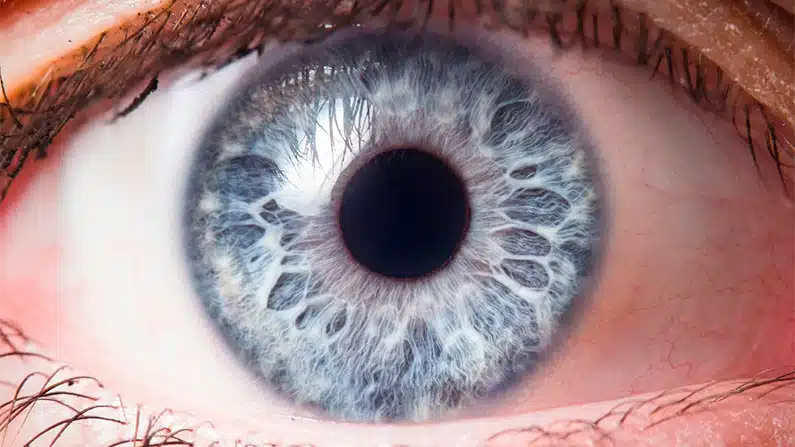
People with blue eyes may have slightly weaker night vision compared with those who have darker eye colors. This is because blue eyes contain less melanin, the pigment that helps absorb light. With a lighter iris that reflects more light instead of absorbing it, more scattered light reaches the retina, which can interfere with vision in low-light conditions.
As a result, blue-eyed individuals may find it harder to adapt to dim or dark environments, while darker-eyed people — with more melanin and better light absorption — often handle low-light situations more easily. [source]

You may also like
9 Blue eyes at birth don’t guarantee a blue-eyed child…
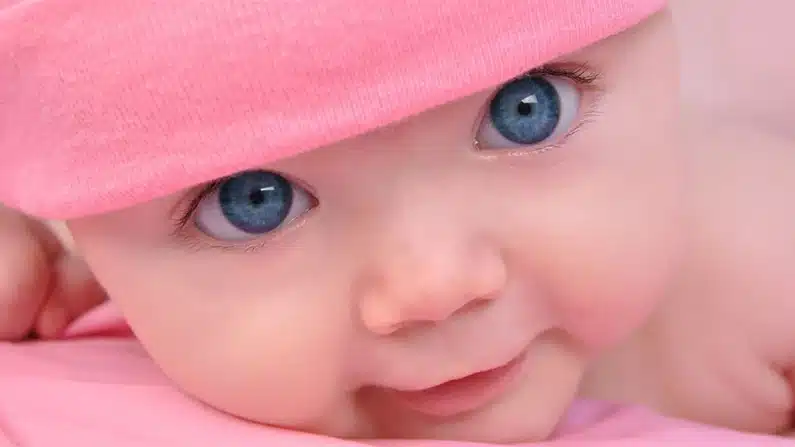
Many newborns appear to have blue eyes at birth, simply because their eyes haven’t yet developed their full amount of melanin — the pigment responsible for eye color. As the child grows and melanin production increases, their eye color can change.
This transition can take anywhere from a few months up to three years. During that time, eye color may shift from blue to gray, green, brown, or another shade, depending on how much melanin develops. So it’s completely normal for a baby’s eye color to change during the early years of life. [source]
10 Research also suggests blue-eyed people may have higher pain tolerance…
Some studies indicate that people with lighter eye colors — such as blue and green — may have a higher tolerance for pain compared with those whose eyes are darker.
One study published in the Journal of Pain found that women with brown or hazel eyes reported more pain and anxiety during childbirth than women with lighter eyes. [source]

You may also like
5 Frequently Asked Questions About Blue Eyes
They are the result of low melanin levels in the iris combined with the way light scatters, which creates the blue appearance — not blue pigment.
Only around 8–10% of the global population has them, with the highest concentration in Northern Europe.
Yes — they have less natural UV protection, making sunglasses and sun safety especially important.
Yes — if both carry the recessive gene variant, their child can inherit it from both parents.
Not always. Many babies’ eyes darken over time as melanin develops, and the final color may not appear until age three.