
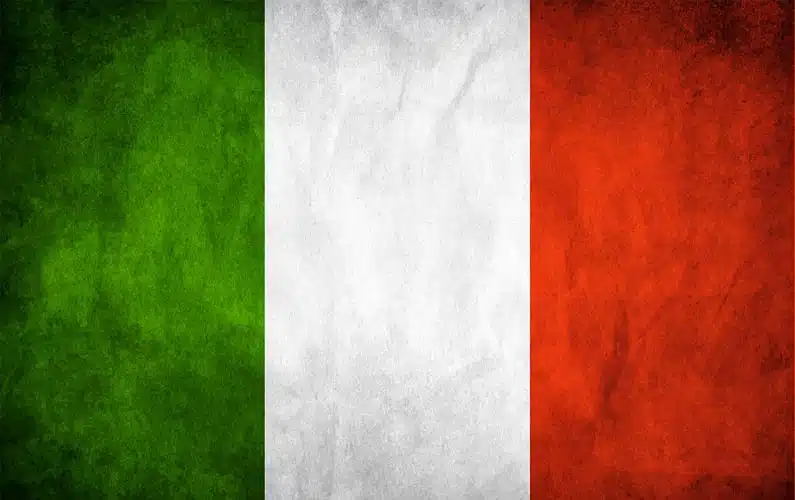
Italy — a country that has fascinated and inspired generations — offers far more than pasta and beautiful landscapes. Behind its rich culture and long history lies a wealth of fascinating facts that span centuries. From ancient ruins to modern innovations, here are 10 interesting insights that give you a deeper look into this remarkable nation!
1 How Italy’s system of government works…
Italy is a parliamentary republic with a president as head of state and a prime minister as head of government. The Parliament consists of two chambers: the Camera dei Deputati (Chamber of Deputies) and the Senato della Repubblica (Senate).
The president is elected for a seven-year term and holds both ceremonial and certain constitutional powers. Executive authority is exercised by the government, led by the prime minister, who must be approved by the Chamber of Deputies. [source]
2 Italy became a unified country surprisingly recently…
Italy was formed as a nation in 1861 through a process known as the Risorgimento, or the “unification movement”. During this period, several independent Italian states and regions were brought together to create a single nation-state.
This means that Italy has been a unified country for just over 160 years, making it much younger than many people realize. [source]
3 Italians may have solved the energy crisis…
Italy is known for its rich cultural heritage and cuisine, but the country has also contributed to science in a rather unusual way. In 2011, Italian inventor Andrea Rossi was granted a patent for a device called the Energy Catalyzer, or “E-Cat“. It is claimed to produce energy through a form of cold fusion, which has sparked considerable attention and debate within the scientific community.
Rossi has, however, been surrounded by controversy over the years, and many scientists question the validity of his claimed discovery. So, in addition to pasta and art, Italy has also given the world something to ponder in the field of energy innovation! [source]
4 Vatican City in Rome was recognized as an independent state in 1929…
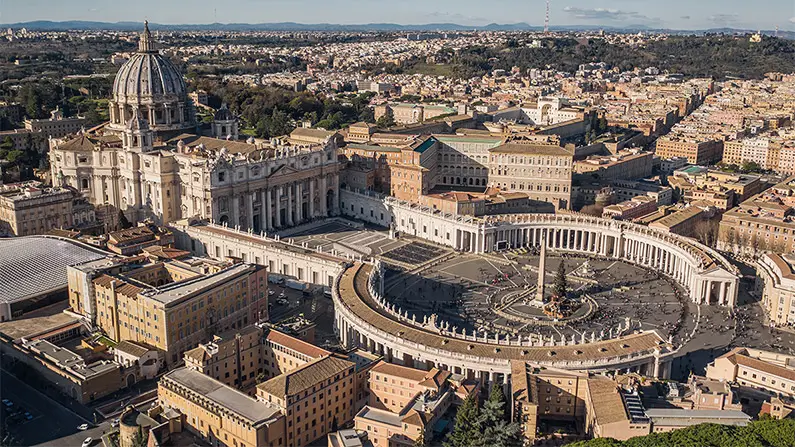
Vatican City, located within Rome, is the smallest country in the world by area, measuring only 0.44 km². It was officially recognized as independent from Italy through the Lateran Treaty in 1929.
Although Vatican City has a population of just 800–900 residents, it attracts millions of tourists every year. [source]
5 What Italy’s climate is like…
Italy’s climate varies depending on the region’s geography. Northern Italy, especially north of the Alps, has a continental climate with cold winters and warm summers. The central and southern parts of the country have a typical Mediterranean climate, featuring mild winters and hot, dry summers.
The coastal regions enjoy a milder climate thanks to the moderating effects of the sea, with warm summers and gentle winters. Inland areas, particularly in the mountains, can experience colder winters and more temperate summers depending on altitude and distance from the coast.
This variation means Italy offers a wide range of weather conditions and climate experiences, making it a great destination for all types of travelers. [source]
6 What religion looks like in Italy…
The dominant religion in Italy is Roman Catholicism. The majority of the population identifies as Catholic, and the Catholic Church holds a strong presence and influence throughout the country. This religious tradition has deep historical roots and has shaped Italy’s culture, customs, and social life for centuries. Approximately 85% of the population identifies as Catholic.
In addition to Roman Catholicism, Italy is also home to minorities practicing other religions and beliefs, including Orthodox Christians, Protestants, Muslims, and Jews. The country is known for its religious diversity and tolerance, embracing various faith communities and expressions. [source]
You may also like
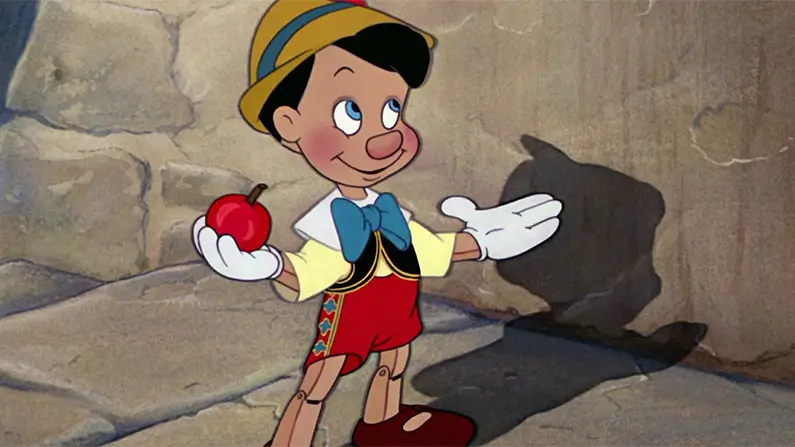
7 Pinocchio made his debut in Italy as early as 1881…
You probably know Pinocchio (1940) mostly from Disney’s animated film. But Pinocchio’s first appearance was actually in an Italian newspaper, where “The Adventures of Pinocchio” (“Le avventure di Pinocchio”) was published between 1881 and 1883 as an illustrated serial.
Pinocchio was created by the Italian author Carlo Collodi. [source]
8 This is how many tourists visit Italy each year…
Italy is one of the most visited countries in the world when it comes to tourism. According to statistics from the UNWTO (United Nations World Tourism Organization) and other sources, the country is consistently ranked among the world’s top tourist destinations.
Every year, around 60 million tourists visit Italy for its history, culture, cuisine, and breathtaking landscapes. [source]
9 What would Italy be without mentioning pizza…
The pizza we know today has its roots in Italy — particularly in Naples. The tradition of baking flatbreads with various toppings is ancient, but the modern pizza was developed in Naples during the 18th and early 19th centuries.
It’s important to note that the pizza we recognize today, topped with tomato sauce and mozzarella, was popularized in Naples in the mid-1800s. The first known pizzeria, Antica Pizzeria Port’Alba, opened in 1830 in Naples and served the style of pizza we’re familiar with today. [source]

10 If you visit Rome, you have to see the “city of cats”…
Another fun fact about Italy is that the country has a so-called “city of cats” located at Torre Argentina in Rome. Torre Argentina is an archaeological site where four ancient Roman temples and parts of a theatre complex have been excavated. What makes it especially fascinating is that the area is now home to a cat sanctuary.
Hundreds of cats — many of them abandoned or injured — live among the ruins. The sanctuary was founded by volunteers and has become a beloved place where the cats are cared for and allowed to live out their lives in a uniquely historic setting. So when you visit Rome, don’t be surprised if you encounter these feline residents who have made the ancient ruins their own home. [source]
5 Common Questions About Italy
Italy can be moderately expensive, especially in major cities like Rome, Venice, and Milan. However, prices vary widely depending on region and season. Southern Italy is generally more affordable, and travelers can manage costs with smart accommodation and dining choices.
Italy is world-famous for its food, art, history, fashion, and architecture. Landmarks like the Colosseum, the Leaning Tower of Pisa, Florence’s Duomo, and Venice’s canals draw millions of visitors. Italy is also known as the birthplace of pizza, pasta, and the Renaissance.
Italy is part of the Schengen Area. Travelers from many countries (including the U.S., Canada, the U.K., and Australia) can enter visa-free for short stays of up to 90 days. Others may need to apply for a Schengen visa in advance. Requirements depend on nationality.
The official language is Italian. Many Italians also speak regional languages or dialects such as Sicilian, Neapolitan, and Venetian. English is commonly spoken in tourist areas, hotels, and major cities, but less so in rural regions.
The most popular times to visit are spring (April–June) and autumn (September–October) when the weather is mild and crowds are manageable. Summer is warm but often crowded, while winter is quieter—ideal for visiting museums or exploring cities like Rome and Florence without peak-season traffic.


