
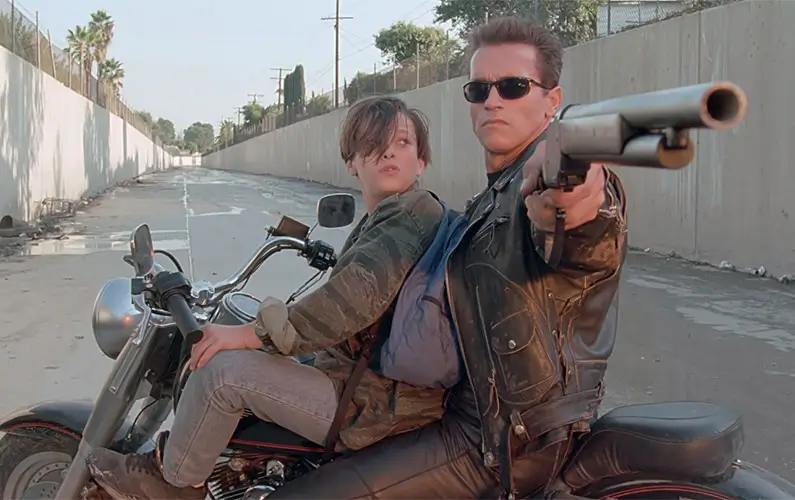
In a dystopian future shaped by machine dominance and humanity’s fight for survival, Terminator 2: Judgment Day weaves a gripping narrative. When an advanced T-1000 cyborg is sent back in time to eliminate the young future leader John Connor, a reprogrammed T-800 cyborg assumes the role of protector.
Blending pulse-pounding action with surprisingly deep character relationships, the film explores themes of fate, loyalty, and humanity’s resilience in the face of an unforgiving technological future. Terminator 2 stands as an iconic pillar of the science-fiction genre, delivering a timeless story that continues to captivate film lovers around the world. With that in mind, here are ten nostalgic and fascinating facts about what many consider the greatest entry in the franchise.
1 Edward Furlong visibly aged during the filming of Terminator 2: Judgment Day…
The production of Terminator 2: Judgment Day lasted long enough for Edward Furlong, who played the young John Connor, to visibly age during filming. He is clearly much younger at the beginning of the movie than at the end, and the physical changes are noticeable to attentive viewers.
Dedicated fans may also catch that his voice gradually deepens as the film progresses—an audible sign of him moving further into puberty. That’s hardly surprising, though, since filming stretched over roughly six months, from October 1990 to April 1991, right in the middle of a period when Furlong was undergoing rapid and obvious teenage development. [source]
2 The realism of the “nuclear nightmare” scene earned rare praise…
For Sarah Connor’s haunting “nuclear nightmare” sequence in Terminator 2: Judgment Day, Stan Winston and his team relied on authentic reference material rather than pure imagination. They studied hours of real nuclear test footage to make the scene as accurate and unsettling as possible.
According to unofficial accounts, several U.S. federal nuclear test laboratories later described the sequence as “the most accurate depiction of a nuclear explosion ever created for a fictional film“. Adding to the effort, each take required nearly two full days to rebuild the miniature set used in the explosion scene—underscoring the extreme attention to detail behind just a few moments on screen. [source]

3 The night’s paradox: Terminator 2 filming and the Rodney King beating…
Director James Cameron has confirmed a striking coincidence surrounding the production of Terminator 2: Judgment Day. The scene in which Arnold Schwarzenegger enters a biker bar was filmed directly across the street from where Rodney King was brutally beaten by police—and it happened on the very same night.
The surreal overlap between a blockbuster action film in production and a real-life event that would soon spark nationwide outrage and unrest adds an eerie layer of historical weight to the scene. It’s a reminder that while fiction was being made for the screen, history was unfolding just steps away. [source]

You may also like
4 Linda Hamilton learned how to pick locks for Terminator 2: Judgment Day…
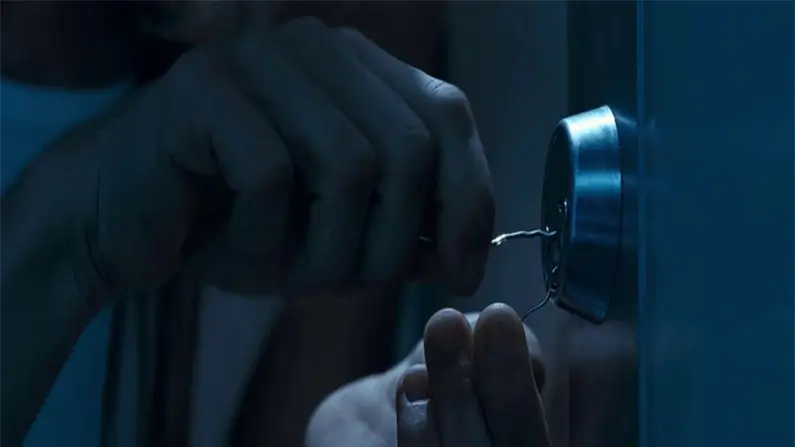
Remember the scene where Sarah Connor, played by Linda Hamilton, uses a simple paperclip to pick a door lock inside the mental institution? That moment isn’t movie magic at all—Hamilton actually picks the lock for real on camera.
Shortly before filming, she learned how to pick certain types of locks using nothing more than a paperclip, allowing the scene to be performed authentically without trick editing. It’s a small detail, but one that perfectly reflects Terminator 2’s dedication to realism—even in the tiniest moments. [source]
5 $5.5 million and eight months later, the groundbreaking T-1000 animations emerged…
To bring the liquid-metal T-1000 to life in Terminator 2: Judgment Day, Industrial Light & Magic dramatically expanded its computer-graphics department—from just six artists to nearly 36. The scale of the work was unprecedented at the time.
In total, the effects cost $5.5 million and took eight months to complete, ultimately delivering just under 3.5 minutes of on-screen footage. Those few minutes, however, redefined what CGI could achieve and set a new benchmark for visual effects in cinema. [source]
6 Carolco Pictures wanted to cut the opening scene where the Terminator is introduced…
When the film’s original $75 million budget ballooned to $88 million, executives at Carolco Pictures grew increasingly nervous. In an effort to rein in costs, they suggested cutting several scenes—most notably the iconic biker bar opening where the Terminator makes his first appearance.
The studio even tried to persuade Arnold Schwarzenegger to convince James Cameron to remove the scene. Schwarzenegger flatly refused, famously responding: “Only a studio executive would cut a scene like that“. In hindsight, it’s hard to argue—the moment became one of the film’s most memorable introductions. [source]
You may also like
7 The helicopter stunt wasn’t a special effect—it was completely real…
During the early 1990s, CGI was still highly limited, so the jaw-dropping helicopter sequence in Terminator 2: Judgment Day was performed for real. Veteran pilot Charles A. Tamburro actually flew the helicopter beneath the overpass during the film’s final chase—no visual effects involved.
The stunt was considered so dangerous that the camera crew refused to film it. As a result, director James Cameron stepped in himself, operating the camera from a moving car, with help from the vehicle’s driver, to capture the daring maneuver (as seen in the image below). It’s a rare example of a director literally putting himself in harm’s way to get the shot. [source]

8 Arnold Schwarzenegger used “cheat cards” to handle long, technical dialogue…
In the scene where the Terminator explains Miles Dyson and the origins of Skynet to Sarah Connor in Terminator 2: Judgment Day, Arnold Schwarzenegger relied on a practical on-set trick. His lines were written on a cue card taped directly to the car’s windshield, just out of frame.
The dialogue was unusually long and highly technical, and the discreet “cheat card” helped ensure every detail was delivered accurately without breaking the scene’s rhythm. It’s a small behind-the-scenes detail—but a clever solution that kept one of the film’s most exposition-heavy moments razor-sharp. [source]

You may also like
9 The steel mill effects were so convincing they fooled former workers…
The visual effects used in the steel mill sequence of Terminator 2: Judgment Day were so realistic that former employees of the facility—which had been shut down for more than ten years—believed it had reopened when they saw the movie.
It’s a testament to the film’s meticulous production design and practical effects that even people who once worked there were convinced by what they saw on screen. [source]
10 The “molten steel” wasn’t real—and required chilly filming conditions…
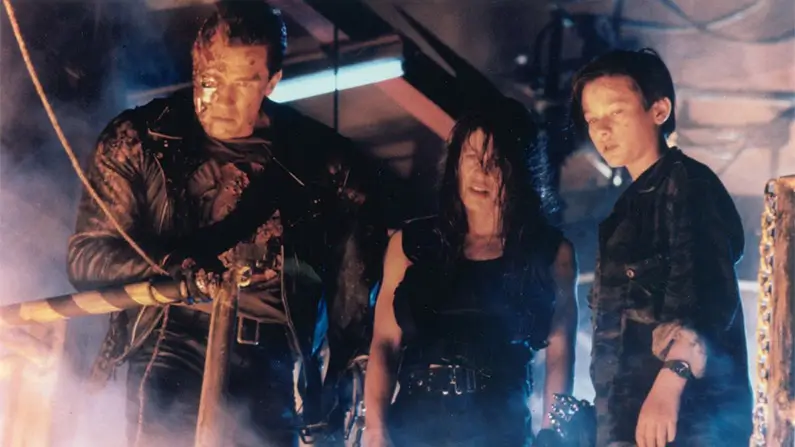
To simulate molten steel in Terminator 2: Judgment Day, the production used a specially created artificial substance instead of real molten metal, which would have been far too dangerous—and in some cases impossible—to work with.
Ironically, the material needed to be kept relatively cool to maintain the correct density and look. As a result, the filming locations were surprisingly cold, forcing the actors to be sprayed with fake sweat between takes to sell the illusion of intense heat on screen. It’s one of those behind-the-scenes details that perfectly captures the film’s commitment to realism—often in uncomfortable ways. [source]

You may also like
5 Frequently Asked Questions About Terminator 2: Judgment Day
Yes. The film is widely praised for its groundbreaking visual effects, strong storytelling, and emotional depth, and is often ranked among the greatest action films of all time.
He was 13 years old during filming, which is why viewers can notice visible changes in both his appearance and voice throughout the movie.
It used a mix of both. Practical effects and miniatures were heavily relied upon, while the CGI—especially for the liquid-metal antagonist—was revolutionary for its time.
It pushed the boundaries of what visual effects could achieve, setting new industry standards and influencing how CGI would be used in major films going forward.
Yes. Thanks to strong direction, memorable performances, and themes that remain relevant, it continues to be enjoyed by both new audiences and longtime fans.