

The Wizard of Oz, first introduced to the world through L. Frank Baum’s classic book from 1900, has since become one of the most beloved films of all time. The magical 1939 film brought the story of Dorothy Gale and her adventures in the Land of Oz to life with its colorful characters, unforgettable songs, and groundbreaking special effects for its era.
But behind the glittering visuals and nostalgic melodies lies a collection of intriguing, funny, and tragic facts that are not always widely known. In this article, we explore ten fascinating details about The Wizard of Oz—drawn from both the film and its literary origins—that shed light on the complex history behind this timeless classic.
1 Dorothy’s shoes weren’t red to begin with…
In L. Frank Baum’s original The Wonderful Wizard of Oz from 1900, Dorothy’s shoes were actually silver. When The Wizard of Oz was produced, Louis B. Mayer of MGM decided to change the color to red to take advantage of the then-new Technicolor process, which made colors appear far more vivid on screen. The ruby slippers quickly became iconic—one of the film’s most unforgettable details.
One pair of the famous ruby slippers worn by Judy Garland was anonymously donated to the Smithsonian’s National Museum of American History in 1979. Since then, they’ve become one of the museum’s most popular attractions—so popular that the carpet around the display has had to be replaced multiple times due to wear from visitors. There are, however, several pairs of the shoes; one was even stolen in 2005 and recovered in 2018. [source]
2 Memory distortion: the Wicked Witch’s real line…
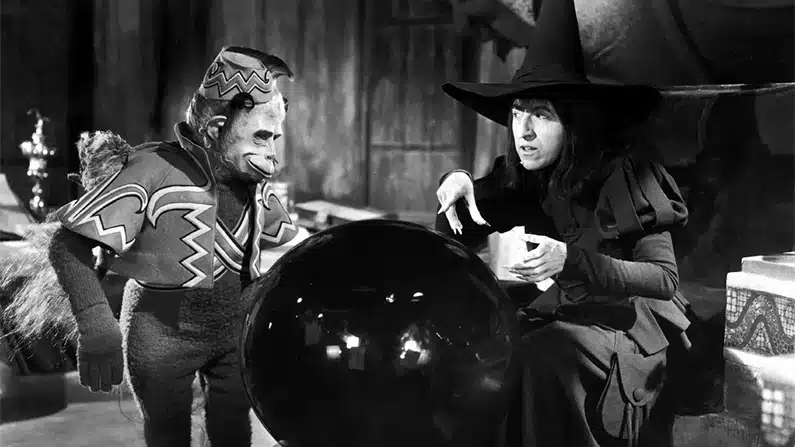
Many people incorrectly remember the Wicked Witch saying “Fly, my pretties, fly” to her flying monkeys in The Wizard of Oz. In reality, she only says “Fly, fly, fly“” This phenomenon—where large groups of people share the same false memory of a specific quote or scene—is sometimes referred to as the Mandela Effect.
This kind of misconception is quite common with classic films and TV shows, where famous lines gradually change in public memory over time. But now, at least, you know how to quote the film correctly! [source]
3 Buddy Ebsen had to leave his role as the Tin Man — due to an allergy to aluminum powder…
Buddy Ebsen was originally cast not as the Scarecrow, but as the Tin Man in The Wizard of Oz. Ray Bolger, who was initially assigned the Tin Man role, convinced the producers to let him play the Scarecrow instead, believing the part better suited his dance style and talents. Ebsen agreed to switch roles and took over as the Tin Man.
However, during filming, Ebsen developed a severe allergic reaction to the aluminum powder used in his makeup, which caused serious breathing problems and ultimately forced him to leave the production. He was replaced by Jack Haley, who went on to portray the Tin Man in the final version of the film. [source]

You may also like
4 The dog in The Wizard of Oz earned more than many human actors…
Terry, the small Cairn Terrier who played Toto in The Wizard of Oz, earned a surprisingly high salary for the time. Terry was paid $125 per week for the role—more than many human actors in minor parts were making back then. The dog’s trainer, Carl Spitz, later said he regretted not asking for more, as the producers were extremely eager to have Terry play Toto.
By comparison, the little people who portrayed the Munchkins were reportedly paid only around $50 per week, less than half of what Terry earned, despite the fact that they had to sing and dance throughout the film. [source]
5 The film’s most famous song was nearly cut — saved by the producer and director…
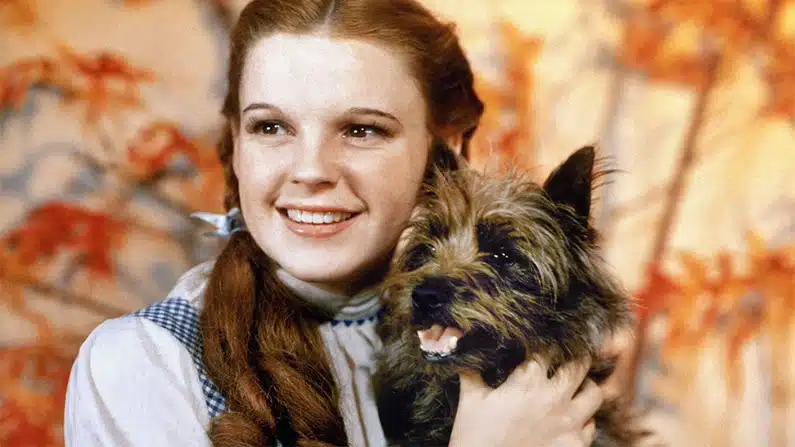
“Over the Rainbow“, the most famous song from The Wizard of Oz and Judy Garland’s signature tune, was almost removed from the movie. Studio executives at MGM felt the song slowed down the story and worried it might not suit a children’s film since it appeared early in the runtime. They were also concerned that it was too long and lacked action.
Fortunately, the film’s producer Arthur Freed and director Victor Fleming stood their ground and insisted on keeping the song. It went on to become one of the most iconic and beloved songs in film history. “Over the Rainbow” later won an Academy Award for Best Original Song and is today widely regarded as one of the greatest movie songs of all time. [source]
6 Margaret Hamilton suffered severe burns during an on-set accident…
Margaret Hamilton, who played the Wicked Witch of the West in The Wizard of Oz, was involved in a serious accident while filming a scene in which her character was meant to make a “smoky exit” from Munchkinland. During a special effect designed to make her disappear in smoke and fire, something went wrong. The effect was triggered too early, causing her dress, hat, and broom to catch fire, and resulting in severe burns to her face and hands.
Hamilton suffered second-degree burns to her face and third-degree burns to her hands. She required six weeks of recovery before she was able to return to filming. After the incident, she avoided scenes involving fire and pyrotechnics whenever possible to reduce the risk of further injury. [source]
You may also like
7 Ray Bolger looked like the Scarecrow for up to a year after filming ended…
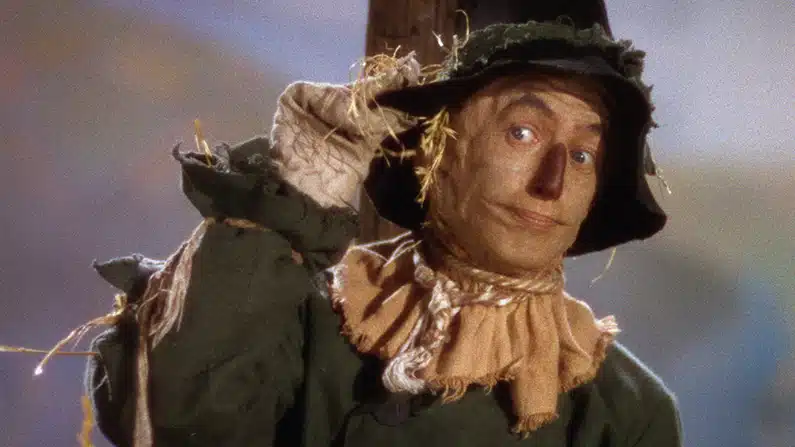
Ray Bolger, who played the Scarecrow in The Wizard of Oz, suffered lasting effects from the facial prosthetics he wore during production. The special makeup and appliances used to create the Scarecrow’s face were tightly fitted to his skin, and when they were removed after each day of filming, they left deep creases and lines on his face.
These marks were so pronounced that they did not disappear immediately once filming wrapped. Instead, it took several months—and according to some sources, up to a full year—before his face fully returned to normal. [source]
8 There’s a hidden cameo in The Wizard of Oz…
In The Wizard of Oz, a woman’s voice can be heard saying “Wherefore art thou, Romeo?” during the Scarecrow’s song If I Only Had a Heart. The voice belonged to Adriana Caselotti, best known as the singing voice of Snow White and the Seven Dwarfs (1937).
For her brief but memorable contribution to The Wizard of Oz, Caselotti was paid $1,000, a substantial sum for such a small role at the time. Her cameo remains one of the film’s lesser-known details, but it has become a fascinating piece of trivia for fans. Did you know this? [source]

You may also like
9 Judy Garland was only 16 — pressured to lose weight and endure harsh dieting methods…
Judy Garland, who played Dorothy in The Wizard of Oz, was just 16 years old when she auditioned for the role. To achieve a more childlike and youthful appearance, she was instructed to lose weight, and to help shape her body, she was required to wear a corset during filming.
At the time, it was common for young female actresses in Hollywood to face strict weight control and undergo various methods to conform to the beauty ideals of the era. Garland struggled with these pressures throughout her career, and they have since been widely recognized as part of the harsh and damaging standards imposed on women within the film industry. [source]
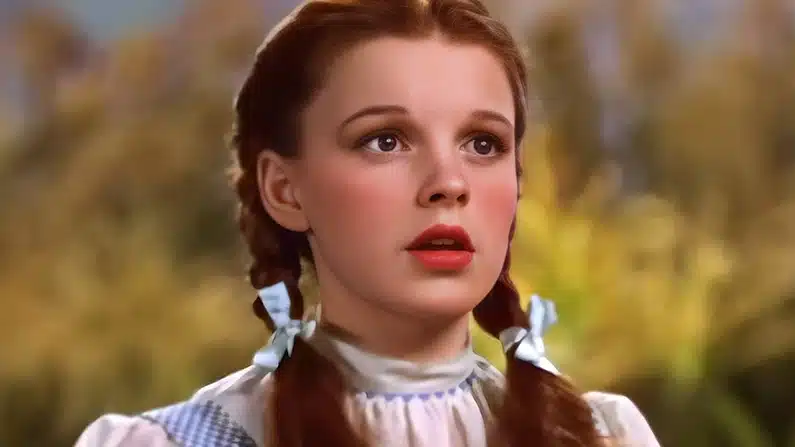
10 The Technicolor process required intense lighting — with on-set temperatures nearing 40°C…
During the filming of The Wizard of Oz, temperatures on set often climbed to nearly 40°C (104°F) due to the demands of the early Technicolor process. Capturing such vivid colors required far more lighting than traditional filmmaking, resulting in extremely intense heat on set.
This created an uncomfortable and exhausting working environment for the cast—especially those wearing heavy costumes and extensive makeup, such as Judy Garland and Ray Bolger. Actors reportedly sweated profusely, felt overheated, and experienced significant discomfort, making the filming process even more physically demanding. [source]

You may also like
Xtra
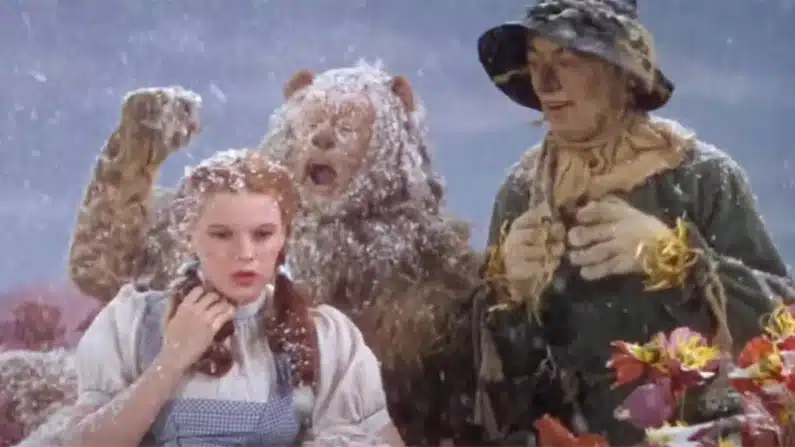
The snow in The Wizard of Oz was made of 100% asbestos…
The snow used in the famous poppy field scene in The Wizard of Oz was created using asbestos, a substance now known to be extremely hazardous to human health. In the scene where Dorothy and the Cowardly Lion fall asleep in the poppy field, chrysotile asbestos was used to produce the illusion of snow falling over them.
At the time, asbestos was not yet widely recognized as dangerous and was commonly used in film and stage productions to simulate effects such as snow or smoke. Today, such a practice would be completely unacceptable due to the well-documented risks of lung cancer and other serious diseases linked to asbestos exposure. [source]
5 Common Questions About The Wizard of Oz
Yes. It is based on a 1900 children’s novel written by L. Frank Baum, which later inspired multiple adaptations and interpretations.
They were changed to highlight the Technicolor process, as red stood out far more vividly on screen than the silver shoes described in the original book.
Yes. Several actors were exposed to unsafe working conditions, including toxic materials, extreme heat, and dangerous special effects.
Many people falsely remember certain famous quotes or scenes. This shared false memory phenomenon is often cited as a classic example of the Mandela Effect.
It remains beloved due to its timeless story, iconic music, groundbreaking visuals, and deep cultural impact across generations.