
Welcome to Australia — a land that offers far more than golden beaches and iconic wildlife. Behind its sun-drenched coastlines lies a treasure trove of fascinating facts that may truly surprise you. From otherworldly natural wonders to rich cultural heritage shaped over thousands of years, Australia is a place where every corner seems to hold a story worth discovering. Join us as we dive into 10 remarkable facts that will not only amaze you, but also deepen your understanding of this vibrant and diverse nation.
1 This is what Australia is known for…
Australia is famous for its unique wildlife, including kangaroos and koalas, as well as its diverse landscapes that range from deserts and rainforests to world-renowned coral reefs like the Great Barrier Reef. The country has a rich Aboriginal culture and history, alongside its fascinating colonial past. Sport plays a huge role in everyday life — especially rugby, soccer, and cricket — and Australia is also celebrated for its vineyards and wine culture. Major cities such as Sydney, Melbourne, and Brisbane offer modern comforts and iconic landmarks like the Sydney Opera House and Harbour Bridge. [source]
2 How many kangaroos live in Australia…
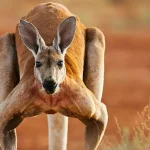
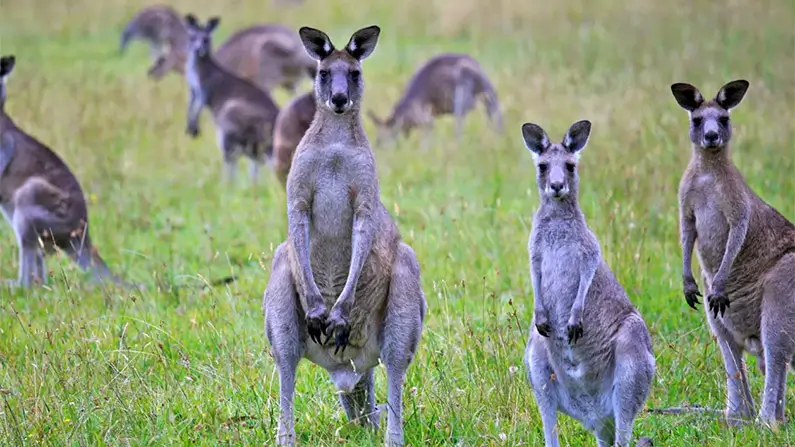
Australia is often called the “land of kangaroos“, and with good reason — there are more kangaroos than people in the vast island nation. According to estimates from the Australian Government’s Department of Agriculture, Water and the Environment, there were around 50 million kangaroos across the country at the end of 2020. In comparison, the human population in 2021 was roughly 25 million people. In other words, Australia has nearly two kangaroos for every resident. [source]
3 So, is Australia a country or a continent…?
Australia is considered both a country and a continent. Geographically, Australia is a continent because it sits on its own tectonic plate and is separated from surrounding continental shelves by ocean waters. The Australian continental plate includes not only mainland Australia but also Tasmania and several smaller nearby islands.
Politically and administratively, Australia is a sovereign nation and a federation of six states and two territories. The nation has a distinct identity and a fully developed political and administrative system governing the entire landmass that makes up Australia. [source]

You may also like
4 Here’s where you’ll find Lake Hillier — the pink lake…
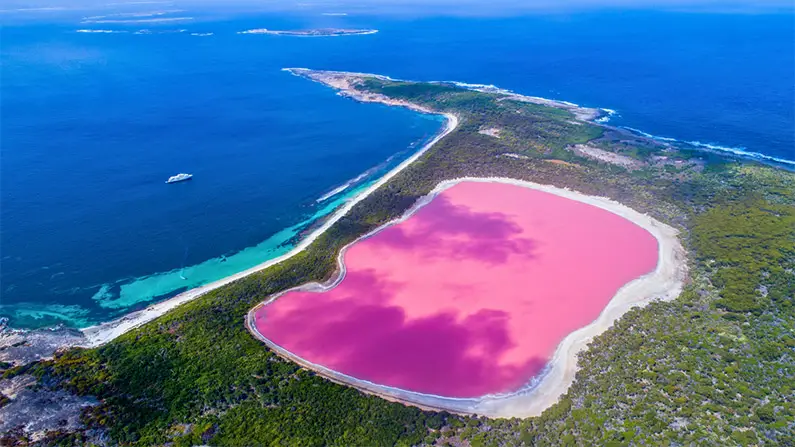
Lake Hillier in Australia is famously pink, thanks to its high salt concentration and the presence of the microorganism Dunaliella salina. Dunaliella salina is a microalga that contains both red and green pigments. When water evaporates and salinity rises, it boosts the production of beta-carotene (a red pigment) within the algae. The red pigment blends with the natural green tones in the algae and water, creating the lake’s distinct bubblegum-pink color.
Despite its striking hue, Lake Hillier is completely safe to swim in, and its vivid color is most noticeable when seen from above. A photo of the lake can be found below. [source]
5 The country’s prime minister vanished without a trace…
Harold Holt, Australia’s prime minister from 1966 until his disappearance in 1967, vanished dramatically and tragically during a swim at Cheviot Beach in Victoria. Holt was an avid swimmer, and on 17 December 1967 he ignored safety warnings and rough ocean conditions.
Despite one of the largest search efforts in Australian history, he was never found, leading to years of speculation and debate. The official conclusion is that he drowned, but with no body ever recovered, the mystery has fueled conspiracy theories and ongoing fascination surrounding his disappearance. [source]
6 What Australia’s climate is really like…
Australia’s climate varies widely depending on location, ranging from tropical in the north to temperate and dry conditions across central and western regions.
In the far north, in tropical areas such as Queensland and the Northern Territory, the weather is hot and humid with clear wet seasons during the summer months. In central Australia, desert climates dominate, bringing extremely hot days, cold nights, and very little rainfall. Along the east coast — including major cities like Sydney and Brisbane — the climate is humid subtropical, with warm summers and mild winters. Western Australia is largely known for its hot and dry conditions, especially across the northwest.
This broad geographic spread gives the country a remarkable variety of landscapes and weather patterns. [source]

You may also like
7 Australia exports a large number of camels to Arab nations…
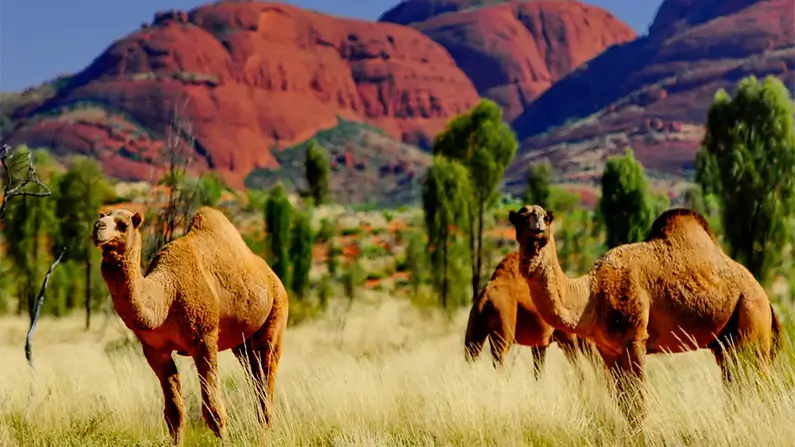
Australia exports camels to Saudi Arabia and other oil-producing countries. The reason behind this is the nation’s large population of wild camels, originally brought to Australia in the 19th century to assist with transport and exploration across the outback.
Over time, these camels multiplied rapidly and have since become more of a problem than a resource, turning into one of the country’s most unusual invasive species. [source]
8 Wild camels raided a town for every drop of water…
And speaking of camels — the town of Docker River in Australia was once invaded by around 6,000 wild camels. This happened during a severe drought when the animals were desperately searching for water.
Over time, the wild camel population has continued to grow, and they occasionally wander into human settlements in search of resources, leading to similar incidents. The camels are not normally aggressive, but simply driven by the need to find water. [source]

You may also like
9 Australia is home to more than 10,000 beaches…
Australia has over 10,000 beaches along its coastline (10,685 to be precise). If you were to visit one new beach every single day, it would take more than 29 years to see them all. Who knows — maybe that’s a retirement plan worth considering? [source]
10 Australia is surrounded by 8,222 small islands…
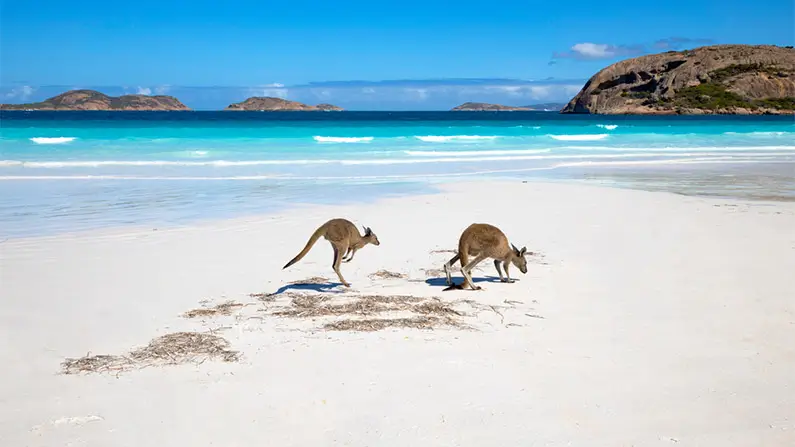
We all know by now that Australia — both a country and a continent — is one very large island. But did you know it is surrounded by 8,222 smaller islands? Most of them are uninhabited, scattered around the nation’s coastline. [source]

You may also like
5 Frequently Asked Questions About Australia
It’s best known for its unique wildlife, vast landscapes, and iconic landmarks like the Sydney Opera House and the Great Barrier Reef.
Yes — it is considered one of the safest travel destinations, with low crime rates and a well-developed tourism infrastructure.
The continent’s isolated ecosystem allowed species like snakes, spiders, and marine creatures to evolve without natural predators, resulting in high biodiversity.
The ideal time depends on where you go, but spring and autumn offer comfortable weather, fewer crowds, and great outdoor conditions in most regions.
No, not usually in big cities, but they are common in rural areas, national parks, and open countryside, where large populations live and roam freely.