
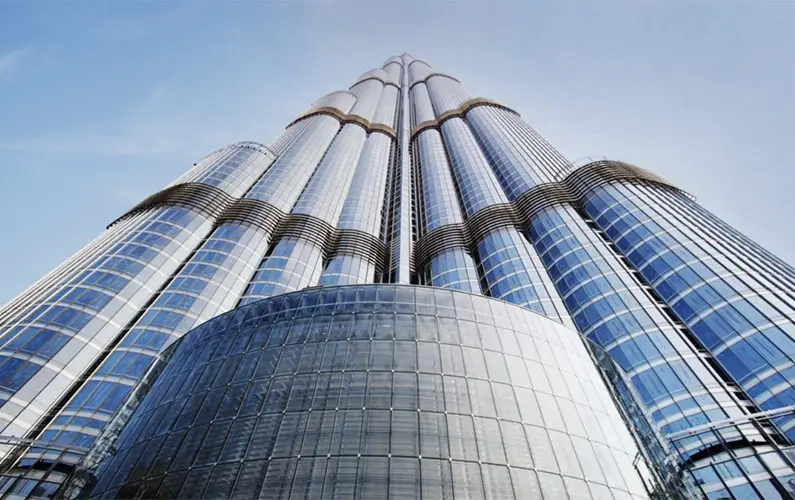
It’s easy to think you already know everything about Burj Khalifa. After all, it’s the world’s tallest building — a landmark visible for miles and featured on countless postcards from Dubai. But behind its dazzling façade lies a collection of details so extreme, strange, or downright unbelievable that most people have never heard of them. Here are ten facts that will make you see this iconic tower in a whole new way.
1 Elevators that travel at over 10 meters per second…
There are a total of 57 elevators inside Burj Khalifa, and some of them reach top speeds of up to 10 meters per second. The building also contains 2,957 parking spaces, 304 hotel rooms, and 900 apartments, giving a clear sense of just how vast and complex this skyscraper truly is. [source]
2 This is the total gross floor area of Burj Khalifa…
The tower has a gross floor area of 309,473 square meters — and that figure refers only to the main tower itself, excluding any connected buildings or podium structures. [source]
3 Burj Khalifa was actually built by Samsung…
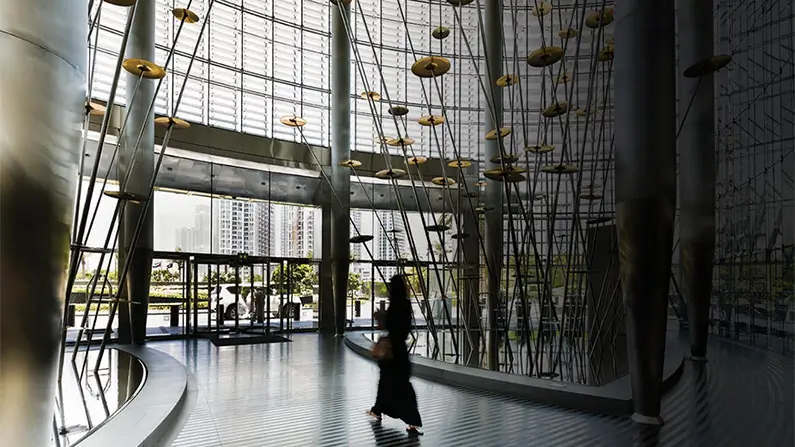
Burj Khalifa was constructed by Samsung C&T Corporation, the same South Korean construction company behind the iconic Petronas Towers. While the connection surprises many people, the Samsung Group consists of several different business divisions — and C&T is the branch responsible for large-scale international construction projects. [source]

You may also like
4 The world’s tallest skyscraper took six years to complete…
Construction of Burj Khalifa began in January 2004 and was completed just six years later, when the tower officially opened on January 4, 2010. For much of the project, it was known as Burj Dubai, but at the inauguration it was renamed Burj Khalifa in honor of the UAE’s then president, Sheikh Khalifa bin Zayed Al Nahyan. [source]
5 The building holds a handful of other world records…
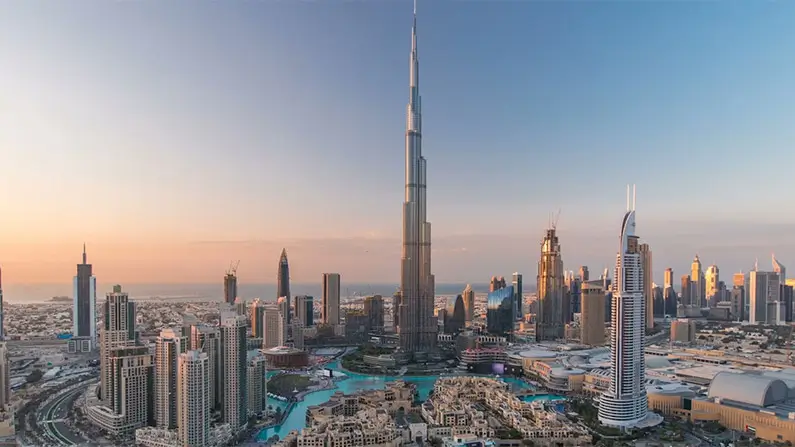
Burj Khalifa still holds several remarkable world records. It isn’t just the world’s tallest building, but also the tallest freestanding structure and the building with the highest number of floors. Its elevators also set records, featuring the longest travel distance of any elevator system, with shafts extending over 500 meters. [source]
6 More than 12,000 construction workers helped complete Burj Khalifa…
During the most intense phases of construction, over 12,000 workers were on site at the same time, recruited from numerous contractors around the world. In total, the project required nearly 22 million work hours before Burj Khalifa was finally completed. [source]

You may also like
7 Unbelievable amounts of aluminum and concrete were used to build the world’s tallest skyscraper…
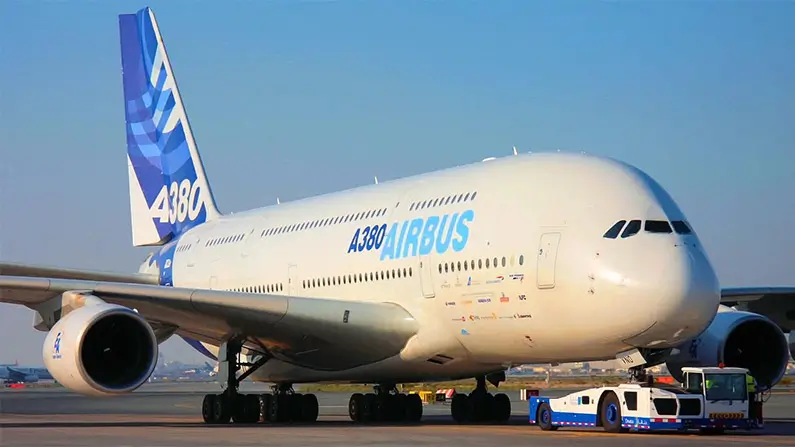
The total amount of aluminum used in the construction of Burj Khalifa is equivalent to five Airbus A380 aircraft (see image below). In addition, the project used as much concrete as the weight of 100,000 fully grown elephants, highlighting the sheer scale of this engineering marvel. [source]
8 And an astonishing amount of reinforcing steel was used as well…
The quantity of reinforcing steel used in Burj Khalifa is truly staggering. In total, around 55,000 tons of rebar were required — and if all of it were laid out in a single continuous line, it would stretch more than a quarter of the way around the Earth. This puts into perspective the enormous amount of material needed to keep the world’s tallest building standing. [source]

You may also like
9 Absolutely mind-boggling numbers…
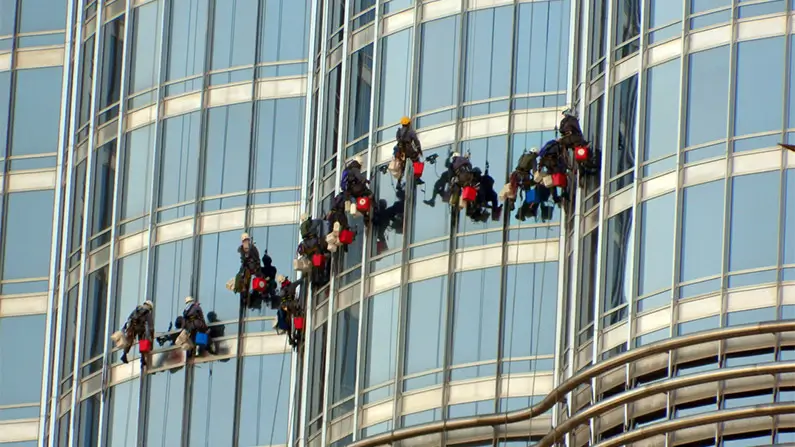
The façade of Burj Khalifa required nearly 26,000 individually custom-cut glass panels, each designed to fit the building’s highly complex shape. The work was carried out by more than 300 Chinese cladding specialists, who together developed a façade system engineered to withstand Dubai’s extreme summer heat and intense sunlight. [source]
10 Burj Khalifa’s design is inspired by a flower…
The skyscraper’s distinctive shape is inspired by the Hymenocallis flower, also known as the Caribbean spider lily. Much like the flower’s long, slender petals radiating from a central core, Burj Khalifa is based on a Y-shaped structural plan, with three wings extending from a central core. This flower-inspired geometry not only creates an elegant silhouette, but also helps improve the building’s stability against strong desert winds. [source]
You may also like
5 Common Questions About Burj Khalifa
It stands at 828 meters (2,717 feet), making it the tallest structure ever built by humans.
Construction was finished in 2010, after roughly six years of building work.
Yes, visitors can access observation decks on multiple levels, offering panoramic views of Dubai and the surrounding desert.
It was designed by Adrian Smith while working at Skidmore, Owings & Merrill, the firm also behind several other iconic skyscrapers.
The building contains a mix of luxury residences, hotel rooms, offices, observation decks, and restaurants, making it a vertical city.