

Alpacas (Vicugna pacos) are domesticated camelids native to the Andes Mountains and closely related to the wild vicuña. They are primarily bred for their exceptionally fine and soft fiber, commonly known as alpaca wool. While alpacas are most commonly found in the Andean regions of Ecuador, northern Bolivia, northern Chile, and southern Peru, breeders can now be found all over the world. Below, you’ll discover ten fascinating facts you probably didn’t know about these adorable and fluffy animals.
1 Alpacas are exceptional guardians against predators…
Some free-range turkey farmers use alpacas to protect their flocks from foxes, since alpacas are highly territorial. They often accept the turkeys as part of their “herd” and defend them by chasing off potential predators. In the United States alone, alpacas are estimated to save the lives of more than 24,000 turkeys every year. [source]
2 Forget therapy dogs – here’s the new phenomenon…!
In several European care homes, including in Germany, therapy alpacas are being used as an alternative to therapy dogs. Their calm and gentle nature has been shown to reduce stress and improve well-being among elderly people and individuals living with dementia. [source]

3 Now you know what “cushing” is…
The position alpacas take when riding in a minibus is called “cushing“. Apparently, alpacas travel by minibus so often that their seated position in vehicles has actually been given its own name. [source]
You may also like
4 Alpaca births almost always happen in the morning…
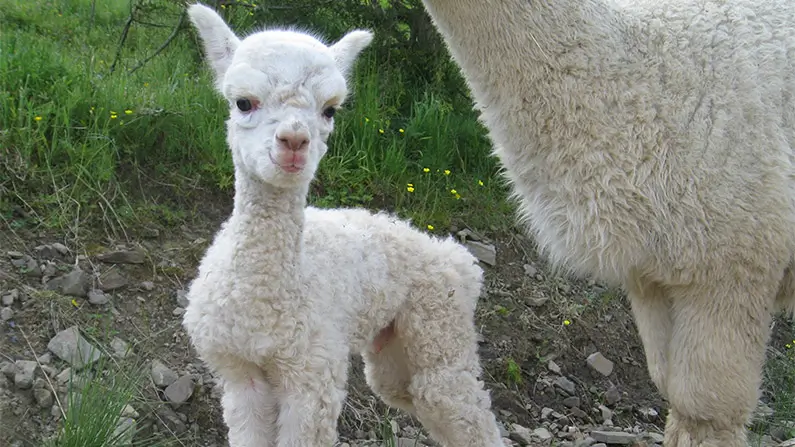
Alpaca births usually take place early in the day, most often between 7 a.m. and 1 p.m. This timing gives the newborn time to dry off and nurse before temperatures drop at night. Births rarely require human assistance, but if labor begins later in the day, it can be a sign of possible complications. [source]
5 Alpacas have become an anti-censorship symbol in China…
The alpaca is used as an anti-censorship symbol in China because its Chinese name is a homonym of a profane insult (“F your mother”). This allows people to use the alpaca as a coded form of protest or insult while technically avoiding online censorship. [source]
6 It’s just a myth that alpacas spit at humans…
Alpacas generally do not spit at people, even though it can happen on rare occasions. Instead, they mainly spit at other alpacas, usually to defend their food or when females want to make it clear they are not interested in mating. [source]
You may also like
7 And yes, alpacas can become aggressive toward humans…
If alpacas are overly imprinted on humans as youngsters — for example through bottle-feeding — they may later develop aggressive dominance behavior toward people, a condition known as “Berserk Llama Syndrome“. It is relatively rare, but occurs more often in males raised without other alpacas. [source]

8 That’s why alpaca wool is so popular…
Alpaca wool is naturally hypoallergenic because it contains no lanolin, and its hollow fibers make it both warmer and softer than traditional sheep’s wool. It is also flame-resistant and highly moisture-resistant, which makes it an exclusive and highly sought-after material in the textile world. [source]

You may also like
9 It changed its name from Lama pacos to Vicugna pacos…
The ancestor of the domesticated alpaca is the endangered vicuña (Vicugna vicugna). Alpacas were originally described under the scientific name Lama pacos, but DNA studies have since confirmed that, unlike llamas, alpacas do not descend from the guanaco. As a result, alpacas are now classified in the genus Vicugna. There are two types of alpaca: suri and huacaya. [source]
10 Alpacas prefer to “go” together…
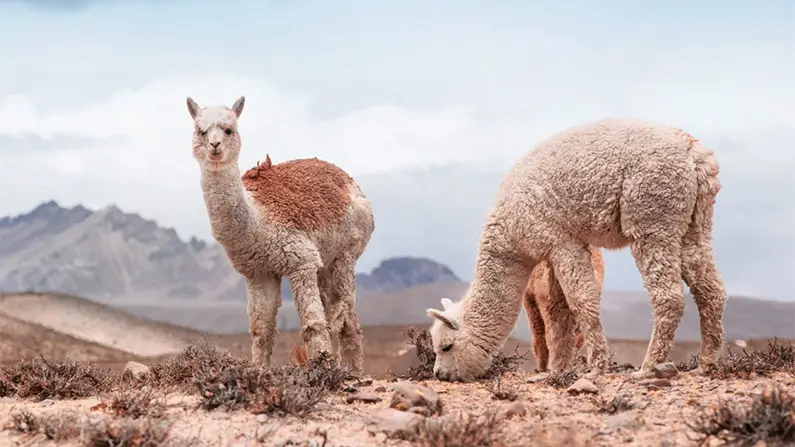
Female alpacas, much like their human counterparts, tend to use the “bathroom” at the same time. In other words, they often relieve themselves together — proving they might have something in common with groups of women on a night out. [source]

You may also like
Xtra Unknown but fun fact: alpacas can recognize each other and even humans…
Alpacas are more socially aware than many people realize — research and expert observations suggest they can recognize individual herd members and humans they’ve spent time with, using a combination of vocalizations, body language, and visual memory to build strong social bonds and remember familiar faces. [source]
5 Common Questions About Alpacas
It is a domesticated South American camelid primarily kept for its soft, high-quality fiber, but also valued for its calm temperament and social behavior.
They originate from the Andes Mountains, where they have been bred for thousands of years by indigenous cultures in high-altitude regions.
Spitting is rarely directed at humans and usually occurs between animals as a way to establish boundaries or defend food.
They are mainly kept for their luxurious fiber, which is used in clothing and textiles, but they are also popular for agritourism, therapy visits, and livestock guarding.
They are generally gentle, curious, and calm, though they prefer respectful interaction and can become stressed if handled improperly.