Corn is everywhere — on our plates, in our snacks, and even in products we use every day. But behind those familiar yellow kernels lies a surprisingly rich story filled with science, history, and unexpected uses. From its ancient origins to its role in modern food and industry, corn is far more fascinating than most people realize.
In this article, we explore 10 fun facts you should know about corn, revealing why this humble crop plays such a big role in our world — and why it deserves a closer look.
1 A quirky but fun pattern in corn kernels…
One fun fact about corn is that each ear contains an even number of kernel rows — never an odd one. This means you’ll almost never find an ear of corn with an odd number of rows running down the cob.
So next time you’re enjoying those juicy kernels, remember that corn seems to follow its own perfectly balanced rule, just to keep us a little surprised and smiling. [source]
2 Corn is believed to have originated in southern Mexico…
Corn is thought to have been first domesticated in southern Mexico more than 10,000 years ago. Ancient traces of the crop have been found at archaeological sites in the region, indicating that corn cultivation has an extremely long history.
Corn was a staple crop for many Indigenous peoples of the Americas and has since spread across the globe, becoming one of the most important crops worldwide. [source]

3 And it’s used for much more than just food…
Corn isn’t only used as a food source — it also plays a role in a wide range of industries and everyday products. It is commonly found in items such as fireworks, glue, fabrics, crayons, fuel, paint, detergents, cosmetics, and plastics, among many others.
This makes corn one of the most versatile crops in the world, reaching far beyond the dinner table. [source]
4 And corn comes in many more colors than just yellow…
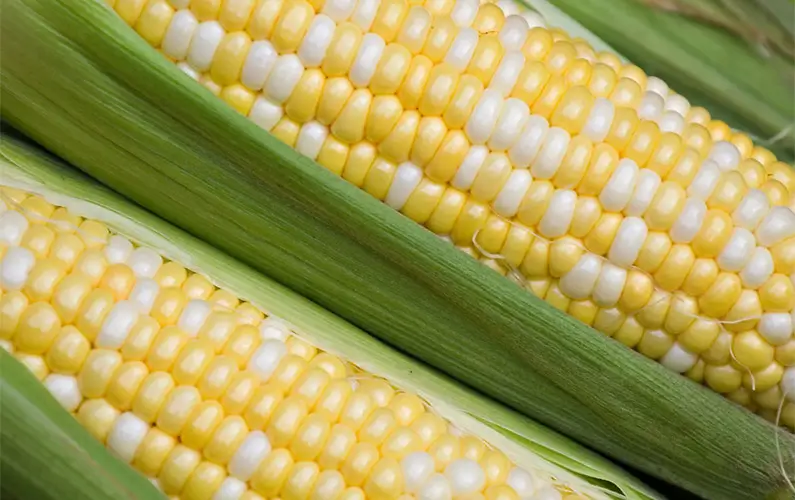
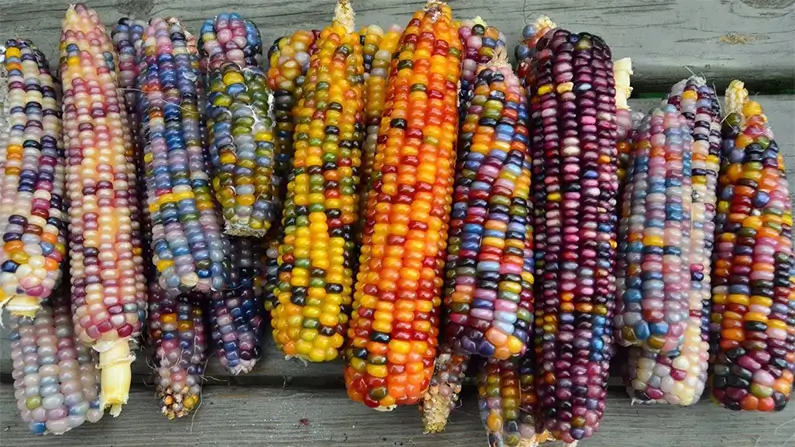
While corn is most commonly yellow, there are many varieties that produce kernels in a wide range of colors, including green, red, blue, purple, and white. These color variations come from genetic diversity within corn and the different natural pigments found in the kernels.
For example, Indian corn, also known as flint corn, often features kernels in multiple vibrant colors such as yellow, red, blue, and white. This type of corn is frequently used for decorative purposes, especially during holidays like Thanksgiving. [source]
5 Corn is technically neither a vegetable nor a fruit…
Botanically speaking, corn is a type of grass, and each kernel is actually the plant’s fruit. From a scientific perspective, corn is classified as a grain, also known as a caryopsis, which is a type of cereal fruit.
However, corn is often used as a vegetable in cooking, especially when eaten fresh as sweet corn or added to savory dishes. This culinary use has led many people to think of it as a vegetable.
So depending on perspective, corn can be seen as both a vegetable and a fruit — but botanically, it is a grain. [source]
6 The United States is by far the world’s largest producer of corn…
The United States is one of the largest corn producers in the world, accounting for a significant share of global production. Roughly one third of the world’s corn is grown and harvested in the U.S.
Corn in the United States is used for far more than just food. It plays a major role in ethanol production, animal feed, industrial applications, and many other uses.
After the United States, some of the largest corn-producing countries include China, Brazil, Argentina, Ukraine, and India. [source]
You may also like
7 Nearly all processed foods contain corn…
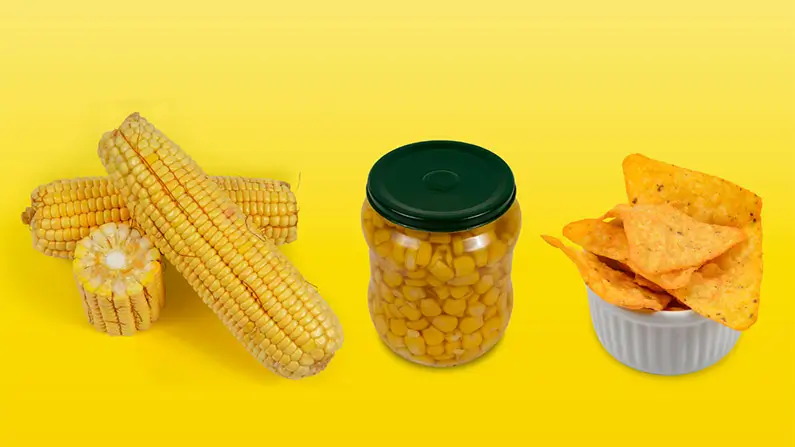
Almost all processed foods contain some amount of corn, whether in large or small quantities. It can be found in everything from cereals, chips, ice cream, baby food, peanut butter, and mayonnaise to marshmallows, cooking oils, margarine, salad dressings, and even chewing gum — just to name a few.
Corn’s many derivatives make it one of the most widely used ingredients in modern food production. [source]
8 The intimate biology of corn: tassels, silk, and the magic of pollination…
Corn plants have separate male and female parts. The male flowers, called tassels, grow at the top of the plant, while the female flowers — known as silk — emerge lower down.
For corn kernels to develop, pollen from the tassels must be transferred to the silk, a crucial step that allows fertilization to occur and ears of corn to form. [source]
You may also like
9 What would corn be without even mentioning popcorn…?
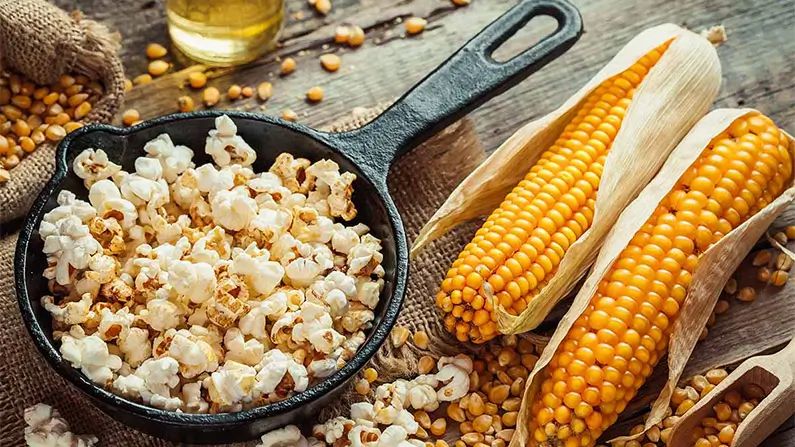
Popcorn is one of the oldest types of corn, with a history that stretches far back in time. Indigenous peoples of the Americas used popcorn in ceremonies and as part of their diet thousands of years ago. Archaeological evidence suggests that popcorn was consumed as early as 3600 BCE in Mexico.
However, it wasn’t until Native Americans introduced popcorn to early European settlers in the 17th century that it became known to a wider audience. During the 1800s, popcorn grew into a popular snack in the United States and Europe, with mobile popcorn carts appearing in many public places.
Its popularity surged even further during the silent film era of the 1920s, as popcorn was an affordable and easily accessible snack for moviegoers. Today, popcorn is one of the most beloved snacks worldwide, closely associated with movie nights and entertainment. And honestly — how many times has popcorn saved a movie night for us? [source]
10 This is why cornfields are so popular in horror movies…
Have you ever noticed how cornfields appear in countless horror films? There’s actually a logical explanation. Cornfields have long been viewed as mysterious and unsettling, especially because they limit visibility and create a sense of isolation.
Another reason is corn’s unusual ability to produce unexpected popping and rustling sounds as it grows under the right conditions. This phenomenon, sometimes called “singing corn“, occurs when wind rushes through the fields, creating vibrations in the stalks, ears, and leaves. The sound is most noticeable when the corn is at a specific stage of maturity, producing a naturally eerie concert-like effect that fits perfectly into horror settings. [source]
5 Common Questions About Corn
Yes. It provides fiber, vitamins, antioxidants, and energy, making it a nutritious part of a balanced diet when eaten in moderation.
From a scientific perspective, it is classified as a grain, but in cooking it is often treated as a vegetable, especially when eaten fresh.
Certain kernels contain trapped moisture inside a hard shell. When heated, pressure builds up until the kernel bursts open, creating popcorn.
It is widely used in fuel production, plastics, cosmetics, adhesives, textiles, and household products, making it one of the most versatile crops in the world.
Its derivatives are cheap, stable, and easy to process, which makes them popular ingredients in a wide range of packaged foods.