

In the world of luxury cars, Rolls-Royce stands as an unwavering symbol of excellence and elegance. With a history shaped by innovative engineering and a passion for detail, Rolls-Royce has created some of the most iconic vehicles ever to grace the roads. From the classic Rolls-Royce Phantom to the modern and powerful Rolls-Royce Cullinan, let us dive into a world of luxury and performance that defines this prestigious automotive brand—through ten fascinating facts about a name that continues to inspire admiration worldwide.
1 The exhaust from the Rolls-Royce Merlin V12 aircraft engine generated so much thrust that engineers learned to take advantage of it…
The Rolls-Royce Merlin V12 was a legendary aircraft engine used during World War II, most famously powering British fighters such as the Supermarine Spitfire and the Hawker Hurricane.
One particularly fascinating feature of the Merlin engine was its exceptionally powerful exhaust output. Aircraft engineers discovered that by angling the exhaust stacks backward, they could harness this force to create additional forward thrust. By exploiting this effect, the overall top speed of aircraft like the Spitfire could be increased by up to 20 km/h (about 12 mph).
This clever use of exhaust thrust resulted in noticeably improved performance and maneuverability, giving Merlin-powered aircraft a valuable edge in aerial combat. [source]
2 The company even offers a course on how to open car doors without leaving fingerprints on the handles…
If you can afford a luxury car from Rolls-Royce, chances are you can also afford a personal chauffeur. And if you have a chauffeur, it might be worth sending them to an exclusive training program.
Rolls-Royce offers a course called “White Glove Experience“, designed to teach chauffeurs the finer points of luxury service—including how to minimize fingerprints on door handles when opening and closing the car. Because at this level of luxury, even the smallest details matter. [source]
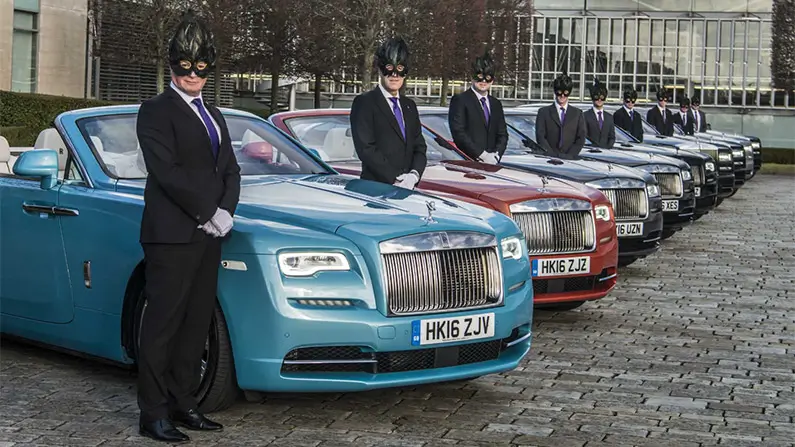
3 Around 75% of all Rolls-Royce cars sold in the UK are still in use today…
An estimated three quarters of all Rolls-Royce vehicles ever manufactured and sold in the United Kingdom are still on the road. This remarkable figure highlights not only the brand’s legendary build quality, but also the exceptional longevity of cars produced by Rolls-Royce. [source]
4 The world’s largest collection of Rolls-Royce cars belonged to an Indian spiritual leader…
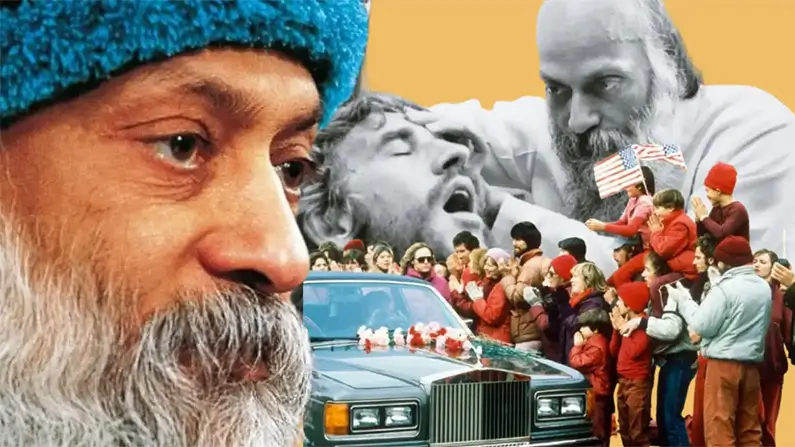
Bhagwan Rajneesh, also known as Osho, was an Indian spiritual teacher and the leader of a controversial new religious movement. During his time in Oregon, USA, in the 1980s, he amassed an extraordinary collection of 93 Rolls-Royce cars.
This extreme display of luxury quickly gained global attention and became known as the largest Rolls-Royce collection in the world. Below, you can see Osho pictured with one of his 93 prized Rolls-Royce vehicles—a symbol of a lifestyle that fascinated and baffled the public in equal measure. [source]
5 An Indian king expressed his dissatisfaction by using the cars for garbage collection…
The Maharaja of Alwar, an Indian ruler named Jai Singh Prabhakar, purchased seven Rolls-Royce cars in 1920. According to popular accounts, he was denied a test drive at a Rolls-Royce dealership in England—allegedly because of the color of his skin.
As a way to assert his dignity and make a statement, the Maharaja went on to buy seven Rolls-Royce vehicles and then used them for garbage collection in the Indian city of Alwar. The story has since become one of the most famous—and ironic—anecdotes in the history of Rolls-Royce. [source]
6 Allen Swift owned the same car for an incredible 77 years…
Allen Swift was a man from Massachusetts, USA, who purchased a brand-new Rolls-Royce Piccadilly Phantom I directly from the dealer in 1928. He owned and meticulously maintained the car for the rest of his life and passed away in 2005 as the oldest person known to still own a car that had never changed ownership.
Allen Swift’s lifelong bond with his Rolls-Royce became one of the most remarkable ownership stories in automotive history, perfectly illustrating the durability and legacy of cars built by Rolls-Royce. [source]

You may also like
7 The model behind the iconic “Spirit of Ecstasy” hood ornament died in a tragic accident…
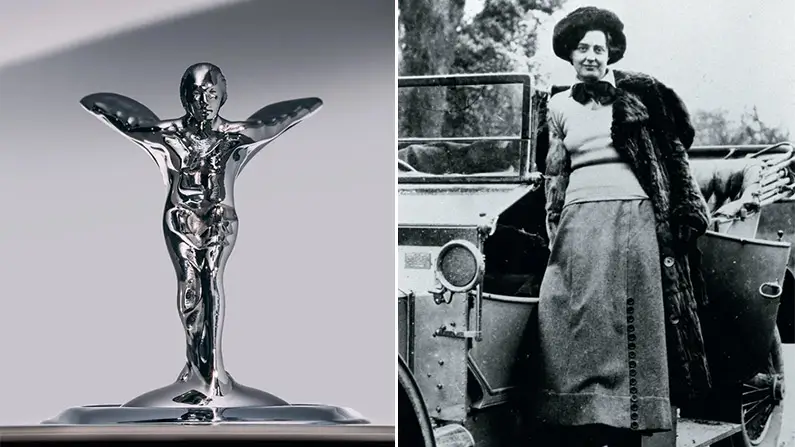
The Spirit of Ecstasy, also known as the “Flying Lady“, is the unmistakable hood ornament that has become a symbol of Rolls-Royce. The sculpture depicts a woman with outstretched arms, leaning forward as if swept back by the wind, embodying grace, motion, and elegance.
The model for the Spirit of Ecstasy was Eleanor Velasco Thornton, who was romantically involved with Charles Rolls, one of the company’s founders, at the time she inspired the sculpture. Tragically, Thornton died in 1915 at just 35 years old while traveling to India aboard the SS Persia, when the ship was torpedoed by a German submarine during the First World War. Her story adds a somber and human dimension to one of the automotive world’s most famous symbols. [source]
8 Rolls-Royce workers refused to repair Chilean jet engines after the coup…
Following the military coup on September 11, 1973, in Chile, which overthrew President Salvador Allende, trade union workers at the Rolls-Royce factory in East Kilbride, Scotland, refused to repair jet engines belonging to the Chilean Air Force.
This refusal was a form of non-violent protest and an act of solidarity with the Chilean people, opposing the newly established military regime under Augusto Pinochet. As a direct result, many Chilean aircraft were grounded and rendered unusable, highlighting how industrial action in Scotland had a tangible impact thousands of miles away. [source]
9 Why the Silver Shadow was never called Silver Mist…
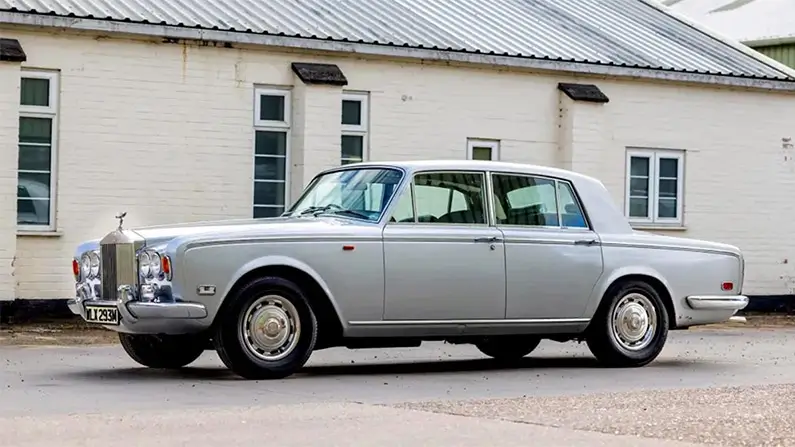
The Rolls-Royce Silver Shadow (pictured below) was originally intended to be named Silver Mist. However, the name was quietly dropped after the company realized that the word “Mist” in German can mean manure, waste, or dirt—hardly associations befitting a luxury car.
To avoid an unfortunate branding mishap, Rolls-Royce opted for the far more elegant and universally appealing name Silver Shadow instead. [source]
10 The Rolls-Royce Ghost was so quiet it made passengers feel disoriented and nauseous…
The Rolls-Royce Ghost, introduced in 2009, was so exceptionally silent during early test drives that some passengers reportedly became disoriented by the eerie quiet inside the cabin. The absence of familiar sound cues made the experience feel unnatural—and even uncomfortable.
As a result, engineers at Rolls-Royce were forced to make the cabin noisier on purpose, adding artificial vibrations and subtle sound feedback so passengers would feel more at ease. Sometimes, absolute perfection needs a few flaws to feel human. [source]
5 Common Questions About Rolls-Royce
The high price comes from handcrafted production, bespoke customization, and premium materials. Each vehicle can take months to build and is tailored to the owner’s exact specifications.
Yes, most components are assembled by hand, including the interior wood veneers, leather upholstery, and paintwork, which can involve dozens of layers.
They are built for exceptional longevity rather than mass production, with a focus on smooth performance, durability, and long-term ownership rather than speed or sportiness.
Yes, the brand’s engineering division develops advanced aircraft and marine engines, separate from the luxury car division, and plays a major role in global aerospace technology.
For buyers seeking unmatched comfort, craftsmanship, and prestige, the value lies in exclusivity and experience rather than traditional performance metrics.