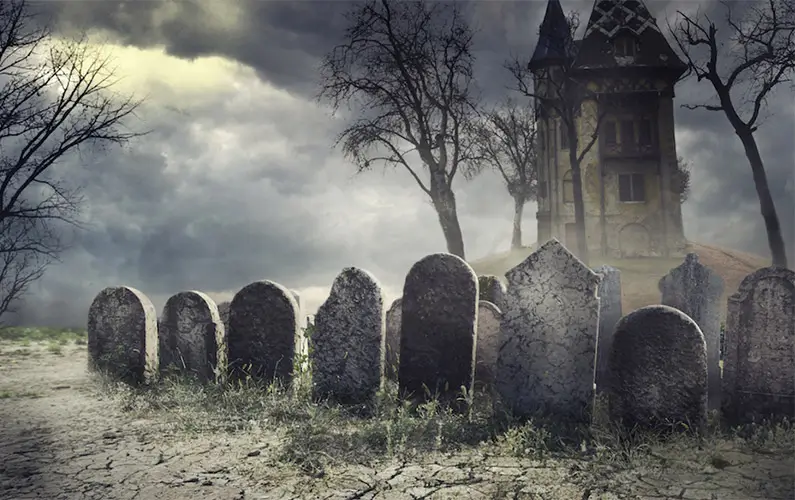
In the shadow of grand churches and beneath a sky filled with melancholy, graveyards rest as quiet witnesses to humanity’s passage through time. These sacred grounds hold stories, cultural nuances, and emotions of both sorrow and gratitude. In this article, however, we will not delve into the unique and meaningful role graveyards play; instead, we will present ten intriguing facts and bits of trivia about them. And a word of warning to sensitive readers — some of these points may actually be a little creepy!
1 Ben & Jerry’s actually has its own graveyard for retired and failed ice-cream flavors…
Let’s start with something that isn’t exactly scary — in fact, it’s rather cute. The popular ice-cream brand Ben & Jerry’s maintains a ‘Flavor Graveyard’, complete with tombstones for discontinued flavors. Some of them were officially retired, while others simply never managed to catch on. [source]
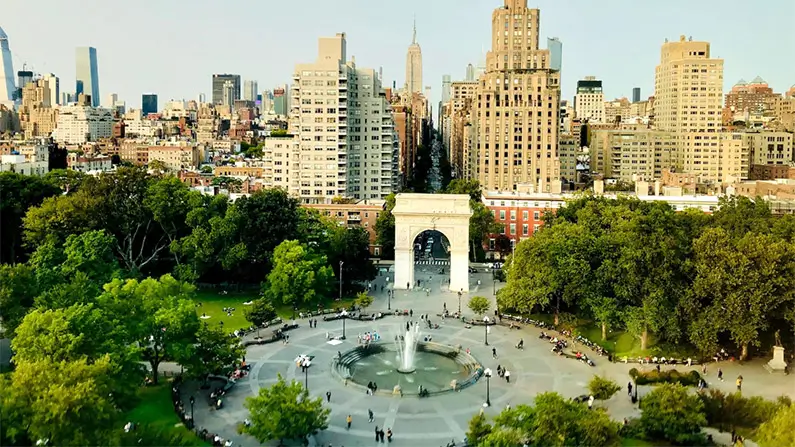
2 Tens of thousands of people are buried beneath Washington Square Park…
Now we’re moving on to something a bit creepier — at least if you’re the superstitious type! New York’s Washington Square Park was once a cemetery, and it’s believed that more than 20,000 bodies still remain buried beneath it. Below, you’ll find an image of Washington Square Park in New York City. [source]
3 Why Mount Everest is called ‘the graveyard in the cloud’’…
The world’s highest mountain, Mount Everest, is sometimes referred to as ‘the graveyard in the clouds’ because it’s estimated that over 200 bodies of climbers still remain on the mountain. In some cases the bodies were never found, but most often they are left behind simply because retrieval is far too dangerous. From time to time, glacier shifts or avalanches expose them again.
The likelihood of encountering at least one body during a climb of Mount Everest is extremely high. [source]

You may also like
4 Luxembourg is home to giant World War II cemeteries for both Americans and Germans…
In Luxembourg, there is a World War II cemetery for American soldiers — including General George S. Patton — where all the graves are marked with white cross headstones. Nearby, there is a German military cemetery where the soldiers’ graves instead feature dark-colored crosses. Below, you’ll find an image from the American cemetery. [source]

5 Cemeteries were relocated from central London in the 1850s due to overcrowding and hygiene issues…
In 1850s London, the city faced serious problems with overcrowded graveyards and growing public health concerns linked to burial practices. In 1852, the Burial Act was passed, leading to the creation of new cemeteries outside the city. As a result, burial grounds were moved from densely populated areas to more peripheral locations to improve sanitation and reduce overcrowding. [source]
6 Why you can find skeleton and skull icons on older gravestones…
A slightly eerie aspect of some older cemeteries is the use of symbolic carvings and icons on gravestones. Many historic markers feature skeletons, skulls, crosses, angels, and other imagery meant to convey messages about death, the afterlife, and the hope of resurrection.
For example, skulls and crosses were common during the Gothic era, symbolizing both mortality and resurrection. Some cemeteries even have so-called ‘grave guardians‘ — stone figures placed beside graves to represent a watchful presence over the dead. [source]
7 Here you’ll find the world’s largest graveyard of rusting ships and boats…
Nouadhibou in Mauritania, West Africa, is home to one of the world’s largest ship graveyards. The area is known as ‘Shipwreck Bay‘ or ‘Cimetière Naval‘, a place where hundreds of abandoned and rusting vessels have been left along the coastline — some of them for decades.
The ships were abandoned for various reasons, including economic struggles, maintenance issues, and changes in ownership. The result is a striking landscape of corroded hulls and skeletal metal structures, which has become both a tourist attraction and a popular photography site. Below, you’ll find an image of the ship graveyard. [source]

8 How people dealt with grave robbers in the past…
On some cemeteries, you can still find coffins equipped with protective ‘security measures’ designed to deter grave robbers. During the Victorian era and earlier, grave robbing was a genuine threat — especially since valuable items were sometimes buried with the deceased.
To discourage thieves, coffins were occasionally placed inside special ‘security cages’ or metal-reinforced coffin boxes. These constructions used iron bars, spikes, or other obstacles to make the coffin difficult or impossible to open. The goal was to protect the resting place of the dead and ensure the graves remained undisturbed. [source]
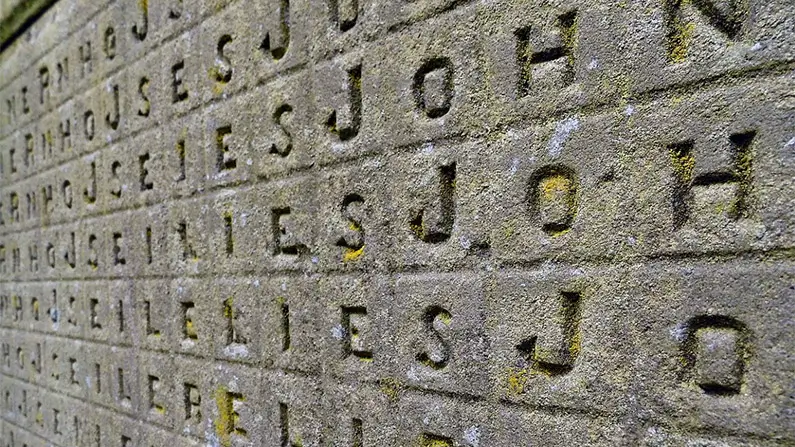
9 John Renie’s gravestone can be read in 46,000 different ways, because it’s an acrostic puzzle…
The gravestone of John Renie at St. Mary’s Priory Church in Wales is famous for being an exceptionally unique and intricate piece of artwork. The stone features an acrostic puzzle inscription consisting of 285 letters, arranged so that the phrase “Here Lies John Renie” can be read in thousands of different combinations thanks to its extraordinary design.
This artistic element has made the gravestone well-known and attracts visitors who are fascinated by its complexity and creativity. Below, you’ll find an image of the gravestone. [source]
10 How people in the past tried to avoid accidentally burying someone alive…
Another eerie and intriguing fact about some cemeteries is the historical existence of ‘living graves‘. The term refers to cases where individuals were accidentally buried alive, often because they were in a coma or mistakenly declared dead. Throughout history, limited medical knowledge and the lack of reliable diagnostic tools sometimes led to incorrect pronouncements of death.
To prevent such tragedies, some cultures and historical periods adopted the practice of waiting a certain amount of time before burial to ensure the person was truly deceased. This gave rise to the use of special buildings called ‘receiving houses’ or mortuaries, where bodies were placed temporarily and monitored for clear signs of actual death — such as the onset of decomposition. [source]
5 Common Questions About Graveyards
A graveyard is typically located next to a church, while a cemetery is a standalone burial ground that does not have to be connected to religious buildings. Cemeteries are usually larger and planned for long-term use.
These symbols were used to convey religious or moral messages. Skulls and skeletons often represented mortality, while angels, crosses, and other icons symbolized hope, resurrection, or the afterlife. This was especially common in Gothic and early Christian art.
Recovering bodies on Everest is extremely dangerous, due to altitude, weather, and terrain. Many climbers who died on the mountain remain there because retrieval could risk more lives, and the environment makes recovery nearly impossible.
Yes. Many modern parks and urban areas were once graveyards, especially in older cities like London and New York. Washington Square Park in NYC, for example, still has over 20,000 bodies buried beneath it.
During times when grave robbing was common, some coffins were protected with iron cages, metal bars, or booby-trap-like structures. These “mortsafes” were meant to stop thieves from stealing bodies or valuables buried with the deceased.