
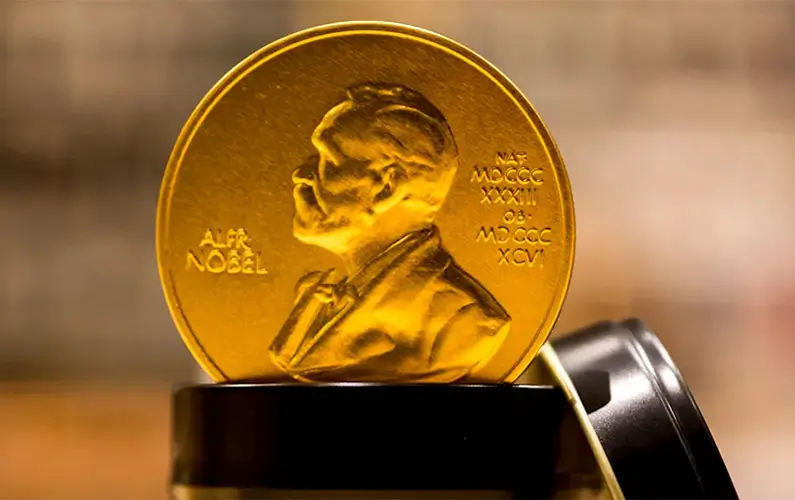
The Nobel Prize consists of annual international awards presented by three Swedish institutions and one Norwegian institution to individuals who have ‘conferred the greatest benefit to humankind’ in the fields of physics, chemistry, physiology or medicine, literature, and peace. The prizes were established through the 1895 will of Alfred Nobel, the inventor of dynamite, and were first awarded six years later, in 1901. It has become an increasingly popular tradition to dress up and enjoy a so-called ‘Nobel dinner’ at home during the award ceremony. In recent years, many schools in Sweden have also embraced the idea. With that said, here are ten facts you may not have known about the Nobel Prize!
1 Only the living can receive a Nobel Prize — with one exception…
The rules state that only living individuals can be nominated for and receive the Nobel Prize. But there is one exception: if a nominee dies after being nominated but before the award ceremony, they are still eligible to win. This has happened twice. One example is Dag Hammarskjöld, who was awarded the Nobel Peace Prize posthumously after having been nominated before his death. [source]
2 The Nobel Prize is not for the young…
On average, Nobel Prize laureates between 1901 and 2017 were 60 years old across all prize categories. In other words, it’s not something most young people should expect too soon. However, there is one remarkable exception: Malala Yousafzai, who won the Nobel Peace Prize at just 17 years old in 2014, making her the youngest laureate in history. The second youngest was Lawrence Bragg, who won the Nobel Prize in Physics in 1915 at age 25. [source]

3 Only wwo people have won the Nobel Prize twice…
John Bardeen is the only person to have received the Nobel Prize in Physics twice, earning the award in 1956 and 1972. Similarly, Marie Curie is the only woman ever to have been honored with two Nobel Prizes — she won the Physics Prize in 1903 and the Chemistry Prize in 1911. She was also the first woman ever to receive a Nobel Prize. [source]
4 Only one Nobel Prize is not awarded in Stockholm…
The only Nobel Prize not awarded in Stockholm is the Peace Prize — it is instead presented in Norway. The exact reason is unclear, but when Alfred Nobel wrote his will, Sweden and Norway were united, which may explain why he wanted the Peace Prize to be awarded in Oslo. Another common explanation is that Nobel believed Norwegian politicians were more committed to peace efforts than their Swedish counterparts.
The Peace Prize is awarded annually in Oslo on December 10th, the anniversary of Alfred Nobel’s death, in the presence of the King of Norway. [source]
5 9 out of 10 Nobel Prize winners are men…
The Nobel Prize has been awarded 573 times between 1901 and 2015, and up until 2021, only 58 women have received a Nobel Prize — meaning the vast majority of laureates have been men. [source]
6 Alfred Nobel’s fortune is still used today…
At his death in 1896, Alfred Nobel left 31 million Swedish kronor in his will to fund the Nobel Prizes. In today’s value, that amounts to approximately 2.1 billion kronor — which is roughly 200 million USD. Even now, the very same endowment continues to finance the selection of new laureates, exactly as Nobel specified in his testament. [source]

You may also like
7 Mahatma Gandhi could have been a major Nobel Prize winner…
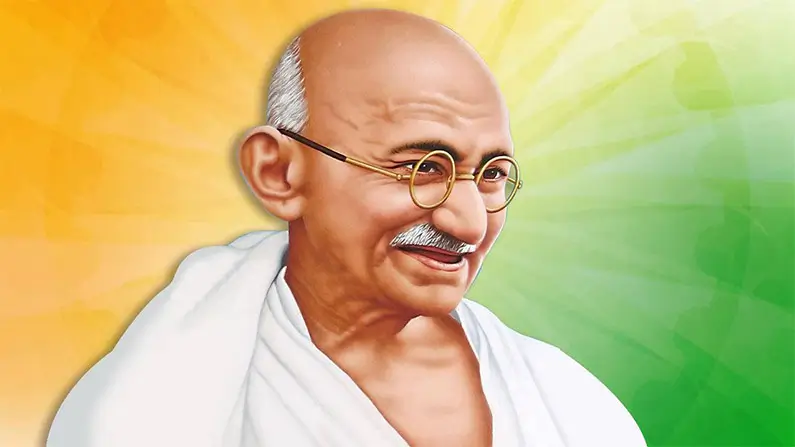
Mahatma Gandhi was nominated for the Nobel Prize five times. However, just two days before the 1948 nominations, Gandhi was assassinated, which meant he was automatically disqualified — so technically, he only had four real chances to win. Unfortunately, he was never awarded a Nobel Prize in the end. [source]
8 This is exactly what the Nobel Prize includes…
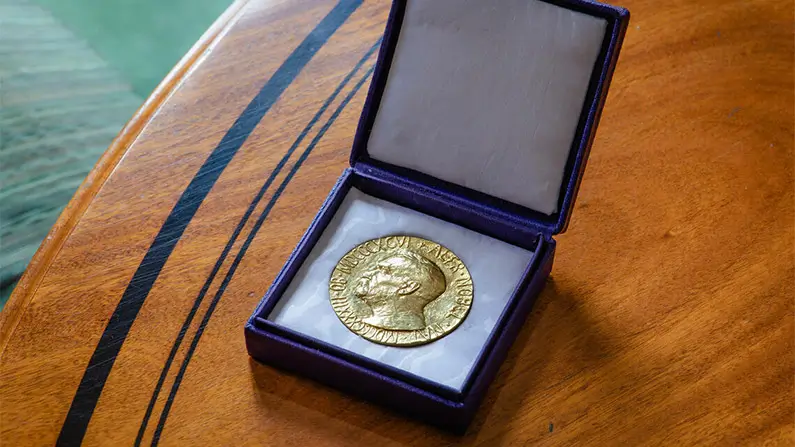
A Nobel Prize is not just a gold medal featuring Alfred Nobel in left profile on the obverse. Laureates also receive a diploma, which usually contains a quotation from the prize motivation. The only diploma without a motivation is the Peace Prize. In addition, winners receive a monetary award, documented in an official certificate confirming the amount.
The prize money varies depending on how much the Nobel Foundation can distribute each year. The amount has grown significantly over time: in the 1980s, the prize was 880,000 SEK (about 2.6 million SEK today). From 2001 onward, the prize amount was 10 million SEK, but in 2012 it was reduced to 8 million, before being raised again in 2017 to 9 million SEK.
If there are two laureates in a category, the prize money is split evenly. It is also common for laureates to donate their prize money to scientific, cultural, or humanitarian causes. [source]
9 Only one person has declined the Nobel Prize…
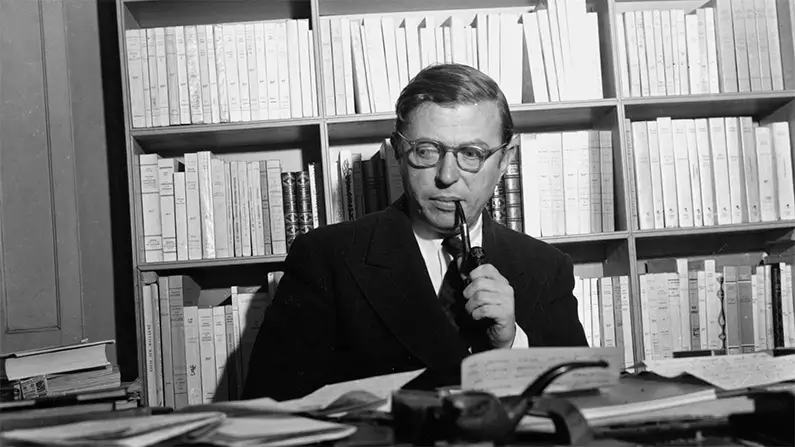
Jean-Paul Sartre (pictured below) is the only person to have ever declined a Nobel Prize, which he did in 1964. His refusal, however, had nothing to do with the prize itself; Sartre rejected all official awards and honors during that period. [source]
10 An 80-year age gap between Nobel Prize winners…
Although the average age of a laureate is around 60 years, and the youngest winner ever was just 17, there is also a man who received the prize at an extraordinary age. John B. Goodenough became the oldest Nobel Prize recipient when he won the Chemistry Prize in 2019 at the age of 97. [source]
5 Common Questions About the Nobel Prize
The Nobel Prize is a set of international awards founded by Alfred Nobel, established through his 1895 will. They honor individuals who have “conferred the greatest benefit to humankind” in physics, chemistry, physiology or medicine, literature, and peace.
Different institutions select laureates depending on the category. For example, the Royal Swedish Academy of Sciences awards the physics and chemistry prizes, while the Norwegian Nobel Committee awards the Peace Prize. Each committee evaluates nominations submitted by qualified experts.
Generally, no. The Nobel Prize cannot be awarded posthumously, unless the nominee dies after being nominated but before the ceremony. In that case, they may still receive the prize — a rare exception that has only happened twice.
The amount varies depending on the Nobel Foundation’s finances. In recent years, winners receive around 9 million SEK (roughly $850,000 USD) per prize. If multiple laureates share a prize, the money is divided equally among them.
The Peace Prize is given in Norway because, when Alfred Nobel wrote his will, Sweden and Norway were in a union. Nobel also believed that Norwegian politicians were more engaged in peace issues, which is why he assigned the Peace Prize to a Norwegian committee.