
World War II is one of the most transformative and devastating conflicts in human history. Over six long years (1939–1945), a global struggle was fought between the Allied and Axis powers, affecting nearly every corner of the world and reshaping the political landscape forever.
With its dramatic battlefields, destructive weapons, and tragic human cost, World War II remains a period of history that continues to influence our world today. In this article, you’ll find ten facts you may not have known about the war before!
1 George H.W. Bush: The American president who barely survived a WWII plane crash…
During World War II, a dramatic incident occurred in which nine American crewmen survived a plane crash — but their struggle for survival had only just begun. Their aircraft went down in the Pacific Ocean, and although all nine men survived the impact, their ordeal was far from over.
Eight of the crew members were captured by Japanese forces. Due to severe food shortages in Japan near the end of the war, they were subjected to horrific conditions and were eventually killed — with some reports even claiming they were cannibalized during desperate times. Only one man escaped this fate: George H.W. Bush, who would later become the 41st President of the United States.
Bush was miraculously rescued by a passing American submarine, saving his life and allowing him to survive the horrors of war. His experiences as a young pilot under fire shaped him deeply and became a significant part of his life story — long before he ever reached the White House. [source]
2 How the city of Konstanz avoided Allied bombings through clever deception and lights during World War II…
The German city of Konstanz managed to avoid devastating bombings from Allied forces during World War II — something very few other German cities could claim. The secret behind the city’s safety lay in a clever and strategic tactic: at night, the residents of Konstanz left all streetlights and window lights turned on.
This display of light made Allied bombers believe that Konstanz actually belonged to neighboring Switzerland, which remained neutral during the war and was therefore spared from air raids. By imitating the appearance of the neutral Swiss town, Konstanz was able to “fool” the enemy and protect its residents from the destruction of war. [source]
3 Innovative method during World War II: Penicillin was recycled from soldiers’ urine…
During World War II, the world faced a severe shortage of vital antibiotics, including penicillin — a drug that had revolutionized the treatment of infections. To meet the enormous demand and limited supply, an unusual but effective method was developed to extract more penicillin: it was recovered and recycled from the urine of soldiers who had already been treated with the antibiotic.
When a soldier received penicillin, a significant portion of the drug was excreted through urine, often in an unchanged or still biologically active form. By collecting and processing this urine, scientists and doctors were able to recover penicillin, increasing the availability of this life-saving medicine during the most critical phases of the war. This innovative solution played an important role in the fight against infections and helped save countless lives despite the harsh conditions and limited resources. [source]
4 The Red Army was responsible for the majority of defeats inflicted on German forces during World War II…
During World War II, the Soviet Red Army played a decisive role in defeating Nazi Germany and its forces. Historical estimates show that the Red Army was responsible for defeating between 75 and 80 percent of the German troops deployed on various fronts. This demonstrates the enormous effort and the brutal fighting that took place on the Eastern Front, where both the will to fight and the number of soldiers were exceptionally significant.
In comparison, the Western Allies — primarily American and British forces — defeated around 20 to 25 percent of German troops during the same period. Despite their important contributions on the Western Front, it was largely the Soviet Union’s Red Army that carried the main burden in fighting Nazi Germany’s military power. This statistic highlights the crucial importance of the battles on the Eastern Front and how they shaped the outcome of the war. [source]
5 Korean soldier became a veteran of three different armies during World War II…
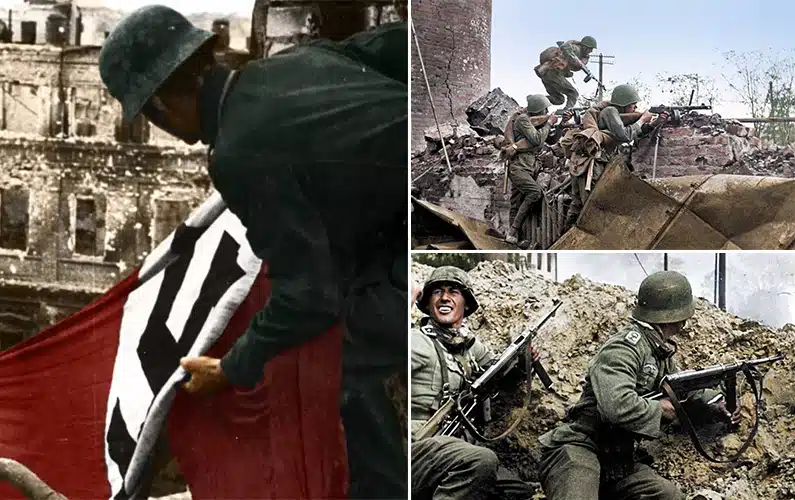
A Korean soldier named Yang Kyoungjong was conscripted into the Imperial Japanese Army during World War II. He was eventually captured and forced to fight for the Soviet Red Army. Later, he was captured yet again and then forced to serve in the German Wehrmacht.
This extraordinary chain of events made him a veteran of three different armies in the same war. [source]
6 Greek resistance changed the course of World War II — forcing the Germans to shift priorities…
When Italy under Benito Mussolini sent an ultimatum to Greece on October 28, 1940 — demanding permission to occupy the country — Greek Prime Minister Ioannis Metaxas responded briefly and decisively: “Ochi!” (“No!”). This marked the beginning of the Greco-Italian War, and the day is still celebrated in Greece as Ochi Day.
Despite Italy’s numerical superiority, the Greeks not only defended themselves but pushed the Italians back into Albania, turning Mussolini’s offensive into an embarrassing retreat. This unexpected Greek resilience and counteroffensive disrupted the Axis powers’ broader strategic plans.
Eventually, Hitler was forced to intervene by sending German troops to the Balkans in April 1941, which meant that valuable resources — time and soldiers — had to be diverted from the planned invasion of the Soviet Union (Operation Barbarossa). Many historians argue that this delay affected the outcome of the war, as the German advance eastward began later than intended — with catastrophic consequences once winter arrived.
Greece’s refusal wasn’t just a moment of national defiance — it became a key factor that disrupted the Axis timeline on a much larger scale. [source]
You may also like
7 The Soviet Union’s unimaginable sacrifice — lost 26 times more soldiers than the Western Allies…
When discussing the Allied victory in World War II, people often mention the industrial power of the United States, the endurance of Britain, and the early resistance of France. But it was the Soviet Union that bore the heaviest burden in human losses. Throughout the war, the Soviet Union lost an estimated 26 million people, of which around 8–11 million were soldiers.
It’s a number so staggering that it often gets lost in history books. For example, the combined military losses of the United States, Britain, and France were roughly equal to the Soviet losses during the Siege of Stalingrad alone — one of the most brutal and prolonged battles of the entire war.
The Siege of Stalingrad, which lasted nearly 900 days, claimed over one million Soviet lives. In total, the Soviet Union’s military losses were about 26 times higher than those of the Western Allies combined. This puts a dramatic spotlight on how crucial the Eastern Front was to the outcome of the war — and at what unimaginable cost the Soviet victory was achieved. [source]
8 From boy scouts to superpower: Before WWII, the U.S. Army was smaller than Romania’s…
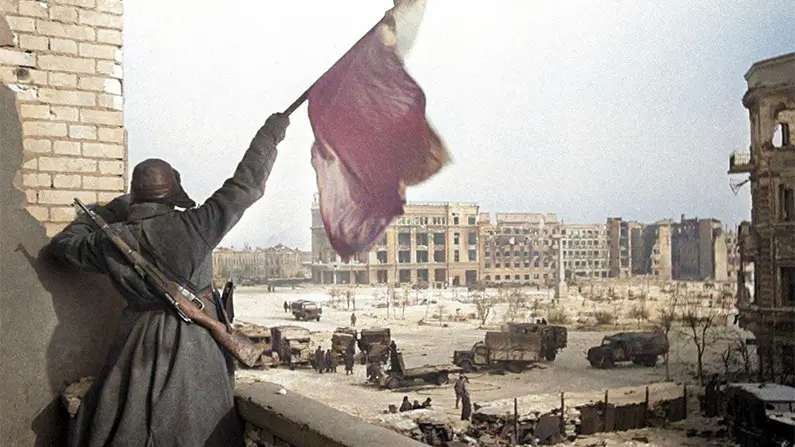
It’s easy to think of the United States as a military giant — especially when looking back at World War II and the decades that followed. But few people know that the U.S. military at the outbreak of the war was almost insignificant by global standards. Just before the war began, the American army was ranked only 17th in the world, behind countries such as Poland, Turkey — and even Romania, whose military ranked 16th at the time.
There were actually more registered Boy Scouts in the United States than soldiers on active duty, which says a lot about the nation’s preparedness. The country was still heavily influenced by isolationist ideals after World War I, and invested neither economically nor politically in building a large military force.
But that would change rapidly. Once the U.S. was drawn into World War II after the attack on Pearl Harbor in 1941, a massive military buildup began. In just a few years, the once small American army transformed into one of the most powerful forces in the world — a shift that would shape not only the war itself but the entire postwar era. [source]
9 Secret transport: When Britain’s gold was shipped as ‘fish’…
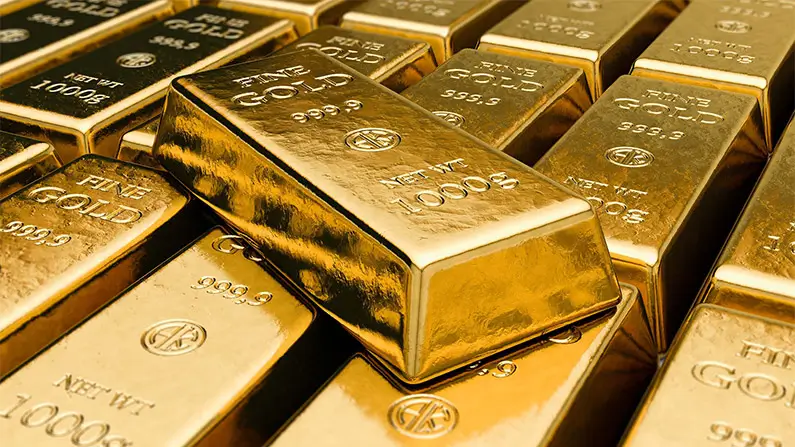
At the beginning of World War II, Britain faced a real threat of a German invasion. To prevent its assets from falling into enemy hands, the nation carried out one of the largest secret transfers of wealth in history — all under the disguise of… fish.
Thousands of crates filled with gold reserves and foreign securities were quietly shipped across the Atlantic to Canada, labeled with the harmless word “fish” to avoid drawing attention. The goal was to protect the British economy in case the Nazis took control of the United Kingdom.
The valuable cargo was stored in the basement of an office building in downtown Montreal, right beneath the feet of roughly 5,000 employees who worked in the building — completely unaware that they were sharing the space with one of the largest gold fortunes in the world. The operation, known as “Operation Fish“, is considered one of the most successful examples of strategic resource relocation during the war. [source]
10 Chaos in the aftermath — mass rapes during the fall of Berlin…
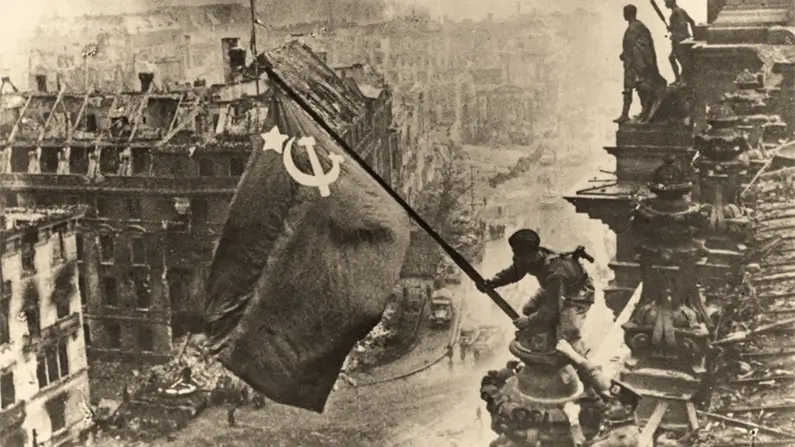
When World War II came to an end and the Soviet Red Army captured Berlin in the spring of 1945, the city experienced not only liberation but also a brutal wave of assaults. Historians estimate that millions of German women — from young girls to elderly women — were raped during the Soviet advance into defeated Germany. In Berlin alone, it is believed that over 100,000 births were a direct result of these assaults.
The Soviet soldiers were driven partly by revenge for the atrocities committed by the Germans in the Soviet Union, but the human consequences were immense and long-lasting. Many victims remained silent in post-war Germany, and the subject was taboo for decades. Only in modern times has it received broader attention, through eyewitness accounts and academic studies that highlight the hidden tragedy that followed the end of the war. [source]
Xtra Tokyo — the deadliest attack of the war…
It’s easy to assume that the atomic bombings of Hiroshima and Nagasaki were the most devastating events in Japan during World War II. But in reality, the firebombing of Tokyo in March 1945 claimed more lives than any single atomic bomb. In just one night, over 100,000 people died in the flames, and millions were left homeless. The attack caused destruction that surpassed both Hiroshima and Nagasaki in terms of the number of casualties, and it has since been described as one of the most brutal air raids in modern history.
The city — largely made up of wooden buildings — became an easy target for the incendiary bombs, which quickly turned entire districts into ash. Despite this, the event has received far less attention than the nuclear attacks, a disparity that historians still discuss today. [source]
5 Common Questions About World War II
World War II began primarily because of Nazi Germany’s aggressive expansion under Adolf Hitler, including the invasion of Poland in 1939. Other contributing factors included the Treaty of Versailles, global economic instability, and the rise of fascist regimes in Europe.
The conflict was mainly between the Allied Powers, led by the United States, the United Kingdom, and the Soviet Union, and the Axis Powers, led by Germany, Italy, and Japan. These nations formed the core groups that defined the war’s global scale.
World War II is the deadliest conflict in human history, causing an estimated 70–85 million deaths. This number includes both soldiers and civilians and covers deaths due to combat, genocide, famine, bombings, and disease.
The war in Europe ended when Nazi Germany surrendered on May 8, 1945 (V-E Day). The war in Asia ended after the United States dropped atomic bombs on Hiroshima and Nagasaki, leading to Japan’s surrender on September 2, 1945 (V-J Day).
The United States entered the war after Japan attacked Pearl Harbor on December 7, 1941. This attack shifted America from isolationism to full military involvement in both the European and Pacific fronts.