Genetics, the study of heredity, is a field within biology that examines how traits are passed down, how the genome is structured and functions, how genetic changes arise, and the biological variation that results. Our genetic heritage has also become a significant factor in genealogy, sparking substantial interest among individuals around the world. Below, you’ll find ten facts about genetics that you may not have known before!
1 Cancer actually has surprisingly little to do with genetics…
Around 90–95% of all cancer cases are caused by environmental and lifestyle factors such as smoking, diet, alcohol, and the sun’s UV radiation. Only 5–10% are linked to inherited genetic mutations, even though cancer at its core always involves changes in the DNA of cells. [source]
2 When twins have kids with twins, genetics gets weird…
When one pair of identical twins has children with another pair of identical twins, the children are genetically as close as full siblings, even though they are legally only cousins. They share up to 50% of their DNA — far more than typical cousins. [source]

3 We don’t even know where half of our gut’s genetic material comes from…
Around 40–50% of the genetic information in our gastrointestinal tract doesn’t match anything ever classified before — not plants, animals, fungi, viruses, or bacteria. We have no idea what it is. Biologists refer to it as “biological dark matter“. [source]

You may also like
4 Some women can see a hundred million more colors than others…
Certain women can have a genetic mutation that makes them tetrachromatic, meaning their eyes contain four types of cone cells. As a result, they can perceive up to 100 million different colors, compared to the roughly one million shades most of us are able to see. [source]

5 A syndrome that doesn’t only come with drawbacks…
There is a rare genetic hormone disorder called Laron syndrome, which results in short stature, a longer life expectancy, and near immunity to cancer and diabetes. Only about 350 people in the world are affected, roughly one-third of whom live in Ecuador. Research is ongoing to understand why. [source]
6 Blue-eyed people likely descend from a single common ancestor…
All blue-eyed individuals share the same genetic mutation in the OCA2 gene, suggesting they descend from a single ancestor who lived around 6,000–10,000 years ago. The mutation reduced the amount of pigment in the iris, resulting in blue eye color. The fact that every blue-eyed person carries this exact same change is strong evidence that it originated from one individual. [source]

You may also like
7 Inbreeding and genetics resulted in blue skin…
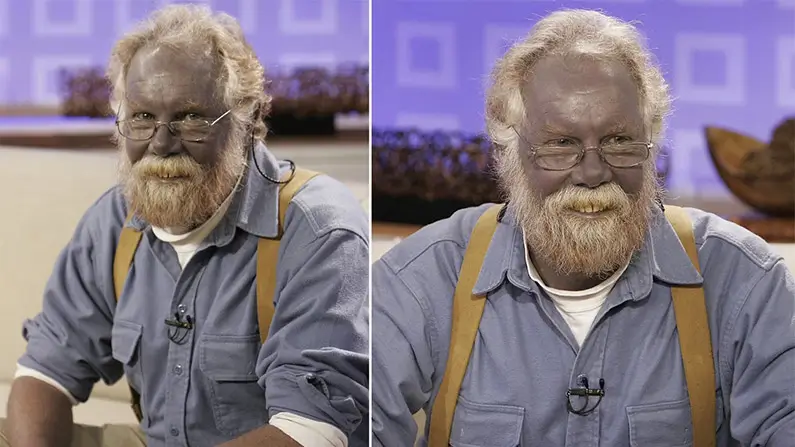
Generations of inbreeding combined with a rare genetic condition called methemoglobinemia resulted in a blue-skinned family in Kentucky, USA, known as the Fugates. A photo of one family member, who was nicknamed “Papa Smurf“, can be found below. [source]
8 Why we rarely live beyond 120 years…
In theory, the human body may be genetically unable to live longer than about 120 years due to biological coding that limits how many times our cells can divide. The longest documented human lifespan belongs to Jeanne Calment of France (1875–1997), who died at the age of 122 years and 164 days. [source]

You may also like
9 Now you have an excuse not to eat your vegetables…
Some people may hate the taste of cabbage, broccoli, and other plants in the Brassica family because these vegetables contain chemical similarities to phenylthiocarbamide (PTC) — a compound that is either tasteless or extremely bitter depending on a person’s genetic makeup. [source]

10 10% of all Europeans are resistant to HIV for a reason…
Biologists at the University of Liverpool have discovered that the plagues of the Middle Ages — such as the Black Death — led to about 10% of Europeans becoming resistant to HIV. These individuals carry a genetic mutation called CCR5-Delta32, which makes them resistant to the virus. This genetic mutation is rare among Africans and Asians. [source]

You may also like
5 Common Questions About Genetics
Genetics is the field of biology that studies genes, heredity, and variation in living organisms. It explains how traits are passed from parents to offspring and how changes in DNA can affect everything from appearance to disease risk.
No. While genetics play a role, most common diseases are influenced primarily by lifestyle and environmental factors, such as diet, smoking, stress, and exposure to toxins. Only a smaller percentage of diseases are caused directly by inherited mutations.
DNA tests can give useful insights, but they are estimates based on comparing your DNA to reference populations. The results are informative but not perfectly precise, especially for regions with mixed or poorly documented histories.
Identical twins start with nearly identical DNA, but small genetic differences can appear over time due to mutations and epigenetic changes. This means that even identical twins aren’t truly 100% genetically identical throughout life.
Your DNA sequence mostly stays the same, but gene expression can change due to epigenetics, which turns genes on or off based on factors like stress, diet, aging, and environmental exposure. These changes do not alter your DNA code but affect how it functions.