
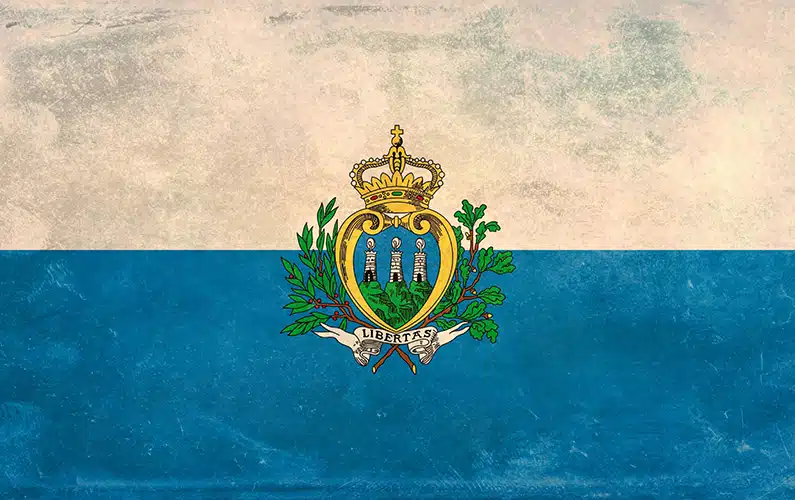
San Marino is one of the smallest and oldest countries in the world, and despite its size of just 61 square kilometers, it boasts a fascinating history and culture. Located entirely within Italy and home to around 33,500 people, San Marino has survived through the centuries as an independent republic.
In this article, we share 10 interesting — and sometimes surprising — facts about this tiny country that often flies under the radar for many travelers.
1 San Marino is the world’s fifth smallest country — and one of the oldest…
San Marino, covering just over 61 square kilometers, is the fifth smallest country in the world. Located entirely within Italy, it is also one of the world’s oldest sovereign republics, having existed for more than 1,700 years.
Despite its tiny size, the country is known for its rich history, picturesque landscapes, and strong traditions. [source]
2 Despite its small size, San Marino has its own Olympic committee…
San Marino has its own Olympic committee and competes in the Olympic Games. The country has participated in the modern Olympics since 1960, making it one of the smallest nations ever to take part. Despite its size, San Marino regularly sends athletes to compete in various sports — usually in very small delegations.
The nation made history at the Tokyo 2020 Olympics, where it won its first-ever Olympic medals: one silver (shooting) and two bronze medals (shooting and wrestling). [source]

3 San Marino was one of the first countries to establish a postal system in the 1600s…
The small republic, with its long history of independence, began developing its own postal service as early as 1607, making it one of the earliest examples of an organized postal system in the world.
This early system helped improve communication and trade, both within San Marino and with other nations beyond its borders. [source]
You may also like
4 Italian is the official language of San Marino — for obvious reasons…
Although San Marino is an independent state, Italian is the country’s official language. San Marino is completely surrounded by Italy, and its culture and language are heavily influenced by Italy.
The small nation also uses many Italian administrative and legal systems, which means its government and judicial structure often resemble Italy’s, even though there are some notable differences. [source]
5 San Marino is one of the few countries with an extremely low national debt…
San Marino does have a national debt, but it is very low compared to most other countries — in fact, compared to the vast majority of them. Historically, the country has managed to keep its public finances stable and its debt at a minimum.
Although the national debt has increased slightly in recent years, mainly to finance public investments and projects, it remains very low relative to GDP. San Marino actually has one of the lowest national debts in all of Europe, making it a clear example of strict fiscal policy focused on avoiding large-scale debt. [source]
6 San Marino is known for its low taxes and is often seen as a tax haven…
San Marino has a favorable tax system, making it attractive to both individuals and businesses looking to reduce their tax burden. Tax rates are generally lower than in many other European countries, and there are beneficial tax incentives for companies.
For example, San Marino offers a low corporate tax rate and relatively low income taxes for both businesses and private individuals. Despite its reputation as a tax haven, the country has agreements with the European Union on tax matters and has taken steps to comply with international standards aimed at preventing money laundering and tax evasion. [source]

You may also like
7 People in San Marino are among the longest-living in Europe…
San Marino has a high life expectancy and is often ranked among the countries with the longest average lifespans in the world. Its residents tend to live longer than many others, thanks to factors such as good healthcare, a high standard of living, and a strong economy.
According to statistics, the country frequently ranks among the top in Europe for life expectancy, likely due to a combination of healthy lifestyles, easy access to healthcare, and a low incidence of serious diseases. That said, it’s worth noting that San Marino is a very small country, which means figures can vary slightly depending on the source.
In 2022, the average life expectancy in San Marino was 83.86 years — 81.30 years for men and 86.65 years for women — according to data compiled by the Central Intelligence Agency. [source]
8 This is how San Marino got its name…
San Marino is named after Saint Marinus, a Christian stonemason and missionary. According to legend, he founded the state in the 4th century. Marinus, originally from Dalmatia (today part of Croatia), fled persecution for his Christian faith and settled on Monte Titano, where he established a small community that would later evolve into modern San Marino.
Saint Marinus is regarded as the country’s patron saint, and his life and legacy remain central to San Marino’s history and national identity. The country celebrates its National Day on September 3, known as Saint Marinus’ Feast Day. [source]
You may also like
9 The famous Guaita Tower once served as both a fortress and a prison…
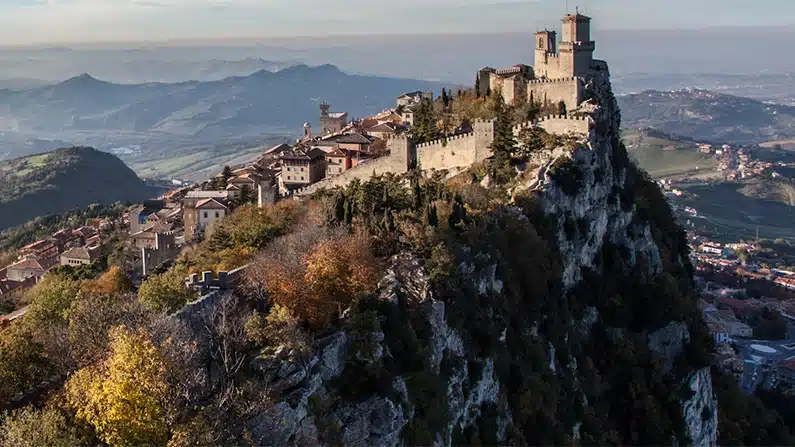
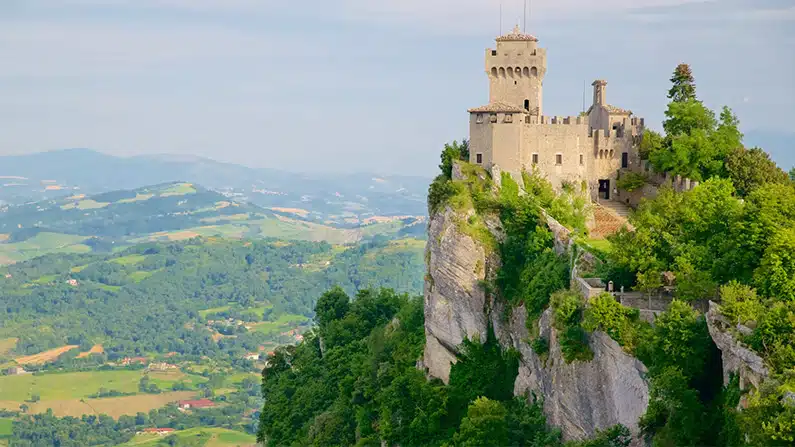
Guaita Tower — shown in the image below — is one of the three iconic towers of San Marino and was used as a prison until the 1970s. One of the country’s most recognizable landmarks, the tower has a long history dating back to the Middle Ages and has served as both a defensive stronghold and a prison during different periods.
Today, Guaita Tower is a popular tourist attraction and a powerful symbol of San Marino’s historical heritage. [source]
10 This is how politics in San Marino changed after World War II…
For much of its modern history — especially during the 19th century and early 20th century — San Marino functioned as a one-party state. During this period, a single political force, the Communist Party of San Marino, dominated politics, and the country’s political system was highly limited.
It wasn’t until 1945, in the aftermath of World War II, that San Marino introduced a multi-party system and began developing a more democratic political structure. This shift fundamentally transformed the nation’s political landscape, allowing multiple parties to operate and compete for power, and leading to a more diverse and pluralistic political climate. [source]

You may also like
Xtra An average of one millionaire for every 60 residents…
A fun and fascinating fact about this tiny microstate is that it’s one of the few countries in the world with roughly one millionaire per 60 inhabitants. With a population of just over 33,500 people, San Marino has an exceptionally high concentration of wealth, making it a remarkable example of economic density despite its small size.
Unlike many other European nations, the country doesn’t rely heavily on large industries or natural resources. Instead, its prosperity is driven by tax advantages and historical charm, which have made it a popular destination for both tourists and investors. [source]
5 Common Questions About San Marino
It is completely surrounded by Italy and sits in southern Europe, near the Adriatic coast.
Yes. It is a fully independent sovereign state and one of the oldest republics in the world.
The official language is Italian, reflecting strong historical and cultural ties to the surrounding region.
Yes. Although it is not part of the EU, it uses the euro through a formal agreement and even issues its own euro coins.
Its prosperity comes from low taxes, tourism, financial services, and political stability, rather than large industries or natural resources.