
Mammoths (Mammuthus) are an extinct genus of elephantids that evolved from ancient elephants which migrated north from Africa around 3 million years ago. Scientists know for certain that mammoths once lived in Africa, Europe, Asia, and North America, as fossils have been discovered across all these regions. The last surviving members of the species, the woolly mammoth, are believed to have gone extinct on Wrangel Island in Siberia approximately 5,000–6,000 years ago.
But you probably already knew most of that — so let’s jump straight into some more fun and fascinating trivia about these gigantic, elephant-like creatures.
1 Mammoths weren’t actually much larger than modern African elephants…
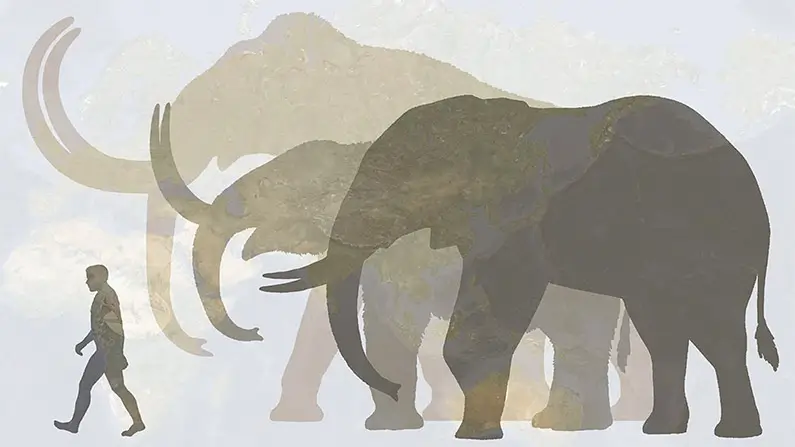
The idea that mammoths were significantly bigger than African elephants is more myth than reality. In fact, they were roughly the same size as today’s African elephants. A male woolly mammoth stood about 2.75 meters (9 feet) tall at the shoulder, measured around 3.35 meters (11 feet) in length, and weighed approximately 6 tons.
Its cousin, the steppe mammoth (M. trogontherii), may have been the true giant of the family — possibly reaching lengths of up to 4–4.5 meters (13–15 feet). [source]
2 They had smaller ears than modern elephants…
Just like the thick fur of woolly mammoths, their ears were also smaller compared to those of modern elephants. This played an important role in their cold-weather adaptation, as it helped reduce heat loss and minimize frostbite. [source]
3 We don’t know with 100% certainty why mammoths went extinct…
Most mammoths disappeared at the end of the last Ice Age, but scientists still don’t fully agree on a single, definitive explanation. According to comparative studies of living elephants reported by the American Institute of Biological Sciences, it appears likely that human hunting played a significant role in the mammoths’ extinction. Other theories also exist, including climate change as a contributing factor. [source]

You may also like
4 Their tusks could grow over 4.5 meters long…
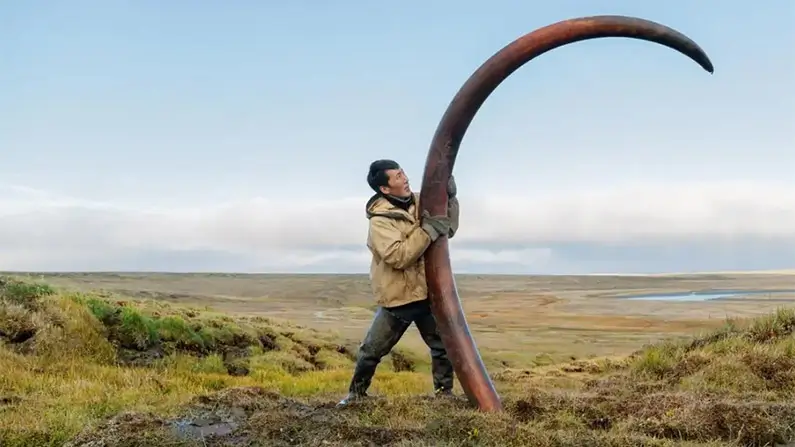
Fossil discoveries and nearly complete mammoth skeletons show that the tusks of the largest males could reach lengths of up to 4.5 meters (15 feet). These enormous tusks were likely a sexually selected trait — males with longer, more curved, and more impressive tusks had better chances of mating with females during breeding seasons.
The tusks may also have been used to defend against hungry saber-toothed cats, but there is no direct fossil evidence to conclusively support this theory. [source]
5 Mammoths appear in early cave paintings…
Between 30,000 and 12,000 years ago, woolly mammoths were among the most popular subjects for prehistoric artists, who painted these shaggy animals on the walls of many caves across Western Europe. These primitive artworks may have served as totems — early humans might have believed that capturing mammoths in pigment on cave walls could help them hunt them in real life.
There are also theories suggesting the paintings were objects of worship. Or perhaps it was simply that talented cave dwellers were bored during cold, rainy days. Unfortunately, this is something we will likely never know for certain. [source]
6 Woolly mammoths were covered in nearly as much fat as fur…
Even the thickest, shaggiest coat wouldn’t have been enough to protect an animal during a full Arctic storm. That’s why woolly mammoths had more than 10 centimeters (4 inches) of solid fat beneath their skin — an extra insulating layer that helped keep them warm in the harshest climates.
Based on what researchers have learned from remarkably well-preserved specimens, mammoth fur ranged in color from blond to dark brown, much like human hair. [source]

You may also like
7 Nearly intact mammoths have been found frozen in ice — helping scientists answer many questions…
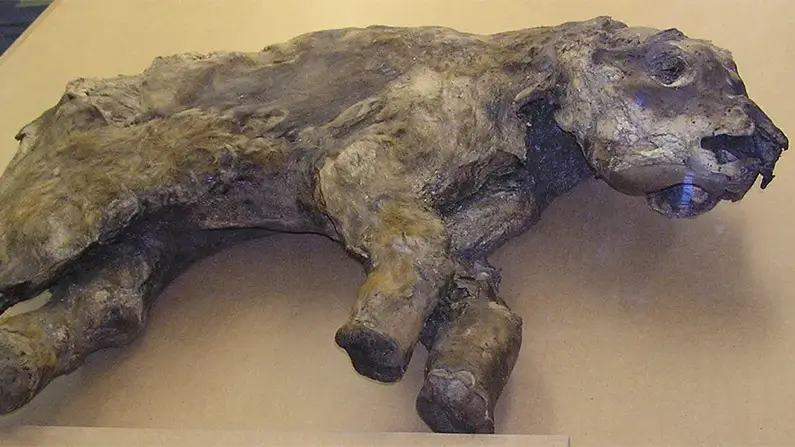
Even 10,000 years after the last Ice Age, the northern regions of Canada, Alaska, and Siberia remain extremely cold, which helps explain the remarkable number of mammoths discovered mummified and almost perfectly preserved in solid ice.
Identifying, isolating, and excavating these gigantic animals is the easy part; the real challenge begins when researchers must keep the remains preserved once they reach room temperature. [source]
8 It may be possible to clone mammoths in the near future…
In August 2006, Japanese researchers led by Narumi Ogonuki presented a plan for a potential revival of the woolly mammoth in the form of a hybrid species. They argued that sperm cells recovered from frozen mammoths could still be viable and might be used to fertilize eggs from Asian elephants.
There are also numerous other approaches and theories, but for now, the technology simply isn’t there yet. Still, with continued scientific advances, it may only be a matter of time. [source]

You may also like
9 Another myth is that mammoths were carnivores…
Just because an animal is large and equipped with intimidating tusks doesn’t mean it was a meat-eater. Mammoths were herbivores, feeding primarily on grasses, but they also consumed other plants and flowers. [source]
10 Mammoths may have used their tusks as snow shovels…
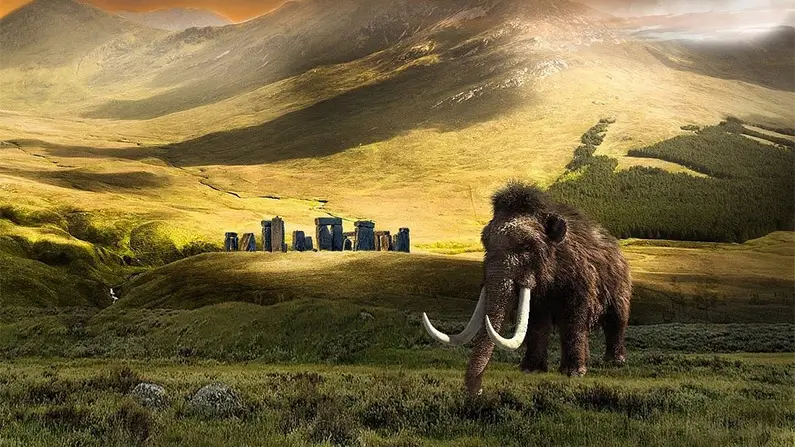
Some researchers believe mammoths used their long, curved tusks to sweep away snow, exposing grass and other vegetation hidden beneath the frozen surface. Wear patterns found on fossilized tusks suggest repeated contact with hard ground, supporting the idea that tusks weren’t just for display or combat — but also practical tools for survival in harsh Ice Age environments. [source]
You may also like
5 Common Questions About Mammoths
Most populations disappeared around 10,000 years ago, near the end of the last Ice Age. However, small isolated groups survived much longer, with the last known individuals dying out on Wrangel Island about 4,000–6,000 years ago.
They once roamed across Africa, Europe, Asia, and North America, thriving in cold, open environments such as tundra and steppe landscapes during the Ice Age.
They were strict herbivores, feeding mainly on grasses, but also consuming shrubs, flowers, bark, and other low-growing vegetation depending on seasonal availability.
Not necessarily. Most species were similar in size to today’s African elephants, although some, like the steppe mammoth, may have been slightly larger than any living elephant species.
Scientists are exploring genetic engineering and hybridization, using preserved DNA and modern elephants as surrogates. While progress is being made, true de-extinction has not yet been achieved.