
Blobfish (Psychrolutes marcidus), the notoriously ugly inhabitants of the deep sea, have fascinated and unsettled many with their unusual appearance. In this article, we’ll dive into the world of blobfish and explore their odd traits and adaptations to the dark abyss of the oceans. Let’s find out why this creature has become a symbol of nature’s strangest creations through these ten facts you probably didn’t know before.
1 The blobfish was voted the world’s ugliest animal…
The Ugly Animal Preservation Society is dedicated to protecting endangered or threatened species that happen to look ugly. In 2013, the organization held a public vote in which more than 3,000 online votes were cast to crown the “World’s Ugliest Animal“.
The blobfish topped the list, beating out other infamous contenders such as the proboscis monkey, the Titicaca water frog, and pubic lice. [source]
2 But blobfish aren’t always that blobby and ugly…
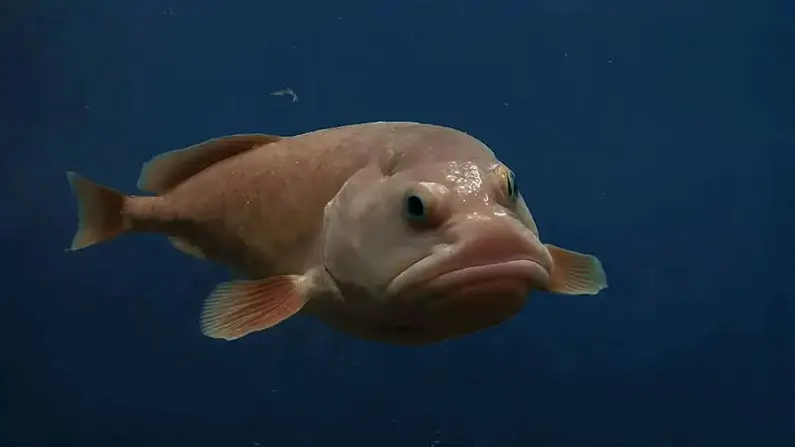
Poor blobfish are famous for having a face that looks a bit like a melted candle. But it’s not really their fault — and they don’t actually look that blobby in their natural habitat. Blobfish live at depths of 600 to 1,200 meters, where the water pressure is extremely high.
At those depths, the pressure can be up to 120 times greater than near the surface, which causes their soft bodies to hold their shape much better. Below, you can see a blobfish in its natural environment — and sure, they may not be beauties, but they’re far less droopy than you might expect. [source]
3 Blobfish mostly just “float along”…
Because their density is slightly lower than that of seawater, blobfish can hover just above the seafloor without needing to use much muscle energy to swim. Their relative lack of muscles isn’t a disadvantage, since they mainly swallow whatever edible matter drifts past them, such as deep-sea crustaceans. [source]

You may also like
4 You could almost call the blobfish the laziest fish in the world…
If a blobfish were a person, it would probably lie around watching Netflix all day instead of hitting the gym. Blobfish have no bones or teeth and an extremely low muscle mass. They rely on the immense pressure of deep water to stay afloat rather than active swimming.
When it comes to eating, blobfish don’t even bother hunting their prey. They drift along the seafloor and use their mouths to suck up crustaceans — such as crabs, sea urchins, and shellfish — that happen to pass by. This laziness is partly due to their environment: living far below the ocean surface with limited food availability means they simply don’t have much energy to swim, hunt, or maintain strong muscles in their gelatinous bodies. [source]
5 No one really knows how blobfish reproduce…
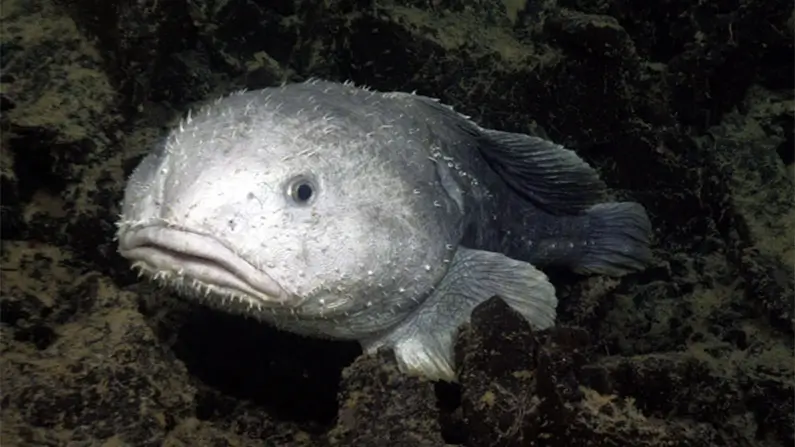
No one knows for sure how blobfish reproduce. Scientists have made educated guesses, but no one has ever observed them in the act. Like many other deep-sea fish, blobfish are believed to use a reproductive system where eggs and sperm are released into the water, a process known as external fertilization.
They are also thought to live fairly long lives, since there are few to no natural predators in the extreme depths where they reside. [source]
6 Blobfish are mysterious loners…
Most fish — or almost all of them — live in schools, but blobfish are true loners that tend to keep to themselves. Because they inhabit such extreme depths, scientists have been able to conduct very limited research on the species.
As a result, much about them remains unknown. How they reproduce, how long they live, and many other aspects of their behavior are still a mystery to researchers. [source]
You may also like
7 Mr. Blobby is a real blobfish — and probably the most famous one of all…
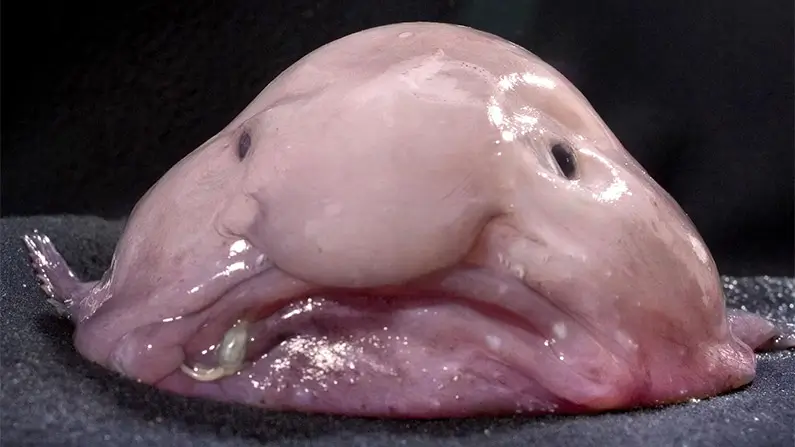
Mr. Blobby is perhaps the grumpiest blobfish known to humankind — and the main reason blobfish became a household name. In 2003, this peculiar little creature was hauled up from over 1,000 meters deep during the NORFANZ expedition off the coast of New Zealand. Scientists were so captivated by his bizarre appearance that they took a photo and shared it online.
It didn’t take long before Mr. Blobby became a viral internet sensation and meme.
In the photo, Mr. Blobby looks utterly miserable — but if you were in his fins, you probably would be too. Imagine being dragged up from extreme depths, forced to pose for a photo just as your body completely blobs out (without deep-sea pressure, blobfish lose their shape). To make matters worse, you then go on to win the title of the world’s ugliest animal a few years later.
The image below shows Mr. Blobby himself. [source]
8 Females lay thousands of eggs at once — and protect their young…
Although scientists still don’t know much about how blobfish mate, they do know something about what happens afterward. Females lay thousands of small pink eggs on the seafloor, which are then guarded by either the female or a male.
Sometimes the adult will hover directly above the eggs, and other times it will almost sit on them to make sure they remain safe until they hatch. [source]

You may also like
9 No one has ever seen a blobfish eat…
As mentioned earlier, blobfish are extremely lazy when it comes to feeding and tend to simply open their mouths and hope something edible drifts in. If food isn’t readily available, these unfortunate creatures would likely starve rather than actively search for prey.
At least, that’s what scientists believe — because no one has ever actually observed a blobfish eating. [source]

10 And speaking of eating — you’d probably never want to eat a blobfish yourself…
Blobfish actually have a lot of flesh and very few bones, but you won’t be seeing them served in restaurants anytime soon. These strange-looking fish have no known natural predators other than humans — and even then, they’re not intentionally fished. Instead, they usually end up accidentally caught in fishing nets.
For this reason, blobfish are believed to be threatened. Sadly, any blobfish that gets caught in a net dies unnecessarily due to the pressure change. Their odd, gelatinous flesh is considered bland and tasteless, giving people little reason to eat them in the first place. [source]

You may also like
5 Common Questions About Blobfish
It is a deep-sea fish adapted to extreme pressure, with a soft, gelatinous body that helps it float above the seafloor with minimal effort.
The “melting” look appears only when brought to the surface. In deep water, intense pressure keeps the body firm and compact.
They live at depths of 600–1,200 meters, mainly near Australia, Tasmania, and New Zealand, where sunlight never reaches.
They have very few natural predators due to their depth. Most deaths happen because of accidental capture in fishing nets.
They are considered vulnerable, mainly because of deep-sea trawling and bycatch, though exact population numbers are unknown.