
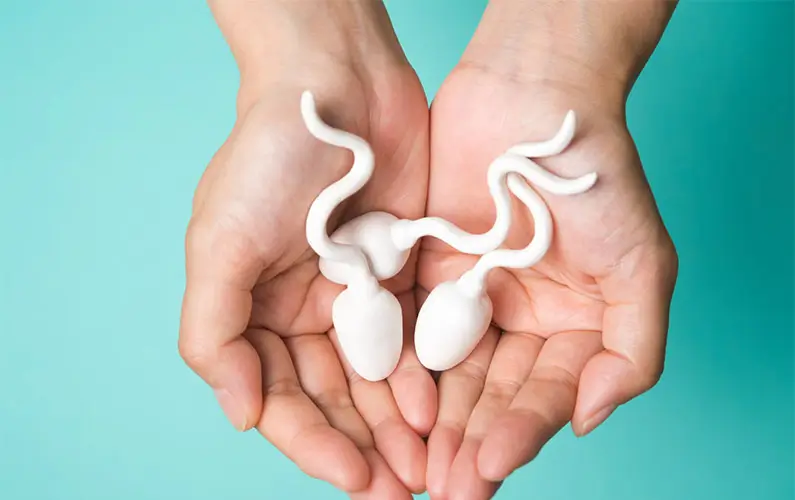
A typical ejaculation contains around 200 million sperm cells. Every second, about 1,500 new ones are produced, living in the body for roughly two and a half months before heading out on their big adventure! Some people see that sticky puddle more often than others — but here are ten facts you should know about sperm.
1 Only a small part of the “mess” actually consists of sperm…
Only about 5–10% of an ejaculation is made up of sperm cells. The rest of the fluid consists of nutrient-rich bodily fluids that help protect and support them on their long and demanding journey toward the female egg.
These fluids come from several glands, including the prostate and seminal vesicles, and contain substances such as sugars (fructose) for energy, enzymes that help improve movement, and compounds that neutralize the acidic environment of the vagina — assuming the ejaculate ends up in the right place, of course. [source]
2 Semen is basically a tiny vitamin boost…
Semen contains a mix of nutrients, including vitamin C, fructose, magnesium, phosphorus, potassium, vitamin B12, zinc, nitrogen, and calcium. The average ejaculation does contain a small amount of protein — but you’d get far more protein from eating an egg white.
On top of that, it contains only about 20 calories. Maybe it’s time to rethink your diet? [source]

3 This is how much semen an average ejaculation contains…
A typical ejaculation amounts to about half a teaspoon, which equals roughly 2–6 milliliters. This estimate is usually based on three to four days without ejaculation.
Each milliliter of semen can contain around 100 million sperm cells, highlighting just how concentrated it really is. [source]

You may also like
4 A sperm cell can survive in the female reproductive system for up to five days…
Depending on how hospitable the environment is, a sperm cell can survive for up to five days inside the female reproductive system. That said, most die within one or two days.
That may sound like a long time — but compared to bat sperm, which can survive for up to 145 days, it suddenly seems far less impressive. [source]

5 This is what happens to your sperm during a passive sex life…
If a man has a very passive sex life and does not ejaculate at all — not even by “taking care of the issue on his own” — the sperm cells that are never released will eventually die and be reabsorbed by the body.
This is a completely natural process and part of how the body continuously regulates sperm production. New cells are constantly produced, while older ones are broken down and recycled. [source]
6 A BMI below 25 is recommended for healthier sperm…
Being overweight or obese can have a negative impact on sperm quality. Studies have shown that men with a BMI above 25 tend to have fewer and slower-moving sperm, and those sperm may also be less capable of fertilizing an egg.
In contrast, men with a BMI under 25 generally show better sperm count and mobility, highlighting the connection between overall health and reproductive health. [source]

You may also like
7 Some sperm cells have two heads or two tails…
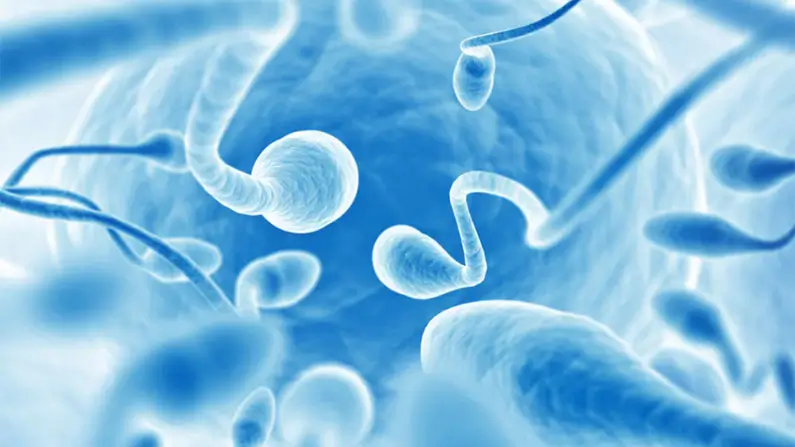
A small portion of a man’s sperm — roughly up to 10% — can be abnormally shaped. This may include sperm with two heads, two tails, or heads that vary greatly in size, from unusually large to very small.
It’s important to note that having a certain percentage of abnormally shaped sperm is completely normal. In most cases, these irregularities do not significantly affect fertility as long as the overall sperm quality and count remain healthy. [source]
8 This is what you should eat to improve sperm quality…
Diet can have a significant impact on sperm health and quality. Foods that may promote healthier sperm include oysters, bananas, walnuts, asparagus, garlic, lean beef, and dark chocolate. These foods are rich in key nutrients such as zinc, omega-3 fatty acids, antioxidants, and essential vitamins that support sperm production and overall reproductive health.
Staying well hydrated by drinking enough water is also important for optimal function. However, it’s worth remembering that a balanced diet and healthy lifestyle — including regular exercise and avoiding harmful habits like smoking and excessive alcohol consumption — play a crucial role in maintaining good fertility and sperm health. [source]

You may also like
9 Some chefs even use semen in cooking…
Believe it or not, there are chefs who have experimented with using semen in cooking — at least one, anyway. That would be Fotie Photenhauer, who famously published a cookbook featuring semen-based recipes titled “Natural Harvest: A Collection of Semen-Based Recipes”.
If you’re curious enough, the book can be ordered online via an external retailer. That said, not everyone finds the idea particularly appetizing — and some might prefer to admire this culinary curiosity from a safe distance. [source]

10 It’s a myth that only a small fraction of a man’s sperm swim toward the egg…
You may have heard the claim that only a tiny portion of sperm are “smart enough” to actually swim toward the egg — often phrased as only one in five. However, this idea is largely a misconception.
In reality, a significant majority of healthy sperm cells are capable of swimming toward the egg. While abnormally shaped sperm do occur, this does not automatically mean they are unable to move straight or effectively. Sperm cells go through different phases of movement and navigation on their journey, and several factors influence their ability to reach their destination. [source]

You may also like
Xtra It doesn’t have to be the fastest sperm that fertilizes the egg…
While we’re busting sperm myths, it’s also not true that the sperm that fertilizes the egg is always the fastest one. Fertilization depends on much more than speed alone. Factors such as a sperm’s ability to survive in the female reproductive system, penetrate the egg’s outer layer, and its genetic compatibility all play crucial roles.
Research shows that different sperm cells have different strengths. Some may be faster but less effective at penetrating the egg, while others are slower yet better suited to survive and successfully fertilize it. In other words, speed isn’t everything — which means you probably didn’t win the race to your mother’s egg after all. Sorry about that. [source]
5 Frequently Asked Questions About Sperm
They can survive for up to five days inside the female reproductive system, although most die within one to two days depending on conditions.
Factors such as diet, body weight, smoking, alcohol consumption, stress, sleep, and overall lifestyle all play a significant role in reproductive health.
A typical ejaculation contains hundreds of millions of cells, spread across just a few milliliters of fluid.
Even cells with abnormal shape or slower movement can sometimes succeed, as fertilization depends on multiple factors beyond speed alone.
Short-term frequency may lower volume slightly, but in healthy individuals the body continuously produces new cells, keeping levels relatively stable.