
Dominating our sky is a radiant jewel — our star and life-giver, the Sun. Its dazzling light illuminates the heavens and casts a golden glow over our days. But beyond its brilliant exterior lies a complex world of intense nuclear reactions and magnetic storms. From glowing sunrises to fiery sunsets, let’s dive into the Sun’s fascinating realm and explore its astonishing influence on life on Earth. Here are ten facts you may not have known about our very own star!
1 The Sun accounts for nearly all the mass in our solar system…
The Sun contains about 99.86% of the total mass of our entire solar system. This means that our star is by far the heaviest and most massive single object within it. The remaining 0.14% of the solar system’s mass is distributed among the planets, moons, asteroids, comets, and other celestial bodies orbiting our star. [source]
2 How incredibly hot the Sun really is…
The temperature on the Sun’s surface, known as the photosphere, is about 5,500°C. But it’s important to distinguish between the temperature of the surface and that of the Sun’s interior.
The Sun’s interior is far hotter than its surface. Its core — where nuclear fusion occurs and energy is generated through thermonuclear reactions — reaches extreme temperatures. While it is difficult to measure precisely, the temperature of the Sun’s core is estimated to be around 15 million°C. [source]
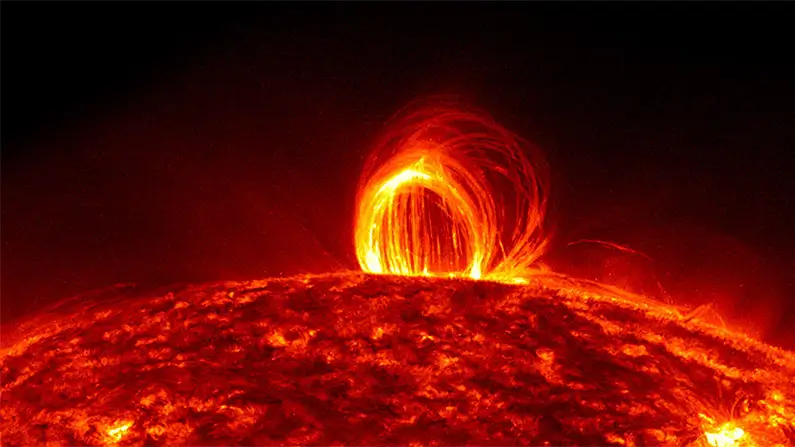
3 This is how a solar eclipse occurs…
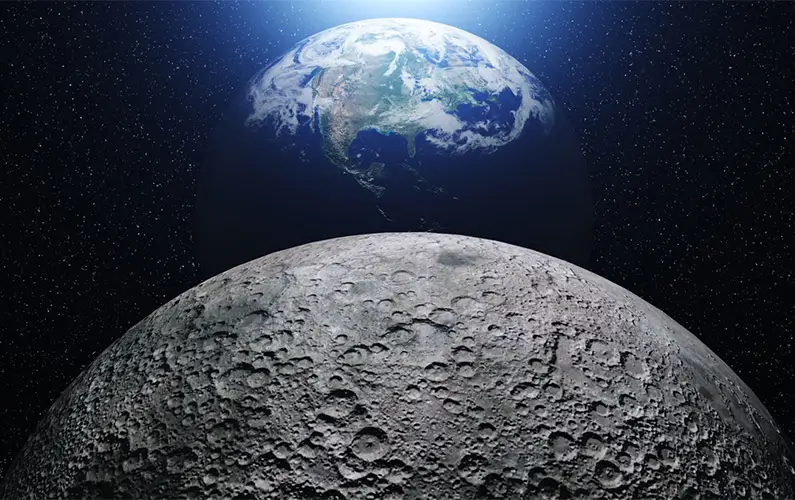
A solar eclipse happens when the Moon passes between the Sun and Earth, casting a shadow on our planet. For a total solar eclipse to occur, the Moon and the Sun must appear the same size from Earth. This is possible because the Sun is about 400 times larger than the Moon, but also about 400 times farther away. This optical coincidence makes it possible for the Moon to completely cover the Sun’s disk during a total solar eclipse. So far, no other planet has been found to experience such a perfectly aligned solar eclipse as the one we see here on Earth. [source]
You may also like
4 How many Earths could fit inside our Sun…
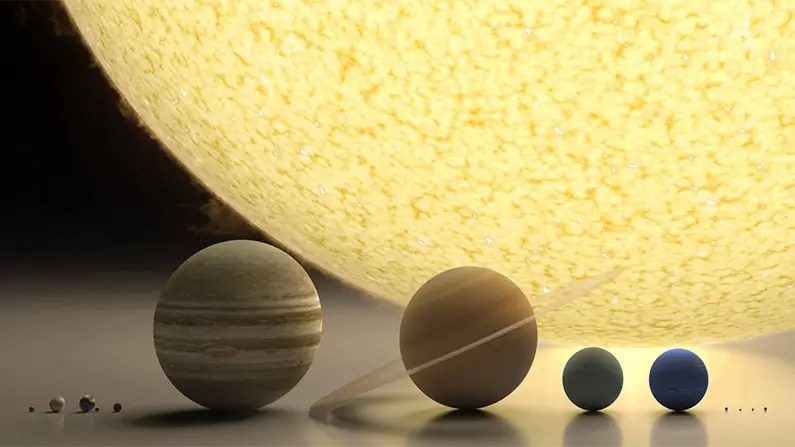
Our star is, as you might expect, enormous compared to our small planet. Its diameter is about 1.4 million kilometers. When comparing the Sun’s volume to Earth’s, roughly 1.3 million Earths could fit inside it. It’s important to note, however, that our Sun is classified as a medium-sized star in the universe. There are stars that are far larger — and others that are much smaller. In the image below, you can see a scale comparison of the planets in our solar system relative to the Sun. [source]
5 Our Sun vibrates like a giant clock…
It may sound strange to think of our star as vibrating, but due to the complex movements within its plasma (the hot gas), vibrations occur on its surface. These oscillations generate sound waves that travel through the Sun and can be measured by scientists here on Earth. Although we cannot hear these sounds because of the vacuum of space, it’s fascinating to imagine that our star is “singing” in its own unique way! [source]
6 What actually makes the Sun shine…?
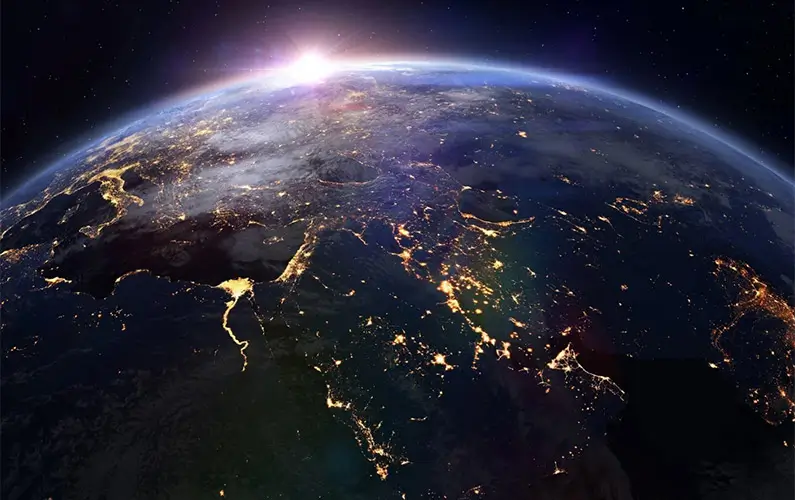
Our star shines through nuclear fusion — a process in which hydrogen atoms fuse together to form helium atoms deep within its core. This reaction releases enormous amounts of energy in the form of light and heat. It is made possible because the Sun’s immense mass and gravitational force create the extreme temperatures and pressures required for hydrogen to merge and be transformed into helium. This continuous process of nuclear fusion is what allows the Sun to shine and provide energy to our entire solar system. [source]
You may also like
7 How our Sun was formed…
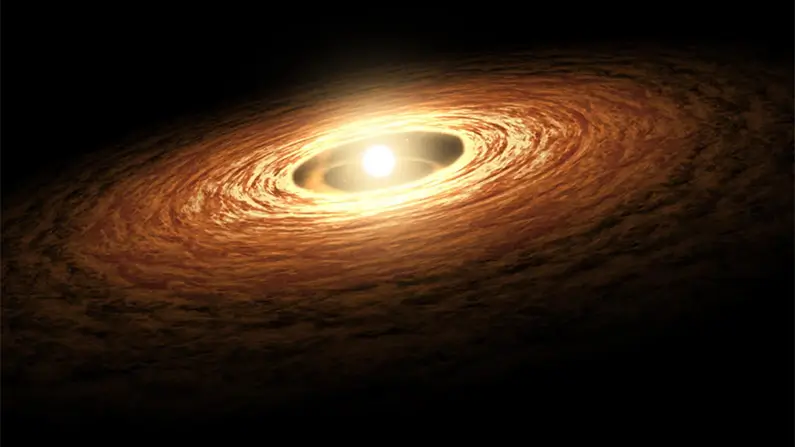
Our Sun was created about 4.6 billion years ago from a vast molecular cloud of gas and dust known as the solar disk or solar nebula. The central part of this disk collapsed under the force of gravity, forming a protostar. Through nuclear fusion — the process of fusing hydrogen into helium — the young star began to shine and generate energy. At the same time, the planets and other celestial bodies in the solar system formed through the accretion and collision of material within the surrounding disk. [source]
8 How solar storms can affect life here on Earth…
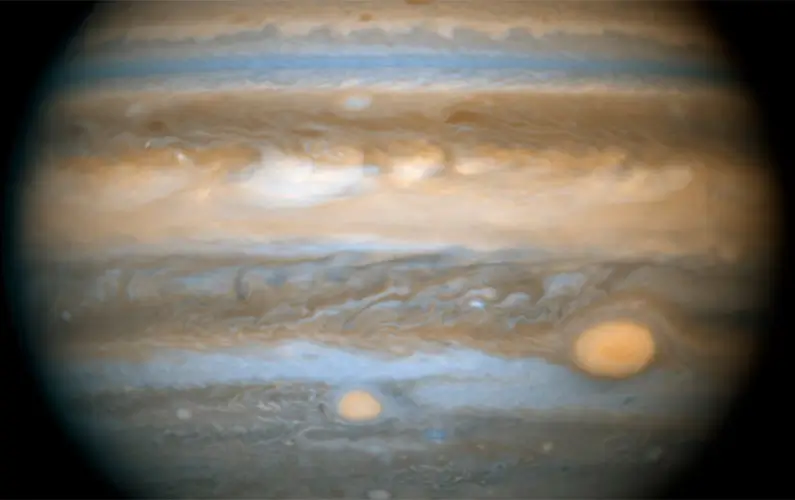
Solar storms are powerful phenomena that occur on the Sun’s surface, primarily in its corona, and are linked to magnetic activity in sunspots. They can trigger geomagnetic storms on Earth, which in turn may disrupt electronics and communication systems, including satellites and GPS. Solar storms can also impact power grids and create auroras near the poles, the beautiful light displays visible in the sky. Scientists continuously monitor solar storms to predict their effects and minimize potential damage to technology and society. [source]
You may also like
9 How our star will eventually die…
Our Sun will continue shining steadily for about another 5 billion years. Once it has exhausted its hydrogen fuel, it will expand into a red giant, dramatically affecting Earth and the inner planets. After this phase, the Sun will shed its outer layers, forming a planetary nebula, while its core collapses into a white dwarf. This white-dwarf stage will be the Sun’s final phase, during which it will slowly cool over billions of years.
It may sound gloomy — but don’t worry, in 5 billion years humanity will probably be long gone anyway (not much more comforting, is it?). [source]
10 How a tiny fraction of the Sun’s energy could power our entire planet…
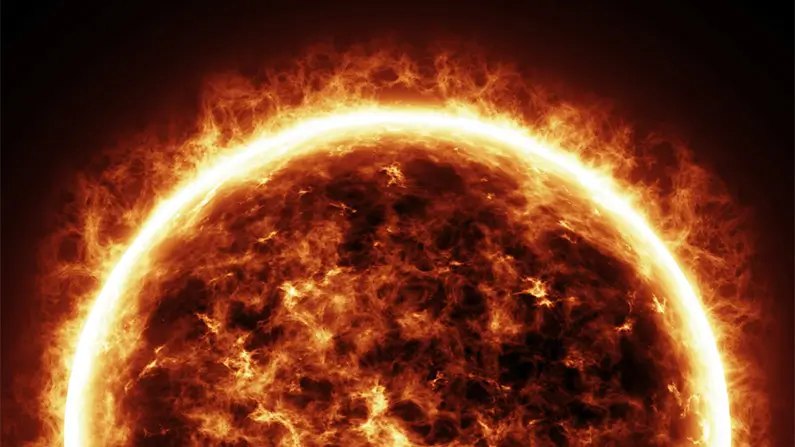
According to some estimates, the total amount of solar energy that reaches Earth in a single day is about 10,000 times greater than the energy consumed by all of humanity during the same period. This means that if we could efficiently harness even a small fraction of the sunlight that reaches Earth each day, we could meet all of humanity’s energy needs.
Unfortunately, we still have a long way to go in terms of research and technology to make this a reality. But who knows what the future might bring? [source]

You may also like
5 Common Questions About the Sun
The Sun is composed primarily of hydrogen (about 74%) and helium (about 24%), with small amounts of heavier elements such as oxygen, carbon, and iron. These gases exist in a superheated, plasma state.
The Sun generates energy through nuclear fusion in its core, where hydrogen atoms fuse to form helium. This process releases enormous amounts of energy in the form of light and heat.
The Sun is approximately 4.6 billion years old. Scientists estimate that it is about halfway through its total 10-billion-year life cycle.
Yes. In roughly 5 billion years, the Sun will run out of hydrogen fuel, expand into a red giant, and eventually shrink into a white dwarf, slowly cooling over billions of years.
The Sun is essential for life. It provides the energy needed for photosynthesis, regulates Earth’s climate and weather, and supplies the warmth that makes the planet habitable.