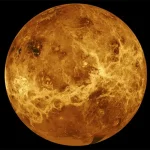
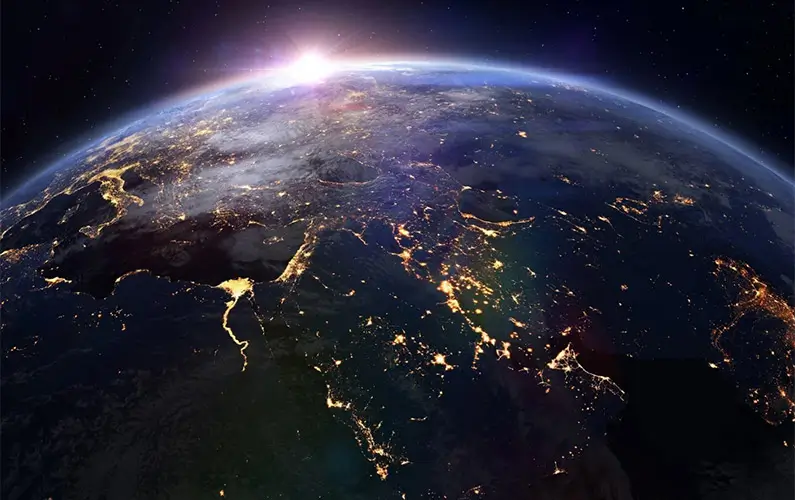
Earth is the third planet from the Sun and the largest of the so-called rocky planets in our solar system. It is also our home — and the home of all known living organisms. Its Latin name, Tellus or Terra, is still used occasionally, and astronomers sometimes represent it with the symbols ⊕ (the sun cross) or ♁ (the globus cruciger).
But all of that is something you probably learned back in school, so let’s instead dive into some fun facts about our very own planet!
1 99% of all life on Earth was wiped out when oxygen appeared…
When oxygen first began to accumulate in large amounts through photosynthesis around 2.5 billion years ago — a period known as the Great Oxygenation Event — it triggered a global upheaval that wiped out up to 99% of all life on Earth at the time. Most of these organisms were anaerobic microbes that simply couldn’t survive in an oxygen-rich environment.
Since then, Earth has gone through multiple mass extinctions, with the evolution of life continually shaped by dramatic shifts in the planet’s atmosphere, climate, and geology. [source]
2 Our days are getting longer — although very slowly…
Earth’s rotation is gradually slowing down at a rate of about 17 milliseconds per century, which means that the length of a day increases over time. During the age of the dinosaurs, around 100 million years ago, a full day on Earth lasted only about 22 hours, illustrating how the planet’s rotation is influenced by factors such as tidal forces from the Moon and changes in Earth’s internal structure. [source]
3 Life on Earth could end in just 800 million years…
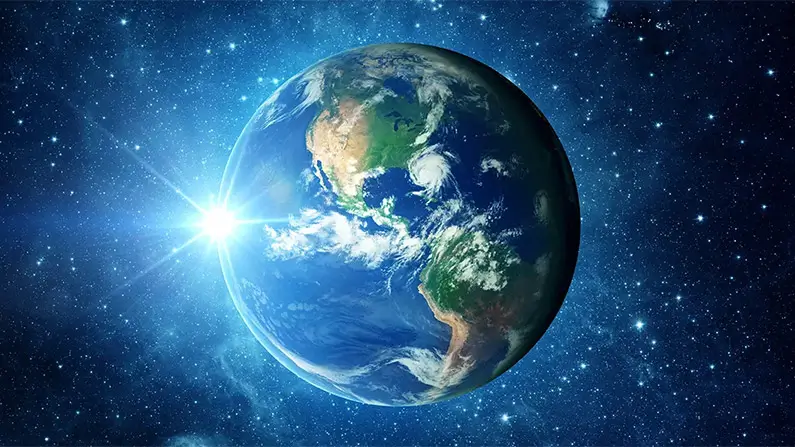
Most scientists believe that multicellular life has only about 800 million years left on our planet. By then, there will no longer be enough CO₂ in the atmosphere for photosynthesis to occur.
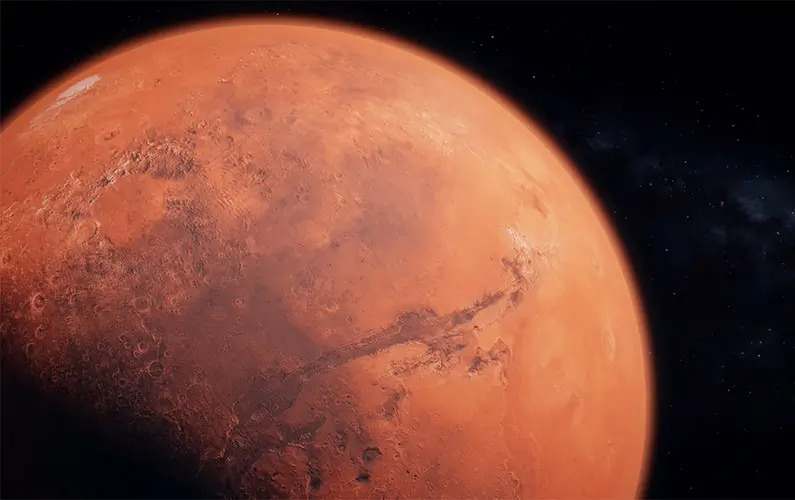
In other words — we’d better speed up that Mars colonization! [source]
You may also like
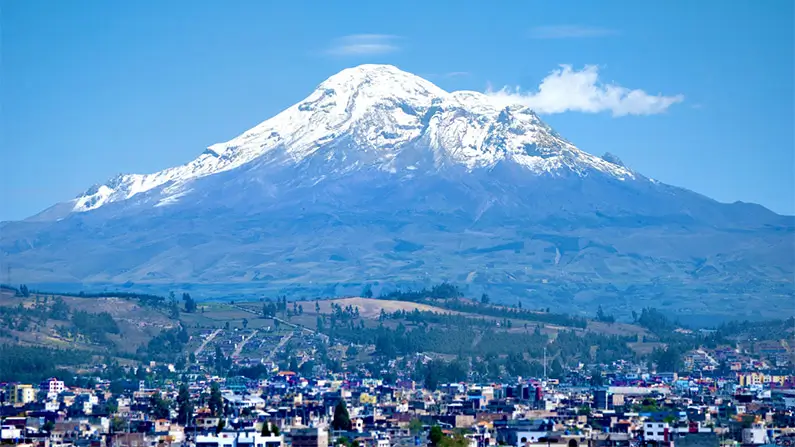
4 Depending on how you measure it, Mount Everest isn’t necessarily the highest point on Earth…
Mount Everest may be the tallest mountain in the world above sea level, but it is actually Mount Chimborazo in Ecuador that lies farthest from Earth’s center. This is because our planet is not a perfect sphere — it bulges at the equator due to its oblate (geoid) shape. As a result, the summit of Chimborazo, even though it is lower in elevation than Everest, ends up being farther from Earth’s core than Everest’s peak. [source]
5 The weakened magnetic field can disable satellites…
There is a large region over central South America where Earth’s magnetic field is significantly weakened. This area is known as the South Atlantic Anomaly. The magnetic field is so weak here that NASA shuts down its satellites when they pass over the region to prevent damage. [source]
6 Mammoths were still alive when the Pyramids of Giza were being built…
There were still living mammoths on Earth as late as 2,000 BCE, specifically on Wrangel Island in the Arctic Ocean. This was around the same time the pyramids were being constructed in Egypt. [source]

You may also like
7 Our planet is getting heavier and heavier…
Earth becomes about 100 tons heavier every day due to falling space dust and small meteorites that constantly hit our planet. In the grand scheme of things, however, this added weight has no noticeable effect. [source]
8 Puts into perspective just how many ants live on Earth…
The total weight of all ants on Earth is estimated to be around 9 trillion kilograms, which is almost three times the total weight of all humans. [source]
You may also like
9 The chances of us being around by then are extremely small…
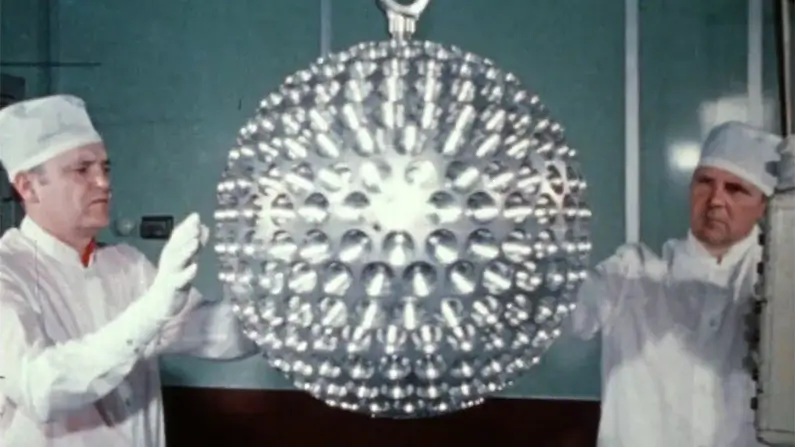
There is a satellite called LAGEOS-1 (launched in 1976) that is expected to return to Earth in 8.4 million years. Inside it is an image showing how scientists believe the continents will look at that time. [source]
10 Pangaea wasn’t the only supercontinent that ever existed…
Pangaea, the supercontinent that began breaking apart around 200 million years ago and eventually formed the continents we know today, was actually at least the fifth supercontinent in a long geological cycle in which massive landmasses continually form and break apart.
Throughout our planets history, these enormous continents have merged and separated repeatedly, driven by the slow but powerful forces of plate tectonics. [source]

You may also like
Xtra This is how much the Moon affects our planet…
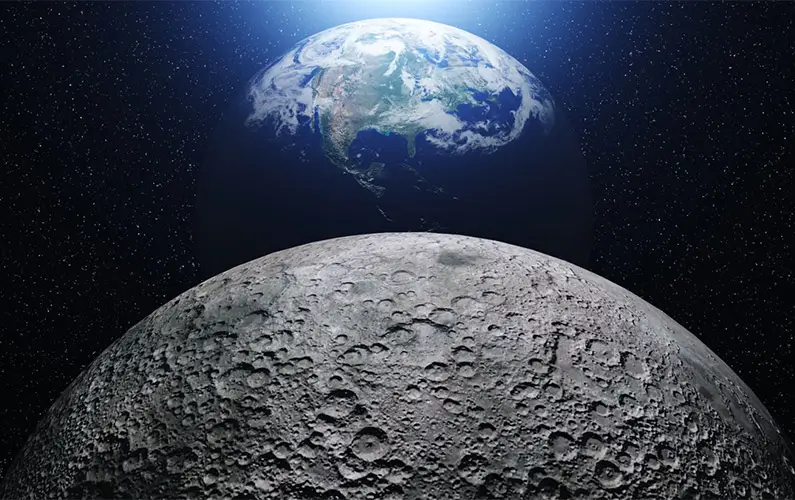
Without the Moon, Earth’s axial tilt would shift unpredictably over time, leading to dramatic climate changes and making the seasons far less stable than they are today. The Moon acts as a stabilizing anchor for Earth’s rotation, and without its influence, the conditions for life on our planet could change drastically. [source]
5 Common Questions About Earth
Our planet is approximately 4.54 billion years old, based on radiometric dating of ancient rocks and meteorites.
Earth has seasons because its axis is tilted by about 23.5 degrees. This tilt causes different parts of the planet to receive varying amounts of sunlight throughout the year, leading to spring, summer, autumn, and winter.
Earth is habitable thanks to its liquid water, protective atmosphere, moderate temperature range, and magnetic field. Together, these factors create the only known environment in the universe where life thrives.
About 71% of Earth’s surface is covered by water, most of it in the oceans. However, less than 3% is freshwater, and only about 1% of that is easily accessible.
Earth’s atmosphere consists mainly of 78% nitrogen, 21% oxygen, and trace amounts of argon, carbon dioxide, and other gases. This composition is crucial for protecting life, regulating temperature, and enabling respiration.