
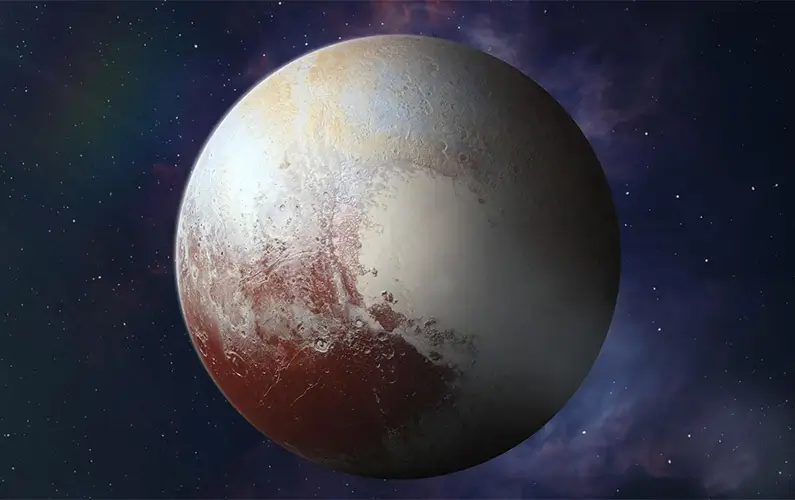
Pluto is no longer classified as a planet, as you may know, but is today considered a dwarf planet of the plutoid type, located in the outer regions of our solar system. At times, this dwarf planet — which follows a highly elliptical orbit — actually moves closer to the Sun than Neptune does.
If you happened to miss the astronomy lessons in school, you can quickly catch up with ten interesting facts about the dwarf planet Pluto right here.
1 Pluto was named by an 11-year-old girl…
The dwarf planet Pluto was named by American astronomer Clyde Tombaugh, who discovered it in 1930. The name, however, was suggested by an eleven-year-old girl named Venetia Burney from England. She was the granddaughter of a librarian and had a strong interest in mythology.
Venetia proposed the name Pluto, after the Roman god of the underworld, and it was adopted as the official name of the newly discovered celestial body. [source]
2 It takes a looong time for Pluto to orbit the Sun…
Pluto’s full orbit lasts an incredible 248 Earth years, which is equivalent to nearly three human generations. It’s almost hard to imagine that a single trip around the solar system could take that long, but Pluto’s very distant and slow orbit makes it exactly the case.
This also means that our ability to observe its entire orbital path is extremely limited within a single human lifetime. [source]

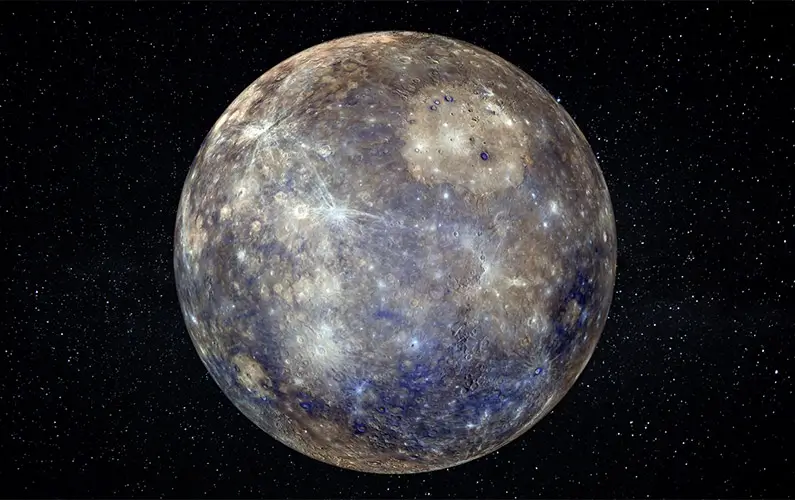
3 Even our own Moon is larger than Pluto…
Our Moon, the one we see in the sky every night, is actually larger than Pluto. To put it into perspective, Pluto’s diameter is only about one-quarter that of Earth’s, making it a relatively small world compared to the major planets in the solar system.
Despite its tiny size, Pluto still holds an important place in our understanding of space and the diversity of the solar system. [source]
You may also like
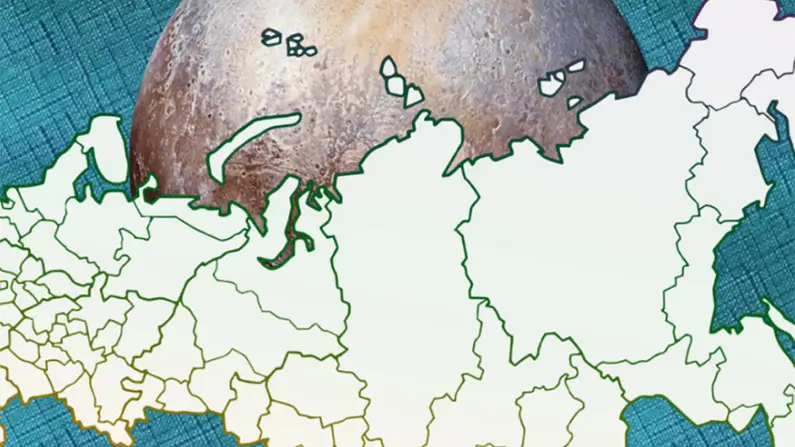
4 Pluto is only slightly smaller than Russia…
Pluto is only marginally smaller than the enormous country of Russia in terms of surface area. In fact, Russia, with its roughly 17 million square kilometers, is just a bit larger than the dwarf planet, which spans about 16.6 million square kilometers.
It’s fascinating to consider that a distant celestial body in space has a surface area almost equal to the largest country on Earth. Despite Russia being the biggest nation on our planet, it is only slightly larger than this remote world far out in the solar system. [source]
5 A famous Disney character was named after the dwarf planet…
A well-known Disney character actually got his name from the dwarf planet Pluto. Mickey Mouse’s loyal dog — Pluto — was named after this distant celestial body in the solar system.
It is not the other way around, as some people believe; the dwarf planet was not named after the dog. Instead, the dog’s name came later, inspired by the planet’s name, showing how the mysteries of space can sometimes find their way into popular culture in unexpected ways. [source]
6 Halfway there — at best…!
During the entire time Pluto was regarded as a full-fledged planet — before it was reclassified as a dwarf planet — it didn’t even complete a single orbit around the Sun. In fact, this small celestial body still hasn’t finished one full revolution since it was first discovered.
Its slow movement along its distant orbit means that one trip around the Sun takes almost 248 Earth years, which means our understanding and observations of this world have taken place during only a tiny fraction of its full cycle in the solar system. [source]

You may also like
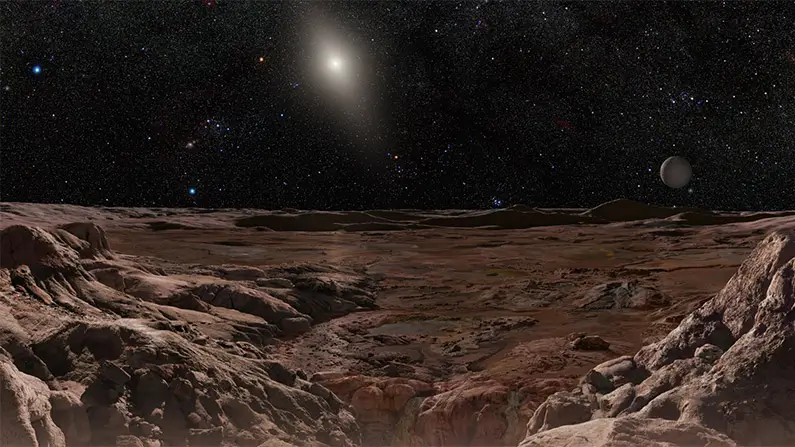
7 The dwarf planet is known for its beautiful landscapes…
It’s not just Earth that offers spectacular scenery — this distant world also has water-based ice and a sky that shimmers in blue. Despite its stunning landscape, it’s of course far beyond our reach, making it impossible for us to experience its beauty up close.
Thanks to modern space missions, however, we can still admire its fascinating nature and imagine what it would be like to visit this remote place in the solar system. [source]
8 Pluto’s discoverer was only an assistant — yet made history…
The dwarf planet Pluto was discovered by American astronomer Clyde Tombaugh in 1930. At the time, Tombaugh was working as an assistant at the Lowell Observatory in Arizona, under the direction of astronomer Percival Lowell.
Tombaugh used a technique called blink comparison photography to examine images of the night sky taken at different times, allowing him to detect Pluto’s movement across the sky. This was the first dwarf planet ever discovered and became an important contribution to our understanding of the solar system. [source]

You may also like
9 Pluto is actually a heart-shaped beauty…
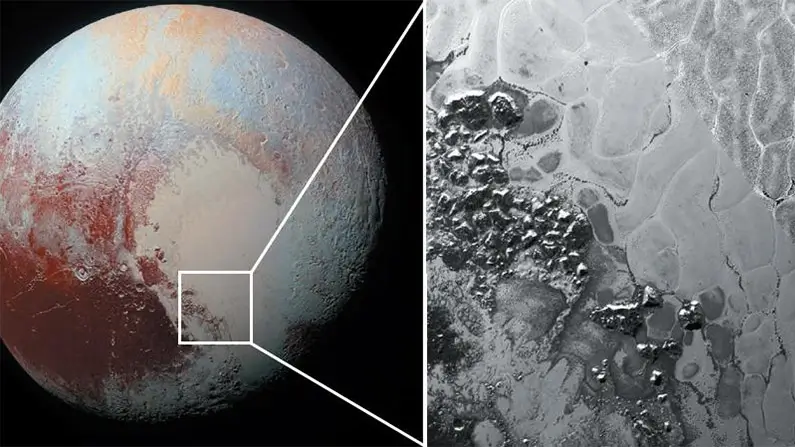
If you examine photographs of the dwarf planet more closely, you can clearly see a heart-shaped formation on its surface. This unusual feature has captured the imagination of many people and sparked curiosity about its meaning.
Perhaps it’s where the gods of love are said to dwell — or simply a symbol of something mysterious and beautiful far out in space. Take a look at the image below to discover this fascinating natural phenomenon for yourself. [source]
10 Frozen and solid substances in all their forms…
Frozen and solid materials appear in many different forms throughout our solar system. On Earth, natural ice is almost exclusively frozen water, but in the outer regions of space, the variety of ices is far greater. On this distant celestial body, far from the Sun, you can find frozen nitrogen, methane, and carbon monoxide.
These substances can exist both in solid form and as frozen surface layers, creating a type of ice completely unlike what we’re familiar with on Earth. The combination of these various frozen gases gives Pluto’s surface its unique properties, contributing to its distinctive appearance and atmospheric conditions. [source]

You may also like
5 Common Questions About Pluto
Pluto was reclassified as a dwarf planet in 2006 because it does not clear its orbit of other objects. While it orbits the Sun and is spherical, it shares its orbital region with many other icy bodies in the Kuiper Belt.
Pluto takes 248 Earth years to complete one orbit around the Sun. It has such a long and distant orbit that it still hasn’t completed a full orbit since its discovery in 1930.
No. Pluto is smaller than Earth’s Moon. In fact, its diameter is only about one-quarter the size of Earth’s, making it a very small world compared to the major planets.
Pluto is composed mostly of ice and rock, including frozen nitrogen, methane, and carbon monoxide. These frozen gases give Pluto its unique surface features and icy landscapes.
Yes. Pluto has five known moons. The largest, Charon, is so big relative to Pluto that the two are sometimes considered a double dwarf-planet system.