
The Roman Empire, founded in 27 BCE and lasting for over 500 years, has fascinated people for centuries. From its grand architecture and military strategies to its cultural legacy that still influences us today, its impact is undeniable. Yet, despite the well-known emperors and famous battles, there are still countless lesser-known—but equally fascinating—details about this mighty empire.
In this article, you’ll discover 10 facts about the Roman Empire that you may never have heard before. Join us on a journey back to antiquity and prepare to be surprised!
1 Rome was the first city to reach one million inhabitants…
During its peak in the 1st–2nd century CE, Rome became the first city in the world to reach a population of one million people. Its residents came from three continents — Europe, Asia, and Africa — creating a unique cultural melting pot. The next European city to reach the same population was London, but not until the 19th century during the Victorian era. [source]
2 The Roman Empire accounted for over 12% of the world’s population…
At its height, around the year 100 A.D., the population of the Roman Empire made up approximately 12–25% of the world’s entire population, depending on the estimate. With around 59–76 million inhabitants, the empire stretched across three continents and was one of the most populous and powerful civilizations in history.
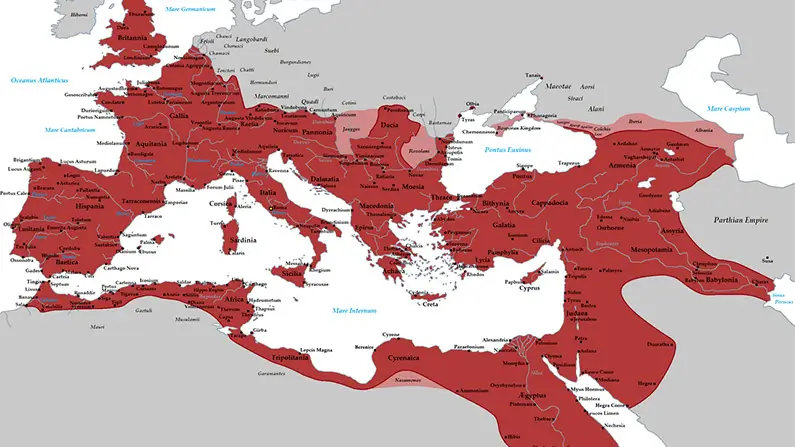
The map below shows the extent of the Roman Empire at its greatest expansion in 117 A.D. [source]
3 The Roman Empire dominated Europe for over 700 years — but they never managed to conquer the Scots…
The Roman Empire dominated Europe for more than 700 years, extending its reach into parts of North Africa and Asia. At its largest, the empire covered around 5 million square kilometers, stretching from Syria to Scotland.
Emperor Hadrian attempted to conquer Scotland but failed — three times. The harsh climate and the native tribes’ guerrilla tactics made it extremely difficult for the Romans to advance. As a result, he built the famous Hadrian’s Wall across northern England to protect the empire from the so-called “barbaric” Scots. [source]

You may also like
4 The Colosseum wasn’t the only amphitheater in the Roman Empire…
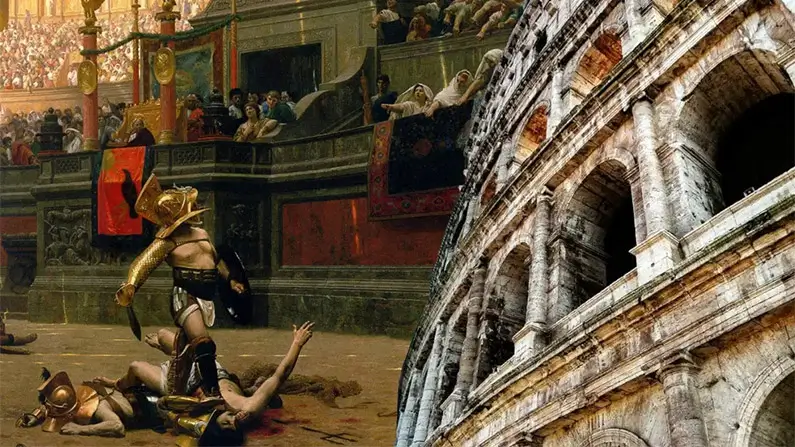
There were over 200 amphitheaters in the Roman Empire, but the largest of them all was the Colosseum in Rome, completed in 80 CE after roughly eight years of construction. Originally called the Flavian Amphitheater, it could hold between 50,000 and 80,000 spectators at its peak.
The name “Colosseum” began to be used long after the structure was completed. It likely derives from the colossal statue of Emperor Nero that stood near the amphitheater. The earliest recorded use of the term “Colosseum” comes from medieval sources, and it became more common in later periods. The Venerable Bede, a monk from the 8th century, referenced the great statue in his writings, which may have contributed to the adoption of the name. [source]
5 The Roman Empire was the first in the world to build a large and complex sewer system…
The Cloaca Maxima, meaning “the greatest sewer” in Latin, was one of the first major sewage systems in the world, located in Rome. Construction began in the 6th century BCE, originally as a simple open-air ditch designed to drain water from the Roman Forum during floods.
Over time, the system was expanded into a more advanced underground sewer network, transporting wastewater and refuse from large parts of the city — though not from private homes. Instead, it serviced important structures such as imperial palaces, bathhouses, and public latrines. Remarkably, the Cloaca Maxima is still partially in use today, making it an impressive testament to Roman engineering. [source]
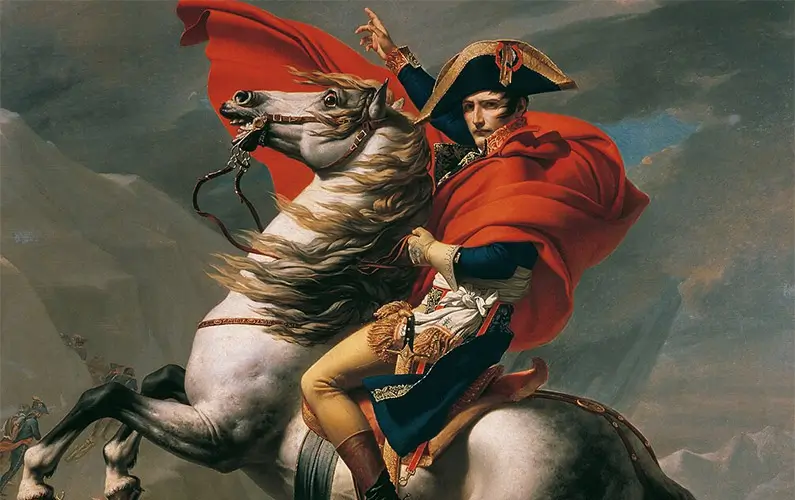
6 The Roman Empire can be divided into three main periods…
The history of the Roman Empire spans several centuries and can be divided into three major periods, each marked by distinct political and social changes that shaped Roman civilization. During these eras, Rome underwent dramatic transformations — from a small city ruled by kings, to a powerful republic, and finally to an empire that stretched across large parts of Europe, Africa, and Asia. Here are the three periods that defined the development of the Roman state:
The Regal Period (c. 625 BCE – 507 BCE): During this time, Rome was ruled by kings, and the city functioned as a monarchy.
The Republican Period (509 BCE – 27 BCE): Rome became a republic, governed by elected officials such as senators and consuls. Power was distributed among various magistrates and popular assemblies.
The Imperial Period (27 BCE – 476 CE): This era began when Augustus became the first emperor, marking the transition to imperial rule. Although the senate continued to exist, it held far less power than during the republic, serving mainly to administer the empire under the emperor’s supreme authority. [source]
You may also like
7 The value of salt in the Roman Empire: A trade commodity and pay for Roman soldiers…
In both ancient Greece and the Roman Empire, slaves were sometimes traded for salt in certain commercial agreements, although this was far from the only use of the mineral. Salt was an extremely valuable resource in antiquity because it was essential for preserving food — especially in an era long before refrigeration existed.
In the Roman Empire, salt was so important that soldiers were partly paid in salt, which is where the English word “salary” originates. Salt also served as a symbol of wealth and power, and played a role in various trade exchanges, occasionally connected to the slave trade, as previously mentioned. [source]
8 Our modern legal systems originate from the Roman Empire…
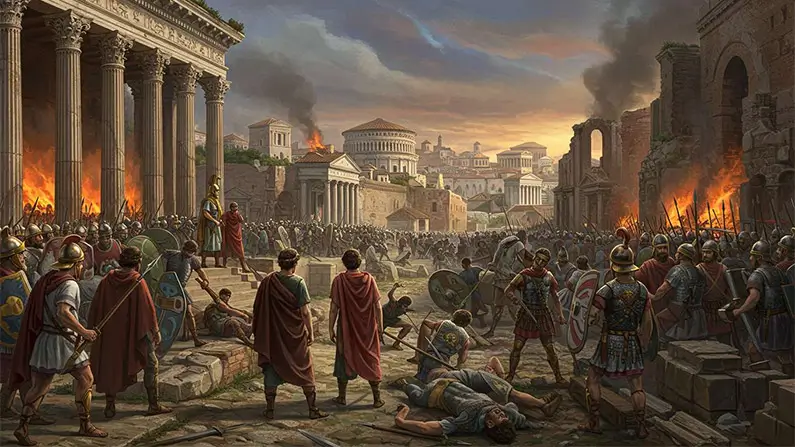
The Romans developed an advanced legal system, and the “Twelve Tables” (Lex Duodecim Tabularum) were one of the first written collections of laws, drafted in the 5th century BC when Rome was still a republic. These laws established the rights and obligations of citizens and formed a foundation for the Roman legal structure. Over the following centuries, additional written laws were created, especially during the republican and imperial eras.
The Romans are also considered pioneers of the modern bureaucracy, having developed a vast administrative system to manage their enormous empire. This included the governance of provinces, taxation, the judiciary, and public services — making it one of the first large-scale administrative structures to influence today’s governmental and bureaucratic systems. [source]

You may also like
9 1,900-year-old Roman dams are still in use in Spain today…
Two dams built by the Roman Empire — Embalse de la Aceña and Embalse de Valdecañas — are still in operation in modern-day Spain, more than 1,900 years after their construction. The Romans were highly skilled engineers and built numerous dams and aqueducts that remain functional even today. Roman engineering, particularly in water management, has had a lasting impact, with several structures proving so durable that they continue to fulfil their purpose in the modern era. [source]
10 The recipe for Roman cement disappeared — and remained lost for over a thousand years…
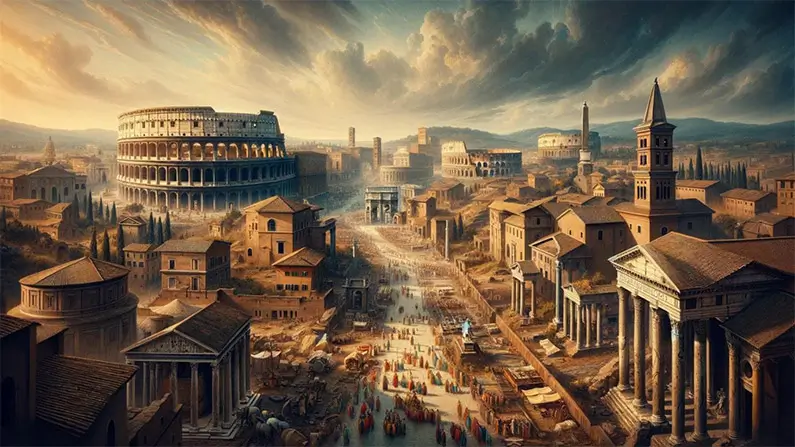
After the fall of the Roman Empire, the knowledge of how to make Roman concrete (opus caementicium) was lost. This unique material — a mix of lime, volcanic ash, and water — created an exceptionally strong and durable building compound. Throughout the Middle Ages and up until the 18th century, the technique was forgotten in Europe, and it wasn’t until the Industrial Revolution that modern cement production methods were rediscovered and developed.
Roman concrete was one of the engineering achievements that enabled the construction of their iconic structures — aqueducts, amphitheaters, and roads — many of which have survived for centuries. [source]
Xtra Even today’s modern shopping malls trace their origins back to the Roman Empire…
The first documented shopping complex in Rome was Trajan’s Market, built during the reign of Emperor Trajan around 100–110 CE. This impressive structure consisted of several floors and housed over 150 shops, stores, and workspaces.
It was one of the largest and most advanced commercial buildings in ancient Rome and served as a major center of trade, where goods such as food, clothing, and various products were sold. In many ways, it stands as an early example of a modern shopping mall. [source]
5 Common Questions About the Roman Empire
The Roman Empire was a vast state that emerged after the Roman Republic and was ruled by emperors from 27 BCE to 476 CE in the West and 1453 CE in the East (Byzantine Empire). It controlled huge territories across Europe, North Africa, and the Middle East and shaped Western culture, law, language, and architecture.
The fall of the Western Roman Empire was caused by a combination of factors including political instability, economic decline, overextension, corruption, military pressure from invading tribes, and internal power struggles. Historians often describe it as a slow collapse rather than a single dramatic event.
The primary language of the Roman Empire was Latin. In the eastern provinces, however, Greek was widely spoken and used in administration. Latin later evolved into the Romance languages such as Italian, Spanish, French, Romanian, and Portuguese.
At its largest around 117 CE, the Roman Empire stretched over roughly five million square kilometers, spanning three continents — Europe, Africa, and Asia. It included territories from modern-day Britain in the northwest to the Middle East in the southeast.
Rome is known for major contributions in engineering, law, architecture, and government. Innovations such as aqueducts, paved roads, concrete, public baths, and complex legal systems originated or were perfected in the empire. Many modern institutions and infrastructures still reflect Roman influence today.