
Koalas (Phascolarctos cinereus) are among nature’s most iconic and adorable creatures. The name “koala” originates from Indigenous languages and means “one who rarely drinks”. Their soft fur, large eyes, and calm behavior have charmed people all over the world. But behind their adorable appearance, there is much more to discover.
In this article, we will explore 10 irresistibly cute facts about koalas that you probably didn’t know before, offering a deeper understanding of these fascinating marsupials. So let’s dive into the wonderful world of koalas and learn more about these charming Australian residents.
1 There once existed a giant species of koalas millions of years ago…
More than 15 million years ago, a species of koalas existed that was up to 20 times larger than the koalas we are familiar with and admire today. Fossils of these giant koalas have been discovered in Australia, offering fascinating insight into their prehistoric past. [source]
2 The majority of koalas are affected by chlamydia…
Sadly, up to around 80% of the koala population is infected with chlamydia. There are several reasons why the disease is so widespread, but the primary cause is overpopulation. In some areas of Australia, koalas have become densely concentrated, increasing close contact between individuals and significantly raising the risk of bacterial transmission. [source]
3 Female koalas often prefer other females — rather than males…
Female koalas are known to display same-sex behavior, at times ignoring males altogether and instead engaging in sexual interactions with other females. This behavior has been observed by researchers and is considered a natural part of koala social dynamics. [source]
You may also like
4 This is how small a newborn koala joey is…
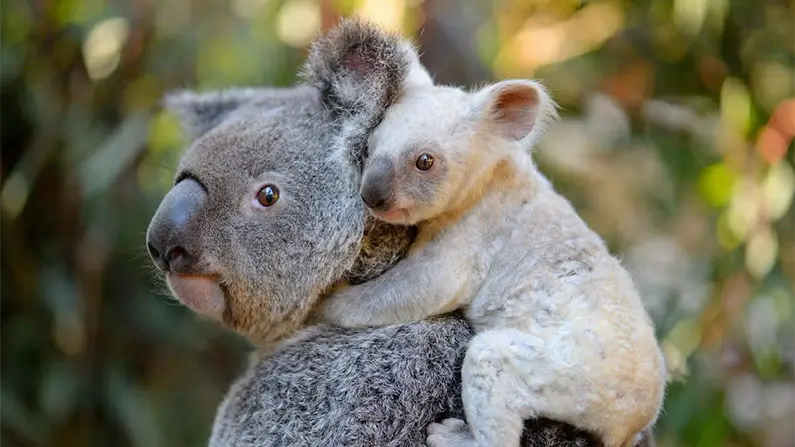
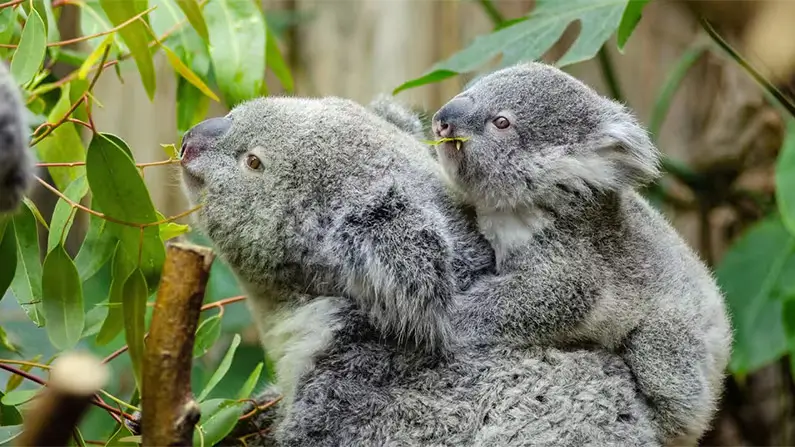
Koalas are born three to four weeks after conception. A newborn koala—known as a “joey“—is extremely small compared to an adult. At birth, they are usually only about 2 centimeters long and weigh around 5–10 grams. They are nearly blind, hairless, and highly underdeveloped.
Because they are so tiny and helpless at birth, joeys are completely dependent on their mother and must crawl into her pouch, where they continue to develop and grow while feeding on her milk. They remain in the pouch for about six months before gradually beginning to explore the outside world and eat solid food. During this time, they grow stronger and their fur slowly begins to develop. [source]
5 And speaking of what young koalas eat…
Young koalas consume their mother’s feces in order to obtain the essential gut bacteria required to properly digest the vegetation found in their ecosystem. This process is a crucial step in their development and allows them to safely transition to a diet of eucalyptus leaves. [source]
6 And speaking of what young koalas eat…
Just like humans, koalas can also exhibit heterochromia. Heterochromia is a medical term that describes an unusual genetic variation in eye color in humans or animals. Individuals with heterochromia have eyes of different colors, meaning one eye is a different color from the other. [source]
You may also like
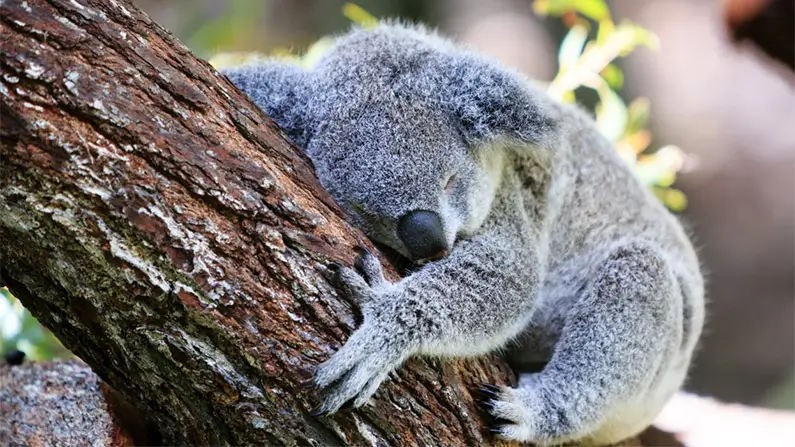
7 There are several reasons why koalas hug trees…
Koalas hug or cling to trees—most often eucalyptus trees—for several reasons. They spend a large portion of their time resting and sleeping, and by gripping branches with their strong claws, they can hang comfortably with minimal effort. This helps them conserve energy and prevents them from falling while asleep.
Another reason for tree hugging is temperature regulation. Eucalyptus trees can be cooler than the ground on hot days, so koalas sometimes cling to trunks to stay cool and avoid overheating. Conversely, when it’s cold, they may press against the tree to retain warmth near the trunk. [source]
8 This is how much koalas sleep each day…
A koala sleeps nearly 20 hours a day and spends, on average, only about four minutes per day on active movement. Food and sleep are life, right? [source]

You may also like
9 They have an extremely small brain relative to their body…
A koala’s brain is so small that it weighs less than 0.2% of its total body weight. An adult koala’s brain typically weighs only around 19–25 grams. Despite its size, this relatively small brain is sufficient to support basic life functions and behaviors, including navigating trees, finding food (eucalyptus leaves), and performing other essential activities needed for survival. But who needs a brain when you’re this cute? [source]
10 Apparently, it was easier to steal a crocodile than a koala, according to the thieves…
In 2006, thieves planned to steal a koala from a Queensland wildlife park, but changed their minds after discovering that the koala was too aggressive and difficult to handle. Instead, they stole a 1.2-meter-long crocodile, which apparently turned out to be the easier option. [source]
You may also like
5 Common Questions About Koalas
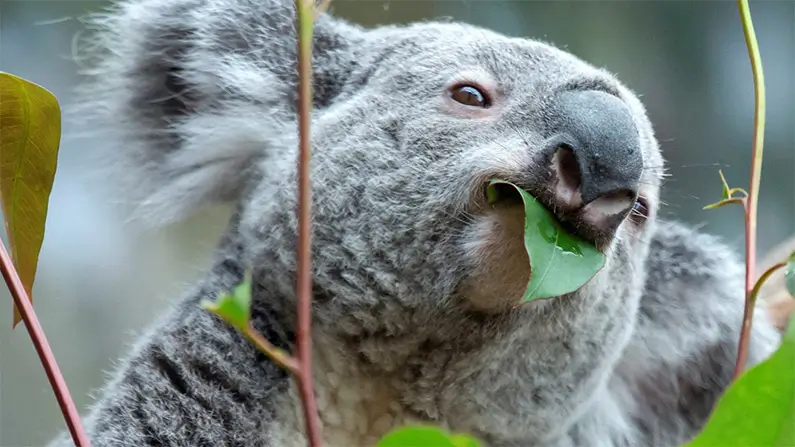
They feed almost exclusively on eucalyptus leaves, which provide very little energy. This is why they sleep so much and move very little to conserve energy.
They sleep up to 18–20 hours per day, making them one of the sleepiest animals in the world. Most of their waking time is spent eating or resting.
They are generally calm and non-aggressive, but they can bite or scratch if stressed, threatened, or handled improperly, especially in the wild.
Tree hugging helps with temperature regulation and energy conservation. Tree trunks can be cooler on hot days and warmer during cold weather.
Yes, a significant portion of the population is affected by chlamydia, which can cause blindness, infertility, and other serious health issues.